
Missouri Releases New Energy Plan, Pushing Nuclear Power as Priority
 Scan to share
According to local U.S. media reports, the Missouri Department of Natural Resources, in its latest statewide comprehensive energy plan, has formally placed the development of new nuclear power plants, enhancement of grid resilience, and advancement of energy autonomy at the strategic priority level. Official data show that Missouri currently consumes energy at a scale 8 times its in-state production, relying heavily on cross-regional transmission from external grids, and the plan aims to fundamentally reverse this trend of dependence on out-of-state power.
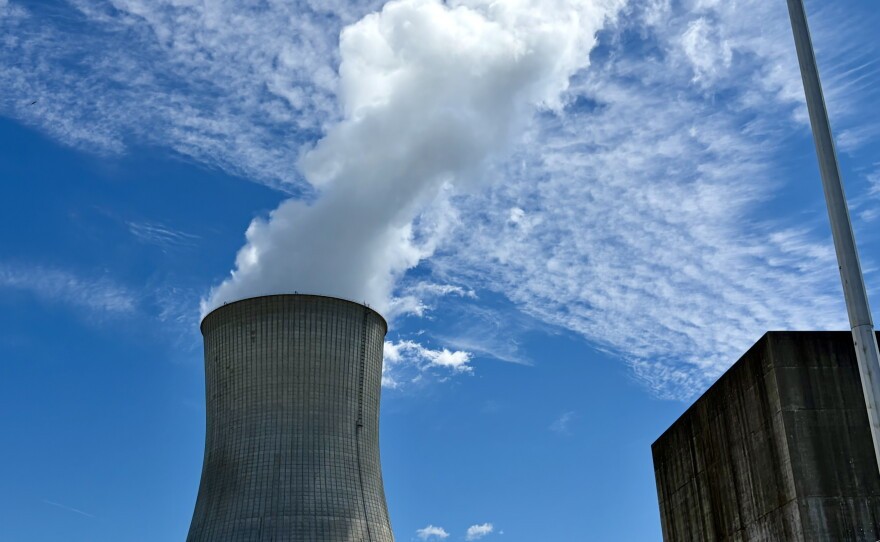
Missouri Governor Mike Kehoe noted in the report that in recent years Missouri's exposure risk to interstate imported electricity has increased significantly, and the new energy plan provides a systematic action roadmap for reversing this situation. Department of Natural Resources Director Jake Buxton emphasized that with the accelerated clustering of artificial intelligence (AI) data centers, in-state electricity demand faces explosive growth, and under the dual rigid constraints of meeting "zero carbon emissions" and "24-hour uninterrupted all-weather dispatch," nuclear power is the most practical choice under current technological conditions, with its operating availability rate able to stably reach above 97%.
The report's estimates indicate that in order to replace aging power plant units scheduled for retirement on time and to accommodate the high-density incremental load of future data centers, Missouri's future in-state generation scale must reach more than 2.6 times the current level. Although during the previous legislative session, lawmakers and the public engaged in intense debate over the high-cost nuclear power construction financing plan and its impact on residents' daily electricity bills, the plan report clearly warns: if the state continues to passively rely on externally imported electricity, against the backdrop of an overall surge in regional AI load, local residents will instead be exposed to a more severe risk of disorderly electricity price increases; proactively building baseload power plants with deterministic costs within the state will help flatten the long-term electricity price growth curve.
To this end, the state nuclear energy special task force led by Buxton has proposed legislative recommendations to the state legislature, planning to establish "Priority Energy Zones," focusing on utilizing site resources such as brownfields, decommissioned and shut-down power plant sites, and existing industrial parks, to significantly reduce the retrofit costs of grid expansion and new reactor construction through infrastructure reuse.
At the utility enterprise level, Ameren Missouri, which operates the state's only commercial nuclear power plant—Callaway Nuclear Generating Station—is systematically reshaping its power source planning. Ameren Chief Power Development Officer Ajay Arora revealed that although natural gas remains a baseload transition power source in the short term, the company has formally listed new nuclear capacity additions by 2040 as a strategic goal, and over the past year has been accelerating comprehensive assessments of techno-economic feasibility and state-level regulatory policies between large conventional nuclear power and small modular reactors (SMRs).
Currently, Missouri is rapidly rising from a traditionally secondary data center market to an important computing corridor in the United States. High-energy-consumption computing parks have been accelerating their spread from Kansas City along Interstate 70 and Interstate 44, with Montgomery County advancing two hyperscale data center projects, and the energy sector is striving to build long-cycle power guarantees for them through forward-looking nuclear power deployment.
Disclaimer: Information republished from partner media, institutions or other websites is provided for reference and communication purposes only. It does not imply endorsement of its views or verification of its accuracy. Please contact us if any content infringes rights or requires correction.