
NASA Launches Space Nuclear Power Student Challenge
 Scan to share
Recently, the National Aeronautics and Space Administration (NASA) officially launched the 2026-2027 "Power to Explore" Student Challenge. This competition, involving the fields of science, technology, engineering, and mathematics (STEM), is open to students from kindergarten through 12th grade across the United States, aiming to guide young people to gain an in-depth understanding of space nuclear power systems and encourage them to create drawings depicting future concepts of using nuclear "batteries" to power lunar exploration missions.
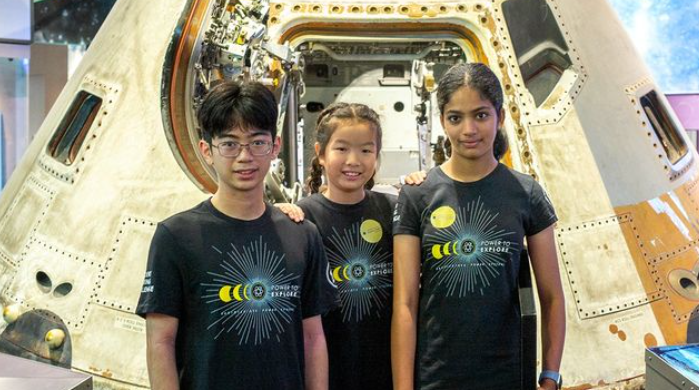
As the core support for humanity's return to the Moon and the establishment of long-term outposts, nuclear technology has demonstrated irreplaceable advantages in coping with extreme environments such as the frigid temperatures of the lunar poles, the long lunar nights, and permanently shadowed craters. Carl Sandifer, project manager of the Space Reactor Division at NASA Headquarters, stated that as the agency accelerates the construction of a lunar base, nuclear power sources can provide continuous electricity for scientific exploration in the shadowed regions of the lunar south pole, ensure the long-distance transport of heavy scientific payloads, and keep scientific instruments warm during the long lunar night.
Participating students are required to submit a 200-word essay and an original hand-drawn illustration showcasing a plan to build a lunar base using Radioisotope Power Systems or nuclear fission reactors. The judging panel will evaluate entries in three categories: kindergarten through 4th grade, 5th through 8th grade, and 9th through 12th grade. The grand prize winners in each category will be invited to visit the Glenn Research Center in Cleveland for an on-site learning experience, and all qualifying participants will also receive digital certificates and take part in virtual interactive events with experts.
This "Power to Explore" Challenge is funded by NASA's Science Mission Directorate and is operated and managed by the Radioisotope Power Systems Program under the Research and Technology Mission Directorate. With the deep integration of the nationwide nuclear energy renaissance and deep space exploration plans, this competition not only provides a platform for young people to showcase innovative thinking, but will also reserve a solid talent pipeline for the future of America's space and nuclear science and technology endeavors
Disclaimer: Information republished from partner media, institutions or other websites is provided for reference and communication purposes only. It does not imply endorsement of its views or verification of its accuracy. Please contact us if any content infringes rights or requires correction.