
US Issues Construction Permit for Advanced High-Temperature Gas-Cooled Reactor
 Scan to share
Recently, the U.S. Nuclear Regulatory Commission (NRC) officially issued a construction permit for the Xe-100 high-temperature gas-cooled reactor to the Long Mott project in Texas, marking an important milestone in the history of commercial high-temperature reactor development in the United States. The project is led by X-energy, with Fluor serving as the engineering, procurement, and construction contractor, and has been incorporated into the U.S. Department of Energy (DOE) Advanced Reactor Demonstration Program (ARDP). It plans to build 4 Xe-100 modules with a total electric power capacity of 320 MW, focusing on industrial cogeneration of heat and power, and will provide stable electricity and high-temperature process steam at 565°C to the Dow chemical complex.
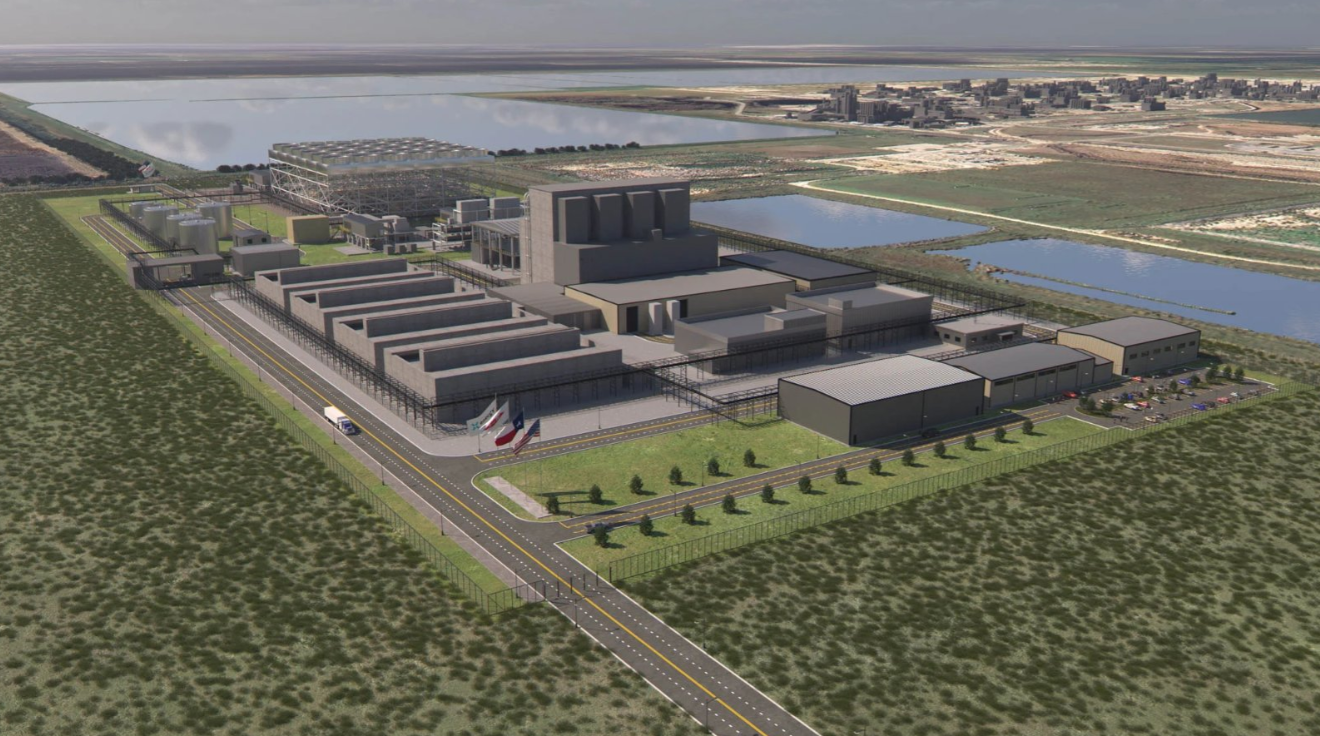
With the two core reviews—safety assessment and environmental impact assessment—both fully closed, the project is now fully ready for construction to begin, while the second project of the same model—the Cascade project in Washington State—has also simultaneously launched engineering design, leveraging the review template established through this project to accelerate replication and deployment. Unlike traditional nuclear power plants that primarily supply electricity to the grid, the Xe-100 targets the dual rigid demand of chemical enterprises for stable heat and power, offering greater revenue certainty and representing a key shift in the mainstream commercialization approach of U.S. advanced reactors toward industrial end-user markets.
The core value of this permit lies in the fact that the U.S. Nuclear Regulatory Commission (NRC) has established a complete set of safety review precedents for high-temperature gas-cooled reactors through this project. For many years, advanced nuclear reactors have generally faced the industry pain points of lengthy review cycles and high regulatory uncertainty. With the Long Mott project completing all reviews, subsequent Xe-100 projects of the same model will no longer need to conduct foundational safety demonstrations from scratch, and will only need to carry out assessments addressing site-specific differences. Taking the Cascade project in Washington State as an example, its first phase also plans to deploy 4 Xe-100 units, with long-term expansion potential to 12 units, directly targeting the high-load electricity demand of Amazon data centers, successfully significantly compressing the approval cycle and amortizing capital costs through licensing standardization.
In terms of supporting supply chains and sector layout, global companies such as Doosan and Alleima have already undertaken orders for long-lead-time equipment including steam generator tubing and graphite core components, and X-energy's TRISO-X fuel facility is also under simultaneous construction, striving to build a domestic U.S. commercial TRISO fuel production line and thoroughly address the shortfall in high-temperature reactor fuel supply. In terms of technology pathway competition, the Xe-100 has pursued differentiated development from light-water pressurized-water small modular reactors (SMRs) such as NuScale—the latter focuses on baseload grid power supply, while the Xe-100 leverages its high-temperature process heat advantage to enter high-value industrial end-user markets.
Of course, industry analyses point out that project advancement still faces certain uncertainties. A construction permit does not equate to a final operating license, and it will still take several years from construction start to unit completion and commissioning and ultimately to commercial operation, with first-of-a-kind demonstration projects generally carrying potential risks of cost overruns and schedule delays. At the same time, although TRISO fuel has been relatively thoroughly validated through irradiation testing at the laboratory stage, the stability of its large-scale industrial mass production and long-term in-core service still awaits verification through future actual operation. The official launch of the Long Mott project marks the formal transition of U.S. high-temperature gas-cooled reactors from laboratory demonstration to the industrial commercialization stage, and also provides a valuable benchmarking sample for regulatory review and business model exploration of high-temperature reactors worldwide.
Disclaimer: Information republished from partner media, institutions or other websites is provided for reference and communication purposes only. It does not imply endorsement of its views or verification of its accuracy. Please contact us if any content infringes rights or requires correction.