
U.S. NRC Issues First High-Temperature Gas-Cooled Reactor Construction Permit in Nearly Sixty Years
 Scan to share
Recently, the U.S. Nuclear Regulatory Commission (NRC) formally issued a construction permit to Dow's Long Mott Generating Station in Seadrift, Texas. The plant will be equipped with four Xe-100 small modular reactor units developed by X-energy, marking the first high-temperature gas-cooled reactor construction permit issued in the United States in nearly 60 years and representing a historic breakthrough in the commercial deployment of advanced nuclear energy in the country.
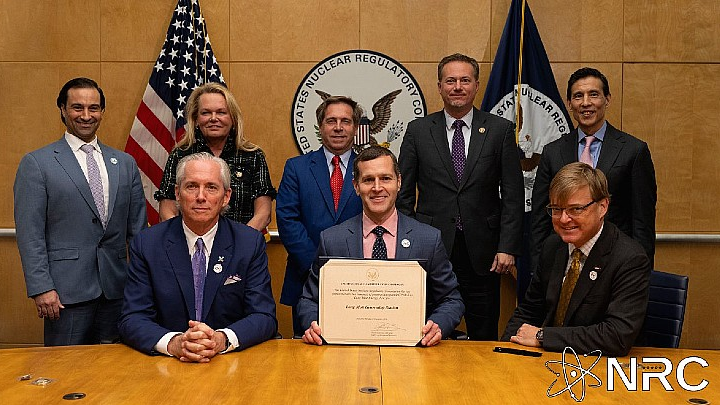
The Long Mott Generating Station is being developed by Long Mott Energy, a wholly-owned subsidiary of Dow, in partnership with X-energy. As a core part of the U.S. Department of Energy's Advanced Reactor Demonstration Program (ARDP), it aims to provide long-term, stable clean electricity and high-temperature steam to Dow's Seadrift manufacturing site, gradually replacing traditional high-carbon energy assets. X-energy CEO Clay Sell noted that the early receipt of the construction permit benefited from the regulator's efficient review, further validating a replicable commercial regulatory pathway for the technology.
The construction permit issued this time only authorizes construction of the facility and does not cover subsequent fuel loading or operation. Edward Stones, Dow's Vice President of Energy and Climate Business, stated that the company will continue to conduct a comprehensive evaluation of the project in terms of competitiveness, execution readiness, and funding affordability before making a final construction decision, with a preliminary investment decision expected in 2027. If subsequent approvals are obtained, construction is expected to begin by the end of this decade, with commercial operation in the early part of the next decade.
As a number of firsts in U.S. Nuclear Regulatory Commission regulatory history, the project is not only the first multi-module advanced reactor facility approved, the first pebble-bed core reactor approved, but also the first design approved with online refueling capability. U.S. Nuclear Regulatory Commission Chairman Christopher T. Hanson emphasized that the regulator completed its rigorous safety review within the established schedule on time, fully demonstrating its ability to advance advanced nuclear technologies from the design stage steadily toward the construction stage on a predictable timeline.
Disclaimer: Information republished from partner media, institutions or other websites is provided for reference and communication purposes only. It does not imply endorsement of its views or verification of its accuracy. Please contact us if any content infringes rights or requires correction.