
US Approves Funding for Final Phase of Molten Chloride Reactor Experiment, Accelerating Validation of Next-Generation Nuclear Energy Technology
 Scan to share
Recently, the U.S. Department of Energy (DOE) has formally approved cost-shared funding for the accelerated final phase of the Molten Chloride Reactor Experiment (MCRE). The funded project will focus on supporting the joint research and development efforts of Southern Company, Idaho National Laboratory (INL), and Core Power, aiming to deepen scientific understanding of liquid chloride salt fuel and molten salt reactor technology and to lay a solid foundation for the development of subsequent commercial reactors.
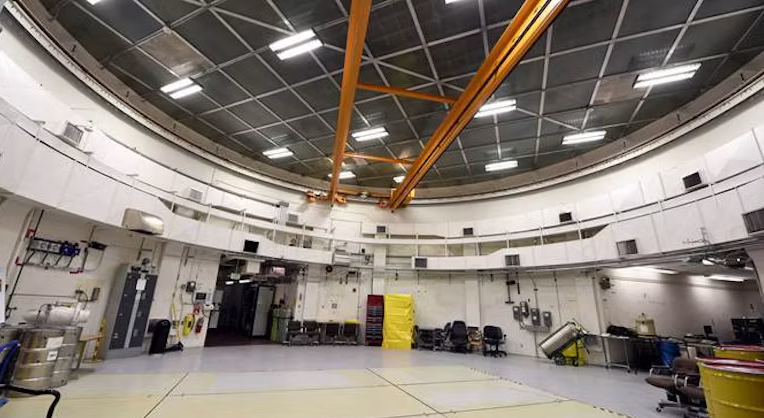
It is understood that the Molten Chloride Reactor Experiment (MCRE) is currently being constructed and tested in the Zero Power Physics Reactor (ZPPR) cell within Idaho National Laboratory (INL)'s Materials and Fuels Complex. The experiment is planned to achieve first criticality as early as 2027, at which point it will become the world's first fast-spectrum molten salt reactor to achieve critical operation, and its test results will directly feed back into and serve the commercial Molten Chloride Fast Reactor (MCFR) technology solution jointly developed by TerraPower and Southern Company.
In terms of technical advantages and application prospects, the molten chloride reactor uses liquid salt as both fuel and coolant, offering high-temperature operation, high thermal efficiency, and inherently safe characteristics. The successful development of this technology can not only be used for large-scale stable power generation, industrial high-temperature heat production, and thermal energy storage, but certain specific configurations can also support fuel breeding, medical isotope production, and breakthroughs in frontier chemistry and advanced materials science, while opening new pathways for future maritime nuclear power applications and offshore clean energy supply.
It is reported that the funding approved this time marks a substantial key breakthrough in the U.S. Advanced Reactor Demonstration Program (ARDP). Industry experts say that with the simultaneous advancement of experimental hardware construction and fuel fabrication, the realization of the Molten Chloride Reactor Experiment (MCRE) will significantly shorten the cycle for advanced molten salt reactor technology to move from the laboratory to commercial deployment, further consolidating the United States' international leading position in next-generation nuclear energy innovation.
Disclaimer: Information republished from partner media, institutions or other websites is provided for reference and communication purposes only. It does not imply endorsement of its views or verification of its accuracy. Please contact us if any content infringes rights or requires correction.