
NASA Seeks Proposals for Radioisotope Power and Other Technologies for Lunar Missions
 Scan to share
On September 8, 2026, the National Aeronautics and Space Administration (NASA) issued a solicitation seeking proposals for critical technologies and infrastructure for lunar exploration, with near-term focus on supporting the construction of a lunar base in the lunar south pole region.
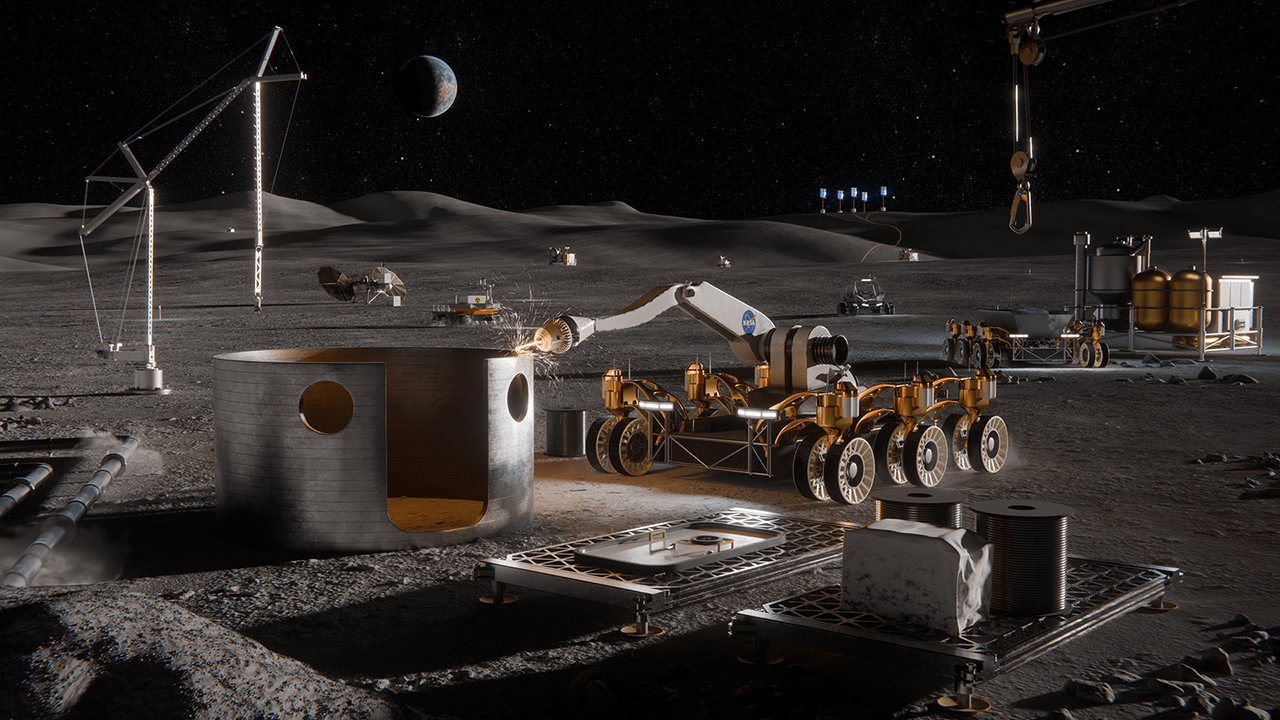
This solicitation is included under Appendix A, the “Lunar Enabling Infrastructure Accelerator” framework, of the NextSTEP-3 Broad Agency Announcement, and covers five technology areas: vertical solar arrays, lunar regolith oxygen extraction, radioisotope power, advanced space manufacturing, and innovative nanomaterial production. NASA stated that these capabilities will be used to address technology gaps in power generation, resource utilization, materials production, and operational support required for long-term crewed lunar exploration.
Among the nuclear energy-related areas, NASA is specifically seeking to advance the development of higher-efficiency power conversion systems, including the Radioisotope Stirling Generator (RSG). This system uses heat generated by radioisotope decay to drive a Stirling conversion device to produce electricity, and can provide power for spacecraft systems operating in dark, dusty, and remote environments.
NASA stated that compared with existing radioisotope power technologies, the RSG is expected to reduce the required fuel quantity to about one-third to one-quarter, and has the potential to use alternative fuels. Relevant radioactive materials may include plutonium-238 or americium-241, among others. NASA plans to design, manufacture, and test an electrically heated RSG prototype for lunar applications.
NASA stated that this work is essentially a research and development program, with the goal of refining system design and validating innovative technology pathways at a stage when the complete system definition is still evolving. NASA hopes to obtain RSG solutions that can provide thermal heat and electricity for landers and rovers, helping equipment operate in harsh environments such as permanently shadowed regions.
In addition to radioisotope power, this solicitation also includes vertical solar array technologies capable of providing stable power generation, management, distribution, and energy storage; in-situ resource utilization technologies for extracting usable oxygen from lunar regolith; advanced space manufacturing technologies that reduce dependence on Earth resupply and improve the flexibility and resilience of lunar missions; and innovative nanomaterial production technologies that enhance the commercial availability and quality of nanomaterials for lunar exploration.
NASA stated that the solicitation is open to private companies, academic institutions, nonprofit entities, and international partners participating through U.S.-led teams. NASA may use technical data, demonstration results, and other experience generated under these contracts to formulate subsequent acquisition strategies.
Disclaimer: Information republished from partner media, institutions or other websites is provided for reference and communication purposes only. It does not imply endorsement of its views or verification of its accuracy. Please contact us if any content infringes rights or requires correction.