
Deployable Energy 1MW Microreactor UNB Achieves Initial Criticality: Scheduled to Enter INL DOME Test Bed in 2027 for Full-Power Testing
 Scan to share
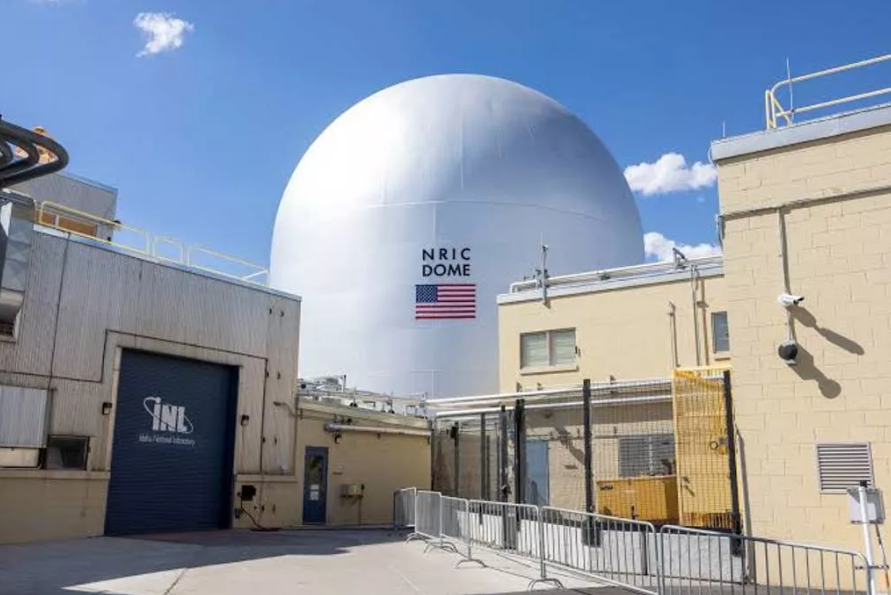
Houston-based nuclear energy startup Deployable Energy recently announced that its independently developed Microreactor, the “Unity Nuclear Battery” (UNB), has successfully completed its Initial Criticality Test. According to the established deployment plan, the system will officially arrive at the Demonstration and Operation of Microreactor Experiments (DOME), the dedicated microreactor test bed at Idaho National Laboratory (INL), in 2027 to conduct full-power comprehensive performance testing.
Despite being branded as a “Nuclear Battery,” the UNB is not physically a chemical battery or radioisotope decay power source, but rather a compact, transportable fission nuclear reactor with an electrical power output of 1 Megawatt (MW). Deployable Energy emphasizes that its engineering design is intended to achieve plug-and-play operation, factory-integrated prefabrication, and rapid highway transport, providing long-duration stable zero-carbon electricity output once delivered to site and connected to the grid.
Deployable Energy thus becomes the second commercial nuclear development company selected for the DOME test bed. Prior to this, nuclear startup Radiant became the first team approved to access the facility earlier in 2026. The National Reactor Innovation Center (NRIC) under the Department of Energy (DOE) has officially approved Deployable Energy's testing plan, authorizing it to utilize DOME's shielding and thermal rejection systems in 2027 to verify full-power operating metrics.
In terms of core physics and thermal-hydraulic design, the UNB combines dual characteristics of mature light water reactors and advanced gas-cooled reactors. Its core uses Low-Enriched Uranium (LEU) fuel, relying on Light Water for neutron moderation to sustain the chain fission reaction; however, in terms of residual heat removal and loop design, the reactor abandons the traditional high-pressure water loop and instead uses chemically inert Helium as the primary coolant loop to circulate and remove heat.
This heterogeneous “water-moderated, gas-cooled” design inherits the clear and well-established nuclear physics safety boundaries of traditional commercial light water reactors, while leveraging the low-pressure and lightweight advantages of gas cooling systems to avoid heavy high-pressure pressure vessels, significantly reducing system complexity and overall weight. Notably, this reactor type insists on using commercial LEU fuel with an enrichment level of approximately 4.95%, avoiding path dependence on High-Assay Low-Enriched Uranium (HALEU), whose supply chain is not yet mature.
As Small Modular Reactors (SMRs) and even smaller microreactors worldwide accelerate from blueprint design toward engineering verification, the DOME facility established at INL is becoming critical infrastructure filling the gap between laboratory physics testing and commercial deployment. This UNB scheduled test marks that this gas-cooled microreactor technology has officially entered the eve of commercialization, transitioning from a proof-of-principle prototype to full-power hot testing.
Disclaimer: Information republished from partner media, institutions or other websites is provided for reference and communication purposes only. It does not imply endorsement of its views or verification of its accuracy. Please contact us if any content infringes rights or requires correction.