
TAF-ID database 22nd edition released, expanding advanced nuclear fuel thermodynamic evaluation data
 Scan to share
The International Thermodynamic Database for Advanced Fuels (TAF-ID) project has been running for over a decade. The project employs the CALPHAD (Calculation of Phase Diagrams) method to develop a thermodynamic database that supports computational analysis of advanced nuclear fuel materials, enabling prediction of phase diagrams and thermodynamic properties of relevant systems.
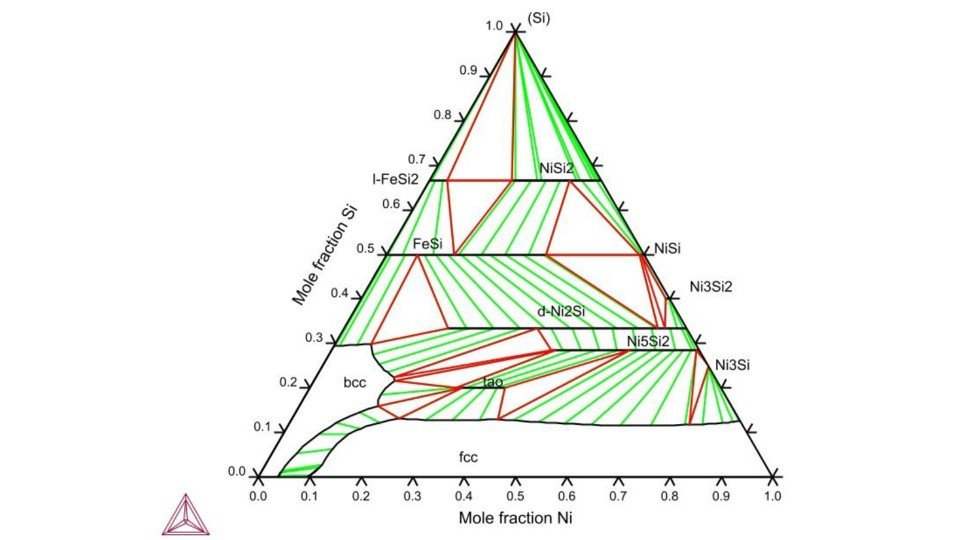
According to project documentation, Version 22 of the TAF-ID database has been released. This update adds and revises assessment data for material systems including Na-U, Na-O, Na-UO₂, U-Ru, U-Si, Al-Si-U, Fe-Pu-U, and O-N-U, and updates gas-phase data based on the latest publicly available information. The database assessment scope has been expanded to 44 elements, 272 binary systems, 151 ternary systems, and 3 quaternary systems. Among these, systems involving Eu, Re, and Na are listed separately.
The TAF-ID project not only develops the database but also provides a platform for exchange on thermodynamic modeling, experimental data review, software assessment, and thermodynamic evaluation. Currently, the project brings together 12 institutions from Canada, France, Japan, the Netherlands, Sweden, the United Kingdom, the United States, and the European Commission.
The database is primarily oriented toward research on fuels and related materials for Generation II, Generation III, and Generation IV nuclear reactors, covering fuel systems such as UO₂, (U,Pu,Am,Np)O₂, (U,Th)O₂, (U,Pu,Zr,Am,Np), UN, and (U,Pu)C, as well as fission products including barium, strontium, molybdenum, zirconium, lanthanides, palladium, ruthenium, rhodium, tellurium, and technetium. In addition, the database covers structural and other related materials such as Fe-Cr-Ni alloys, zirconium alloys, Fe-Cr-Al-Y alloys, concrete, silicon carbide, and boron carbide.
In terms of applications, TAF-ID can be used to analyze the high-temperature behavior of fuels under normal and off-normal conditions, assess the impact of minor actinides on fuel thermodynamic properties, and study the chemical behavior of fission products and their effects on irradiated fuel performance. The database also supports computational studies on solid-liquid phase transitions, vaporization behavior, fuel-cladding chemical interaction at high temperatures, and fuel fabrication.
The TAF-ID database is developed in Thermo-Calc format. In the early stages of the project, it was based on the FUELBASE database of the French Alternative Energies and Atomic Energy Commission (CEA), and incorporated oxide fuel and metallic fuel system data from member institutions. Phase I was conducted from 2013 to 2017, with the first version of the database containing 39 elements, 170 binary systems, and 34 ternary systems; by the end of Phase I, the database had been expanded to 41 elements, 206 binary systems, and 72 ternary systems.
Phase II was conducted from 2018 to 2022, during which the database continued to expand and validation work was initiated, including funding postdoctoral researchers to conduct experimental studies and organizing benchmark tests. In February 2021, the project held an online training course with 70 participants. Phase III is planned to cover 2023 to 2026, with a focus on accident-tolerant fuel (ATF) systems, advanced cladding systems, and fuel-coolant interaction.
Phase III of the project also plans to continue database validation by comparing experimental data for higher-order systems with calculated results, and to conduct benchmark calculations using tools such as Thermo-Calc, Open Calphad, FactSage, and Thermochimica to test the applicability of different software and TAF-ID versions. In parallel, the project will organize training courses, update public releases, and explore mechanisms for third-party access to protected versions and related documentation.
Disclaimer: Information republished from partner media, institutions or other websites is provided for reference and communication purposes only. It does not imply endorsement of its views or verification of its accuracy. Please contact us if any content infringes rights or requires correction.