
MEPhI Develops Diagnostic Methods for Reactor and Chip Overheating Prevention
 Scan to share
Recently, the team from the Laboratory of Thermal Hydraulics and Boiling Physics at the Moscow Engineering Physics Institute (MEPhI) proposed an early diagnostic method for heat transfer crisis based on the analysis of temperature fluctuations on heat-dissipating surfaces, which enables accurate prediction before dangerous boiling phenomena occur, thereby significantly enhancing the safety margin and economic efficiency of nuclear power plants.
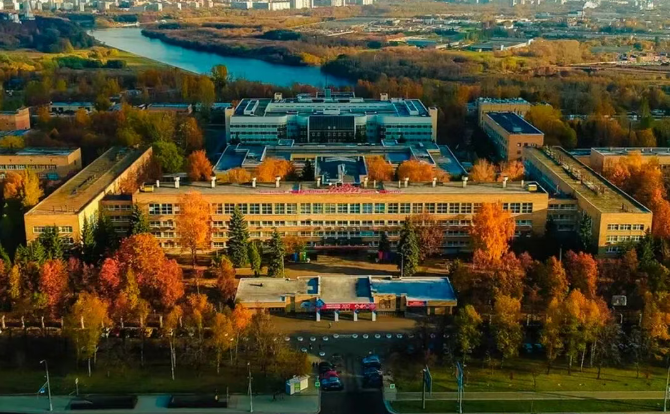
It is known that in the operation of pressurized water reactors such as VVER, if bulk boiling occurs in the reactor core, it can easily trigger a heat transfer crisis and lead to fuel element melting; therefore, operating nuclear power plants typically adopt a conservative underload operating strategy. Laboratory Director Kirill Kutsenko pointed out that this research, by establishing the correlation between coolant pressure, flow rate, and temperature fluctuations, provides a universal diagnostic tool for real-time determination of coolant flow and boiling modes. In the future, artificial intelligence technology will be integrated to build a hardware-software complex serving as a real-time decision-making advisor for nuclear power plant operators.
This diagnostic technology has strong cross-domain universality and has been validated in various coolant environments ranging from water to liquid nitrogen. In addition to providing safety monitoring support for increasing the operating power of traditional nuclear power plants by several percentage points, this theory can also be directly extended to liquid metal (sodium, lead, bismuth) cooled fast reactors in Rosatom's "Proryv" (Breakthrough) project, cooling of superconducting magnets in large particle accelerators, and high-power-density liquid cooling systems for chips in the microelectronics field.
Currently, the research team is committed to developing high-speed software and specialized instruments to promote the commercialization of this early warning system in the nuclear energy and microelectronics fields. By elevating heat transfer crisis prevention from "post-event monitoring" to "pre-event prediction," this breakthrough sets a new technical benchmark for the safety and operational efficiency of high-energy-density devices.
Disclaimer: Information republished from partner media, institutions or other websites is provided for reference and communication purposes only. It does not imply endorsement of its views or verification of its accuracy. Please contact us if any content infringes rights or requires correction.