
German BESSY II 3D Magnetic Field Experiments Reveal Mechanism of Weak Magnetic Field Control over Magnetic Textures
 Scan to share
A team at the Helmholtz-Zentrum Berlin (HZB) in Germany has made progress in controlling magnetic textures in the magnetic material (Fe0.63Ni0.3Pd0.07)3P (abbreviated as FNPP) through 3D magnetic field experiments conducted at the BESSY II synchrotron facility. The research shows that a very small external in-plane magnetic field is sufficient to alter the magnetic stripe structure in this material, providing new experimental evidence for the development of functional magnetic materials for spintronics.
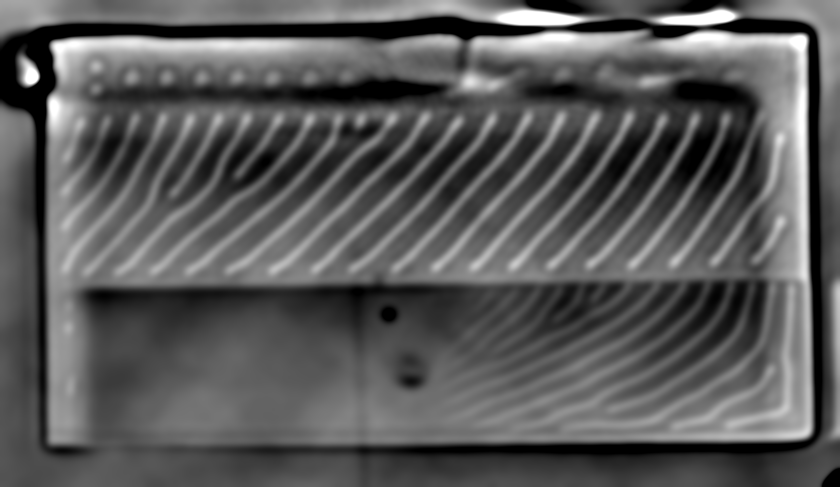
FNPP is a magnetic material that exhibits complex magnetic structures at room temperature, making it a focus of spintronics research. Spintronics is considered promising for lower-energy data processing and novel data storage applications. However, to achieve practical applications, the key lies in whether the desired magnetic structures can be controllably generated and modified, which remains a challenge in current research.
In this study, the team led by Dr. Florin Radu used soft X-rays and ptychographic coherent diffraction imaging at BESSY II to observe FNPP samples while applying external magnetic fields in specific spatial directions, capturing real-time changes in the internal magnetic textures of the material. The experiments were conducted using the vector magnet VEKMAG developed by the team. This instrument can generate magnetic fields of up to 1 tesla in three spatial directions, enabling the study of magnetic structures under 3D magnetic field conditions.
Dr. Viktor Ukleev, first author of the paper, stated that the experiments revealed that when the external magnetic field is applied parallel to the magnetic stripes rather than perpendicular to them, the magnetic stripe domains can be manipulated. What surprised the researchers even more was that a weak magnetic field of only 10 millitesla was sufficient to transform the chiral stripe configuration into a non-chiral fan-shaped configuration.
The research team explained this phenomenon through model calculations. In FNPP, different magnetic interactions compete with one another, giving rise to complex magnetic textures. One of these interactions is approximately isotropic, while another important interaction has a preferred direction. The experiments showed that a weak in-plane magnetic field can establish a new balance among these interactions, thereby altering the stripe state.
The researchers believe that FNPP can serve as a model system for externally manipulating spin textures. These results contribute to a deeper understanding of the controllable mechanisms of complex magnetic structures and advance research on functional magnetic materials for spintronics.
Disclaimer: Information republished from partner media, institutions or other websites is provided for reference and communication purposes only. It does not imply endorsement of its views or verification of its accuracy. Please contact us if any content infringes rights or requires correction.