
Kyoto University and NEDO to Build Dedicated Beamline for Hydrogen Energy Research at SPring-8-II
 Scan to share
Kyoto University announced on August 20 that it will collaborate with the New Energy and Industrial Technology Development Organization (NEDO) to construct dedicated research equipment for the hydrogen energy field at the large synchrotron radiation facility “SPring-8-II”, located in Sayo Town, Hyogo Prefecture, Japan. SPring-8-II is scheduled to begin operation in fiscal year 2029.
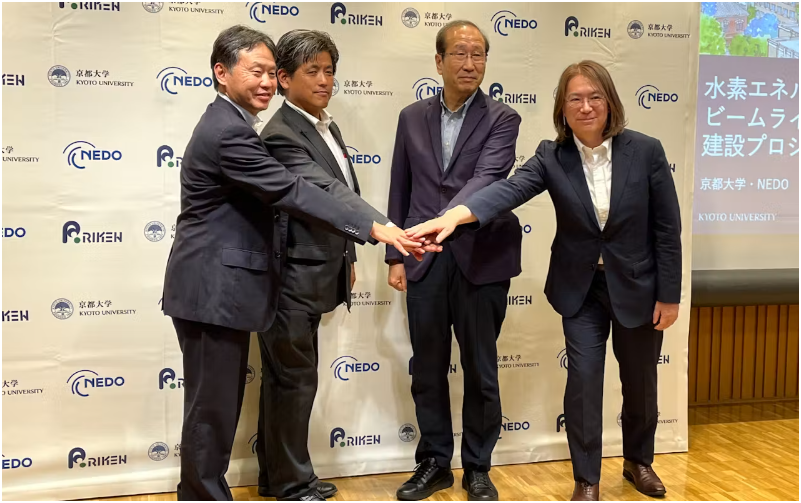
On the 20th, Hajime Kitagawa, Executive Director of Kyoto University (2nd from right), attended a press conference held by Kyoto City government officials.
According to the plan, the two parties will install a dedicated “beamline” at the facility, focusing on hydrogen energy-related research such as fuel cells and hydrogen production via water electrolysis. The beamline will be used to analyze key materials including catalysts and electrolyte membranes in fuel cells and water electrolyzers, leveraging synchrotron radiation technology to observe material reaction processes and help researchers identify the main factors affecting performance and cost.
The project will also support observation of actual fuel cells and water electrolysis devices, including visual analysis of manufacturing processes such as catalyst ink drying and coating, to promote optimization of related manufacturing processes. The research team believes that such in-situ observations can help reduce reliance on theoretical speculation and more directly capture changes in materials under operating conditions.
SPring-8-II is an upgraded facility based on the existing SPring-8, and after the upgrade, the synchrotron radiation brightness is expected to increase to approximately 100 times the current level. Susumu Kitagawa, Executive Director of Kyoto University, expressed hope to advance hydrogen energy research using this high-performance observation platform and apply it to the development of new functional materials.
The research outcomes are expected to help shorten the development cycle of hydrogen energy devices such as water electrolysis equipment and improve product lifespan. NEDO stated that if the project progresses smoothly, it could potentially reduce hydrogen costs by 30% to 50% in the future.
Disclaimer: Information republished from partner media, institutions or other websites is provided for reference and communication purposes only. It does not imply endorsement of its views or verification of its accuracy. Please contact us if any content infringes rights or requires correction.