
The Ecological Environment Code of the People's Republic of China Officially Takes Effect Today
 Scan to share
On August 15, 2026, coinciding with the fourth National Ecology Day, the Ecological Environment Code of the People's Republic of China officially took effect. The promulgation and implementation of this Code marks the formal entry of China's ecological environment protection legal system into a new stage of codification, representing a major milestone in the rule of law for advancing ecological civilization construction and the building of a Beautiful China.
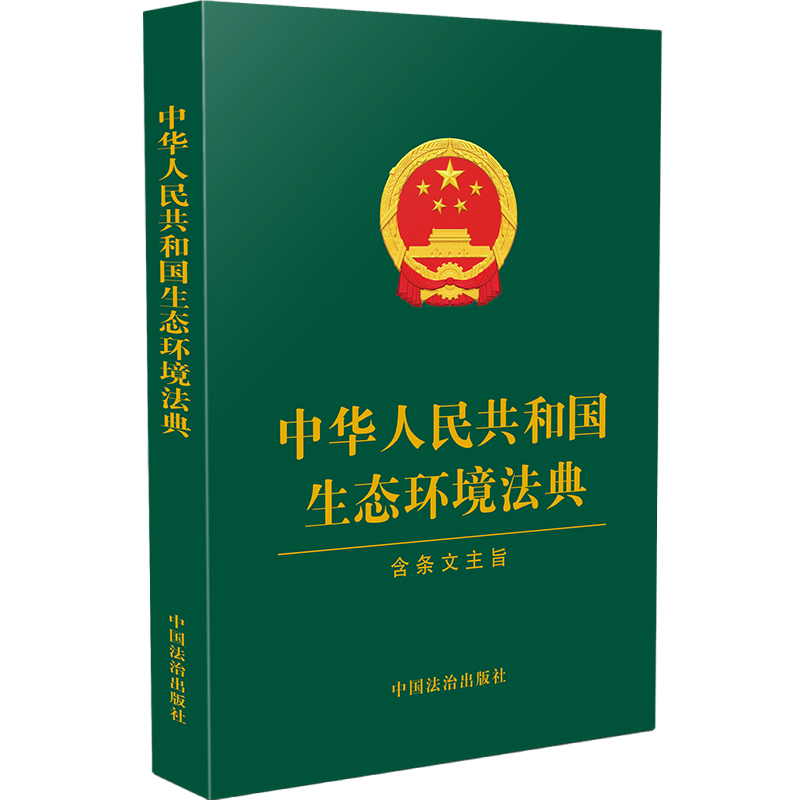
The Code's promulgation:
A historic leap in the rule of law for ecological civilization construction
The Ecological Environment Code of the People's Republic of China is the second foundational law named as a "Code" after the Civil Code. The Code systematically integrates existing effective laws and regulations in areas including environmental protection, air pollution prevention and control, water pollution prevention and control, soil pollution prevention and control, solid waste pollution prevention and control, radioactive pollution prevention and control, and noise pollution prevention and control. It abolishes 10 separate laws, incorporates the essential provisions of more than 20 laws into the Code system, and makes comprehensive provisions on basic principles of ecological environment protection, supervision and management systems, pollution prevention and control, ecological protection and restoration, green and low-carbon development, and climate change response, establishing a complete and logically rigorous legal norm system.
The compilation of the Code has consistently followed Xi Jinping's Thought on Ecological Civilization as its fundamental guide, embedding the philosophy that "lucid waters and lush mountains are invaluable assets" throughout. It establishes the basic principles of prevention first, systematic governance, ecological priority, green development, public participation, and liability for damage. It also enshrines August 15 as National Ecology Day within the Code, solidifying it at the level of foundational law and providing a solid legal basis for protecting the ecological environment with the strictest systems and the most rigorous rule of law.
New provisions of the Code:
Key compliance points for the nuclear power industry
The promulgation and implementation of the Code brings systematic and full-chain profound impacts on environmental compliance for the nuclear power industry. The nuclear power industry needs to focus on new changes in the following four major areas.
First, the intensity of penalties for violations has been significantly increased.
The Code extends the administrative prosecution limitation period for violations with harmful consequences from 2 years to 5 years, and introduces the presumption of fault principle and the general principle of dual punishment (penalizing both entities and responsible individuals). With respect to radioactive pollution prevention and control directly relevant to nuclear power, the upper limit of fines for illegal discharge of radioactive waste gas and waste liquid has been raised from 200,000 yuan to 2 million yuan, and the upper limit of penalties for unauthorized storage and disposal of radioactive waste has been increased to 5 million yuan.
Second, the scope of pollutant discharge permit management has been expanded.
The Code replaces the previous "catalog" model with direct enumeration, bringing entities that discharge radioactive waste liquid or generate radioactive solid waste within the scope of pollutant discharge permit management. Previously, radioactive material discharges from nuclear power plants were managed through "nuclear facility operating licenses" under the Nuclear Safety Law, while conventional pollutants were covered only by environmental impact assessment approvals. After the Code takes effect, nuclear power plants may need to obtain pollutant discharge permits for conventional pollutant discharges.
Third, environmental impact assessment for nuclear facilities achieves full "four-stage" coverage.
The Code brings all stages of nuclear facility siting, construction, operation, and decommissioning within the scope of ecological environment impact assessment, eliminating the overlap in application between the former Law on Prevention and Control of Radioactive Pollution and the Nuclear Safety Law, and clarifying the specific types of facilities prohibited from construction within planning restriction zones. Meanwhile, the Code unifies the data quality management system for monitoring, clarifies that monitoring institutions bear responsibility for the authenticity of data, and specifically establishes penalty provisions for violations by radioactive pollution monitoring institutions, with fine amounts higher than those for general monitoring institutions, reflecting the special stringency of radioactive monitoring.
Fourth, compliance requirements for the full life cycle of nuclear power plants have been upgraded.
At the siting stage, the rigid constraints of ecological protection red lines and nature reserves have been elevated to the level of the Code, requiring comprehensive screening for nuclear power siting. At the construction stage, ecological protection has been upgraded from "environmental impact assessment supporting requirements" to legally mandated obligations, with a new independent penalty provision for "failure to implement environmental protection countermeasures." At the operation stage, the Code adds new rules on electromagnetic radiation and light pollution prevention, requiring supporting power transmission and transformation facilities to conduct electromagnetic radiation monitoring and information disclosure. At the decommissioning stage, soil pollution status investigation reports must undergo dual filing, and failure to complete the investigation will prevent the registration of land use rights transfer, forming a procedural forcing mechanism.
The formal implementation of the Code is both a regulatory framework and an opportunity for high-tech clean energy industries such as nuclear power. As an important component of low-carbon energy, nuclear power plays an irreplaceable role in serving the "dual carbon" strategy. The Code's institutional arrangements for green and low-carbon development, including the first systematic legal provisions on carbon peak and carbon neutrality, the establishment of a carbon emission statistical accounting system, and the establishment of a national carbon emission rights trading market, provide clearer rule-of-law safeguards and broader development space for the high-quality development of the nuclear power industry. The nuclear power industry should proactively adapt to the new requirements of the Code, further improve environmental management systems, strengthen radiation environment safety risk prevention and control, promote deep integration of nuclear safety and ecological environmental protection, practice ecological civilization principles through concrete actions, and contribute nuclear power's strength to building a Beautiful China.
National Ecology Day was established in 2023, set for August 15 each year, to commemorate the first proposal of the philosophy that "lucid waters and lush mountains are invaluable assets" on August 15, 2005. The coincidence of the fourth National Ecology Day with the official implementation date of the Ecological Environment Code carries profound symbolic significance — from the proposal of the philosophy to the implementation of the Code, China's ecological civilization construction is continuously reaching new heights on the track of the rule of law.
Disclaimer: Information republished from partner media, institutions or other websites is provided for reference and communication purposes only. It does not imply endorsement of its views or verification of its accuracy. Please contact us if any content infringes rights or requires correction.