
Bulgaria's Kozloduy Nuclear Power Plant Faces Shutdown Risk Due to Low Danube Water Levels
 Scan to share
On August 11, Bulgaria's Ministry of Energy warned that the Kozloduy Nuclear Power Plant is facing the risk of reduced output or even shutdown due to the continuously declining water level of the Danube River.
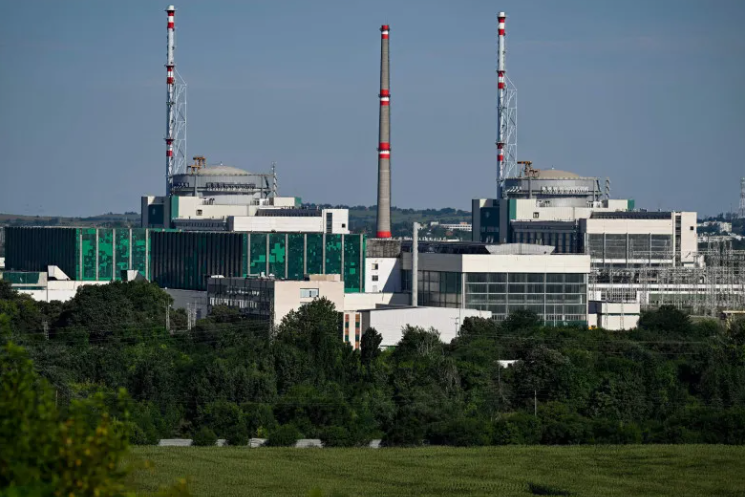
The plant relies on the Danube to provide cooling water for its two 1,000 MW reactors. If the water intake capacity continues to be constrained, it will directly affect the safe operation of the reactors and the stability of power supply. Bulgaria's Ministry of Energy stated that measures have been taken to ensure water supply to the cooling system, including dredging the channels connecting the Danube to coastal pumping stations to maintain the necessary flow.
This summer, the Danube's water level has dropped to historic lows due to prolonged drought. Near Ruse, Bulgaria, the river's flow is already more than one meter below the safe navigation level, and it has continued to decline over the past 24 hours. Georgi Kaschiev, a nuclear energy expert and former chairman of the management board of the Kozloduy Nuclear Power Plant, warned that the current water level is only about 10 to 12 centimeters away from the first critical threshold that would trigger a reduction in reactor power output. If it drops another 20 centimeters, the plant could be forced to shut down.
This drought is not a problem unique to Bulgaria, but a regional crisis sweeping across multiple Central and Eastern European countries. Large stretches of the Danube's riverbed have been exposed, even revealing historical relics such as prehistoric mammoth bones in Bulgaria. Water levels of the Danube in Hungary and Romania have also fallen to record lows or near-record lows. Romania's Cernavodă Nuclear Power Plant has also experienced a sharp drop in cooling water flow, prompting the Romanian Navy to conduct controlled underwater blasting to widen rock blockages near the Bala Canal, directing more water into the cooling system.
The cascading pressure on the energy system is becoming evident. Hungary was forced for the first time to shut down a reactor cooled by Danube water, and the reduced nuclear output has forced the affected countries to import electricity at high costs to avoid the risk of blackouts. Near Apatin, Serbia, vessels have run aground at docks, and hydroelectric plants have also cut generation due to insufficient water to drive turbines. Meanwhile, other major European rivers such as the Rhine and the Loire are also at or near historic low water levels, showing that extreme heat and drought are simultaneously impacting shipping, nuclear power, hydropower, and regional energy security.
Disclaimer: Information republished from partner media, institutions or other websites is provided for reference and communication purposes only. It does not imply endorsement of its views or verification of its accuracy. Please contact us if any content infringes rights or requires correction.