
Why Swedish Nuclear Power Plants Are Less Affected by European Heatwaves
 Scan to share
This summer, persistent high temperatures across much of Europe forced some nuclear power plants to reduce output or even temporarily shut down due to rising cooling water temperatures and falling river levels. In comparison, Sweden's Vattenfall-operated nuclear plants at Forsmark and Ringhals were less affected, mainly because both facilities are located in coastal areas and use seawater for cooling.
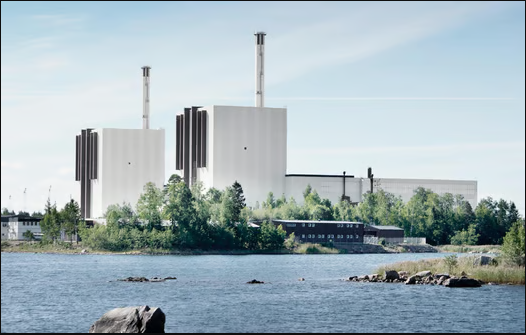
Many nuclear plants in continental Europe rely on river water as their cooling source. During heatwaves, river levels and water temperatures can change rapidly, easily impacting cooling efficiency. Anna Collin, Communications Officer at Ringhals, stated that Swedish nuclear plants use seawater cooling, which differs in operating conditions from many inland nuclear plants.
Cooling is a critical step in the power generation process at nuclear plants. After the reactor releases energy, water in a closed system is heated into steam, which drives the turbine, and the turbine in turn drives the generator to produce electricity. After passing through the turbine, the steam must be cooled in the condenser and converted back into water for reuse in the cycle. During this process, the condenser uses large volumes of seawater to carry away excess heat. Generally, the lower the cooling water temperature, the higher the condensation efficiency and the better the plant's power generation efficiency.
Anna Collin explained that seawater does not enter the reactor core itself, but is used in the cooling systems and related equipment, such as cooling the steam after it passes through the turbine so that the water can return to the power generation cycle.
Cooling is also critical to nuclear safety. Even after a reactor is shut down, the core continues to generate decay heat, also known as residual power, for a period of time, and must be continuously cooled to maintain a safe state. Therefore, nuclear plants have clear operating limits and safety procedures to ensure sufficient cooling capacity remains available under high-temperature conditions.
Rising seawater temperatures can reduce the efficiency of cooling systems, and nuclear units may need to reduce output when necessary to maintain established safety margins. Anna Collin stated that such adjustments are normal operational measures and do not mean safety is compromised; rather, they ensure the units always operate within safe limits.
The Forsmark and Ringhals nuclear plants use seawater from the Baltic Sea and the Kattegat strait, respectively. Compared to smaller water bodies such as rivers, oceans typically warm more slowly and are less susceptible to low water levels. This gives coastal nuclear plants more stable cooling conditions during summer heatwaves.
However, seawater cooling also presents other operational challenges. For example, some nuclear plants around the world have experienced large numbers of jellyfish entering cooling water systems. The risk in Sweden is generally lower than in areas along the Atlantic coast, but similar incidents have occurred at the Ringhals and Oskarshamn nuclear plants. To mitigate the impact, some systems remove such debris before seawater enters the plant's cooling system.
For the nuclear plants operated by Vattenfall at Forsmark and Ringhals, the coastal location allows them to maintain favorable operating conditions even during hot summers. The Forsmark nuclear plant has on several occasions reduced power output due to seawater temperature factors, but has never shut down a reactor for this reason; the reactors currently in operation at Ringhals have also never been taken offline due to excessively high seawater temperatures.
Disclaimer: Information republished from partner media, institutions or other websites is provided for reference and communication purposes only. It does not imply endorsement of its views or verification of its accuracy. Please contact us if any content infringes rights or requires correction.