
Third fuel debris retrieval test at Fukushima Daiichi Unit 2 postponed due to robotic arm malfunction
 Scan to share
The robot used by Tokyo Electric Power Company (TEPCO) for the third experimental fuel debris retrieval at Fukushima Daiichi Nuclear Power Station Unit 2 malfunctioned during an on-site operational test, forcing the cancellation of the plan originally scheduled to “start after July 2026 if all went well.” The company stated it will reassess the relevant procedures.
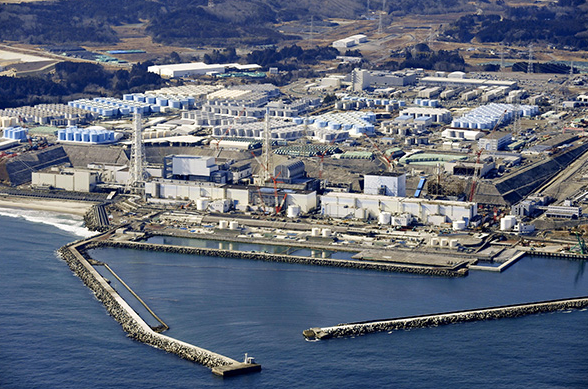
The malfunction occurred in part of the large robotic arm equipment used to collect fuel debris. During an operational test in the reactor building of Unit 2, TEPCO found an abnormality in one of the motors driving the robotic arm, causing the brake to fail to release and the arm to be unable to extend. The company is currently studying the replacement of the faulty motor.
The third experimental retrieval plan was to use a large robotic arm, which differs from the “fishing rod-type” robot used in the first two attempts. Previous operational checks did not reveal similar issues, but to ensure equipment condition, all related motors had been replaced once. This robotic arm, costing approximately 7.8 billion yen, had previously experienced problems such as cable aging and breakage, and a camera getting stuck in a pipe during a simulation test after installation. The radiation resistance of its camera was also found not to meet manufacturer specifications, leading TEPCO to switch to a verified camera, which delayed the deployment originally planned for the second half of fiscal year 2025.
Akira Ono, President of TEPCO and head of decommissioning and contaminated water treatment measures, stated at a press conference on July 30 that the company hopes to conduct thorough inspections and adjustments of the robotic arm before deploying it for on-site work, and that identifying problems early will facilitate subsequent deployment. He also stated that TEPCO will not abandon the goal of “starting around summer” and will proceed with the deployment plan while confirming various details.
Under the current plan, the “start” of the third experimental retrieval is defined as the tip of the robotic arm passing through the valve leading to the containment vessel. Subsequently, the operation team will acquire three-dimensional data inside the containment vessel before entering the fuel debris collection phase. The entire process, from start to completion of collection, is expected to take three to four months.
The first fuel debris collection at Fukushima Daiichi Nuclear Power Station Unit 2 was completed in November 2024, 13 years and 8 months after the 2011 accident; the second collection was conducted in April 2025. Because cables and other materials melted by the high temperatures during the accident solidified and blocked the pipes leading to the containment vessel, the first two operations used a “fishing rod-type” robot capable of operating in narrow spaces.
It is estimated that approximately 279 tons of fuel debris remain in Unit 1 of Fukushima Daiichi Nuclear Power Station, about 237 tons in Unit 2, and about 364 tons in Unit 3, totaling approximately 880 tons. The two experimental retrievals conducted so far have yielded approximately 0.9 grams of fuel debris. Even with the switch to the robotic arm for the third attempt, only a few grams of samples are expected to be obtained.
The Japan Atomic Energy Agency (JAEA) previously analyzed samples from the first retrieval and confirmed the detection of uranium, evaluating them as typical fuel debris. The relevant samples were subsequently distributed to multiple research institutions for analysis. With approximately 25 years remaining until the decommissioning target set by the Japanese government and TEPCO for completion by 2051, how to safely and stably retrieve and process large quantities of fuel debris remains a core challenge in the decommissioning work of Fukushima Daiichi Nuclear Power Station.
Disclaimer: Information republished from partner media, institutions or other websites is provided for reference and communication purposes only. It does not imply endorsement of its views or verification of its accuracy. Please contact us if any content infringes rights or requires correction.