
U.S. and Paraguay Sign Civil Nuclear Energy Cooperation Agreement
 Scan to share
U.S. Secretary of State Marco·Rubio (Marco Rubio) and Paraguayan Foreign Minister Ruben·Ramirez·Lezcano (Ruben Ramirez Lezcano) signed a strategic civil nuclear energy cooperation memorandum of understanding in Washington on August 4. According to relevant information, the two sides signed what is commonly referred to as the “123 Agreement,” which establishes the basic framework for bilateral cooperation in the field of civil nuclear energy.
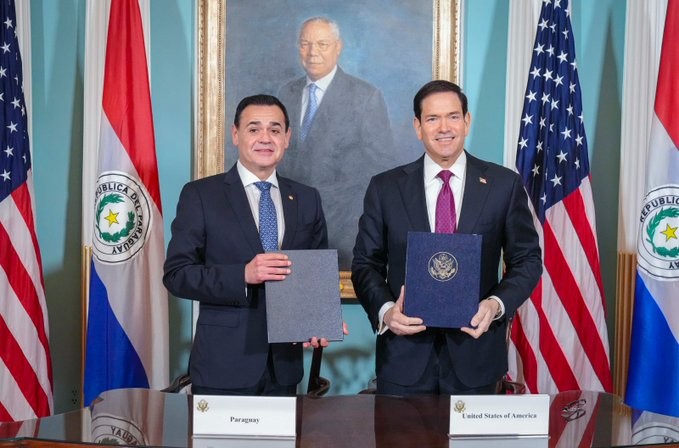
The “123 Agreement” originates from Section 123 of the U.S. Atomic Energy Act, passed in 1954. This provision authorizes the United States to transfer civil nuclear technology for energy or scientific purposes to partner countries under specific conditions. As a prerequisite, the recipient country must comply with International Atomic Energy Agency (IAEA) standards, and the United States retains the right to monitor the use of nuclear materials to prevent them from being used for military purposes.
Since 1954, the United States has signed similar agreements with more than 25 countries. In Latin America, the United States has previously established such civil nuclear energy cooperation arrangements with Argentina, Mexico, Brazil, and other countries.
At the signing ceremony, Rubio stated that relations between the United States and Paraguay have continued to strengthen in recent years, and this agreement represents a further step toward institutionalizing the bilateral relationship. He said both sides hope to establish a long-term cooperative relationship that will endure regardless of changes in government.
Lezcano stated that Paraguay maintains cooperation with the United States in areas such as security, trade, and investment, and that both sides also coordinate at the regional and global levels. He expressed the view that this agreement will help the two countries continue to deepen their cooperation.
Disclaimer: Information republished from partner media, institutions or other websites is provided for reference and communication purposes only. It does not imply endorsement of its views or verification of its accuracy. Please contact us if any content infringes rights or requires correction.