
IAEA Publishes Technical Document on Emergency Planning Zones for Small Modular Reactors
 Scan to share
The International Atomic Energy Agency (IAEA) recently released the technical document "Technical Basis for Emergency Planning Zones for Small Modular Reactors," designated as TECDOC-2134, published in Vienna in 2026. The document comprises 132 pages, includes 11 illustrations, is written in English, and is now available for download. This marks the first time the Agency has systematically documented, in publication form, the outcomes of a coordinated research project related to protective action planning zones in the deployment of small modular reactors.
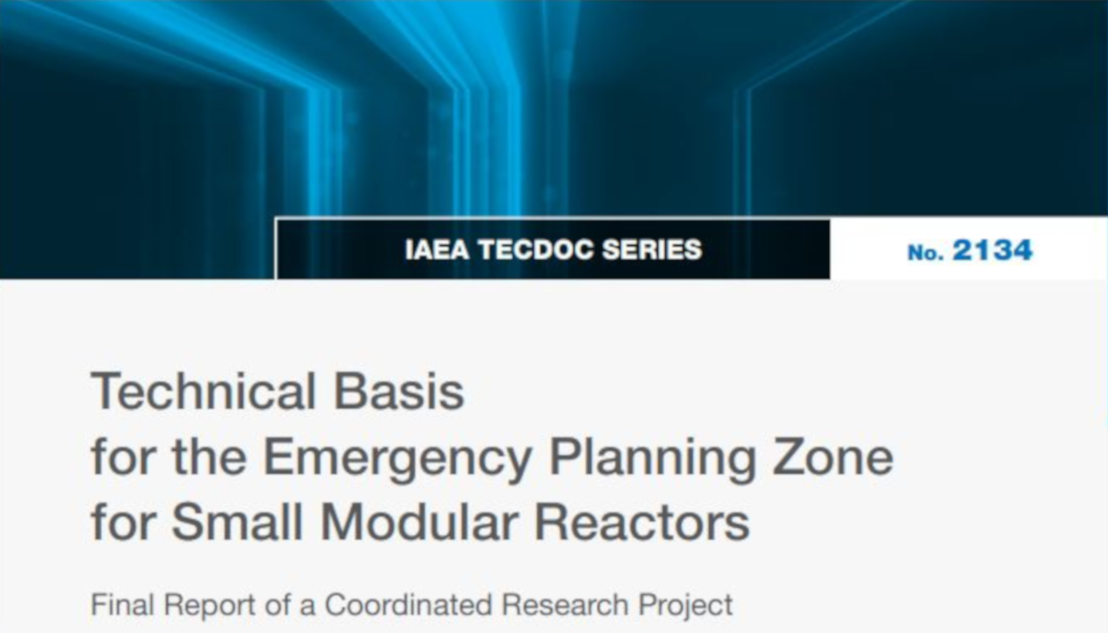
The document focuses on the technical basis for emergency preparedness and response for small modular reactors, with particular attention to determining the size of protective action planning zones. A protective action planning zone is an area surrounding a nuclear facility where protective measures are pre-planned in response to potential accidents, and its designation is directly related to arrangements for public evacuation, sheltering, iodine tablet distribution, and environmental monitoring in the event of an accident. Compared with traditional large nuclear power units, small modular reactors exhibit different characteristics in terms of design, power output, and accident progression, thus requiring a more tailored technical assessment framework.
This document proposes the event types, technical factors, and assessment criteria to be considered when determining emergency preparedness and response measures for small modular reactors, and introduces relevant methodologies and criteria based on international nuclear safety standards. The document discusses the implementation of the defense-in-depth concept in small modular reactor designs, including engineered safety systems, safety margins, accident release characteristics, and radiological consequence assessment, providing a reference for regulatory bodies, designers, and operating organizations.
The document also emphasizes that small modular reactors typically feature lower thermal power, smaller source term releases, greater safety margins, and engineered safety systems, which may result in smaller-scale and slower fission product release processes, thereby reducing potential radiation impacts on the public near the site. However, the determination of emergency planning zone sizes must still be based on specific reactor designs, site conditions, accident scenarios, and radiological consequence predictions, rather than simply applying uniform values.
The judgments regarding the size of protective action planning zones developed through this research project primarily reflect the technical opinions of participating organizations based on predictive radiological consequence analyses. As small modular reactors move into deployment and licensing phases in more countries, this type of document helps drive the transition of emergency planning from traditional large reactor experience toward a more refined, risk-informed approach, and also provides an international technical basis for countries to develop their own regulatory requirements and emergency arrangements.
Disclaimer: Information republished from partner media, institutions or other websites is provided for reference and communication purposes only. It does not imply endorsement of its views or verification of its accuracy. Please contact us if any content infringes rights or requires correction.