
Ghana Acquires Nuclear Power Plant Simulator to Advance Nuclear Talent Training
 Scan to share
The Ghana Atomic Energy Commission (GAEC) has installed a nuclear power plant simulator at its simulation center for personnel training, operational procedure drills, and safety capacity building, in preparation for Ghana's future nuclear power program. The facility allows trainees to familiarize themselves with plant control, operations, and emergency response procedures in a controlled environment before the actual construction of a nuclear power plant.
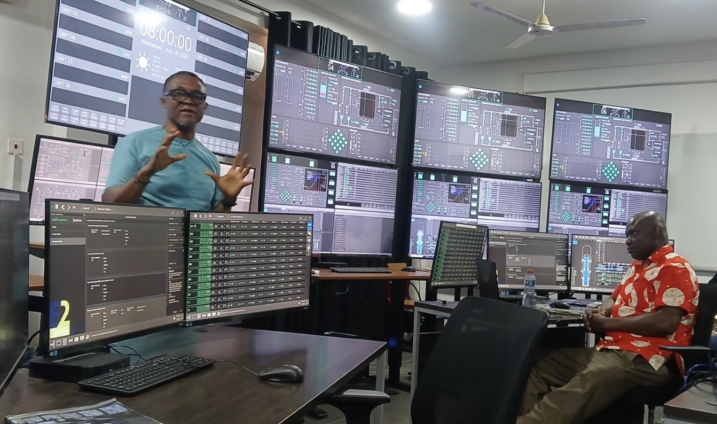
George Kofi Appiah, Manager of the Localization and Stakeholder Support Center at the GAEC Nuclear Power Institute, stated that the simulator will help Ghana develop the professional capabilities needed to safely operate nuclear facilities. The remarks were made during a media professionals' tour organized by Nuclear Power Ghana (NPG), aimed at enhancing public understanding of Ghana's nuclear power program.
Appiah noted that Ghana joined the "Infrastructure Foundation Program for the Responsible Use of Small Modular Reactor Technology" between 2020 and 2021, through which the country acquired this simulator to support the development of domestic nuclear human resources. He stated that this equipment is the only one of its kind in Africa and one of the few globally, and is in fact also providing training support for the African sub-region.
Currently, the simulation center has been used to train Ghanaian personnel as well as trainees from African countries including Nigeria and Kenya. Appiah emphasized that the equipment is not a nuclear reactor but a computer-based system that reproduces nuclear power plant control and operational scenarios. "After training on the simulator, there will be no noticeable difference in the operating experience when working at an actual plant," he said.
According to the introduction, the simulator is based on a small modular reactor (SMR). Small modular reactors use smaller reactor modules, and installed capacity can be expanded by combining multiple modules. Appiah stated that the NuScale design showcased at the simulation center has been upgraded from an initial 50 megawatts per module to 77 megawatts; with a plant composed of 12 modules, it can provide a maximum of 924 megawatts of electricity.
Appiah said that the modular design helps simplify maintenance. When a single module requires servicing or encounters a problem, that module can be taken offline while the remaining modules continue to operate, thereby avoiding a complete plant shutdown.
Regarding safety design, Appiah explained that the reactor design includes protective structures surrounding the reactor and related systems to limit the impact of accidents, and employs passive safety measures that rely on natural forces such as gravity to help control the reactor when necessary. He also stated that control rods can absorb particles that sustain the nuclear chain reaction, thereby slowing or stopping the reaction; in emergency situations such as loss of power, the design utilizes gravity to allow fuel rods to fall into the reactor core.
Appiah stated that Ghana's nuclear power program requires diverse professionals including nuclear engineers, reactor operators, chemistry personnel, and other technical staff. The simulation center will help accelerate workforce development and promote the continued implementation of a safety culture in Ghana's nuclear power preparations.
Disclaimer: Information republished from partner media, institutions or other websites is provided for reference and communication purposes only. It does not imply endorsement of its views or verification of its accuracy. Please contact us if any content infringes rights or requires correction.