
South Korea and Kazakhstan Sign Nuclear Energy Agreement, Deepening Cooperation on Critical Minerals and Strategic Industries
 Scan to share
South Korea and Kazakhstan signed a memorandum of understanding (MOU) on the peaceful use of nuclear energy on Tuesday (September 15). The leaders of the two countries agreed to expand cooperation in critical minerals, artificial intelligence (AI), and other strategic industries.
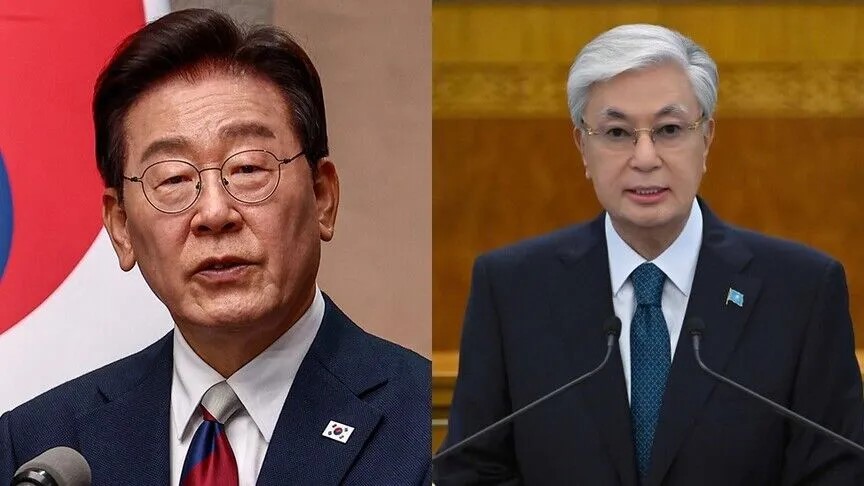
During the state visit of Kazakh President Kassym-Jomart Tokayev to South Korea, South Korean President Lee Jae-myung and Tokayev held talks at the Blue House in Seoul.
According to The Korea Times, South Korea and Kazakhstan signed a total of 13 agreements and memorandums of understanding.
Lee Jae-myung and Tokayev also agreed to elevate bilateral relations to a future-oriented comprehensive strategic partnership and expand cooperation in areas such as energy, science and technology, infrastructure, and culture.
Kazakhstan is seeking to attract more South Korean investment and technological expertise to develop its abundant mineral resources, including critical materials essential to high-tech industries and global supply chains.
Against the backdrop of intensifying global trade uncertainty, Seoul hopes to diversify its sources of critical minerals and energy.
According to The Korea Times, Lee Jae-myung said: "Kazakhstan is rich in energy and resources and has enormous potential in future-oriented advanced industries, making it a key partner for South Korea's economic security. We believe that South Korea, with its advanced manufacturing and digital technologies, can help enhance Kazakhstan's industrial technology level."
President Tokayev's visit comes on the eve of the inaugural South Korea—Central Asia Summit to be held in Seoul on Wednesday. At that time, President Lee Jae-myung will gather with the leaders of Kazakhstan, Kyrgyzstan, Tajikistan, Turkmenistan, and Uzbekistan.
As South Korea strives to build deeper economic ties with resource-rich Southeast Asia and Central Asia, the summit will focus on topics such as trade, investment, energy, critical minerals, and resilient supply chains.
Disclaimer: Information republished from partner media, institutions or other websites is provided for reference and communication purposes only. It does not imply endorsement of its views or verification of its accuracy. Please contact us if any content infringes rights or requires correction.