
Focusing on Nuclear Safety Assessment and Future Strategic Priorities, the OECD Nuclear Energy Agency's Working Group on Accident Analysis and Management (WGAMA) Holds Its 29th Annual Meeting
 Scan to share
The Working Group on Accident Analysis and Management (WGAMA), a subsidiary body of the Committee on the Safety of Nuclear Installations (CSNI) of the OECD Nuclear Energy Agency (OECD/NEA), held its 29th Annual Meeting from September 7 to 9, 2026, at the OECD Conference Centre in Paris, France.
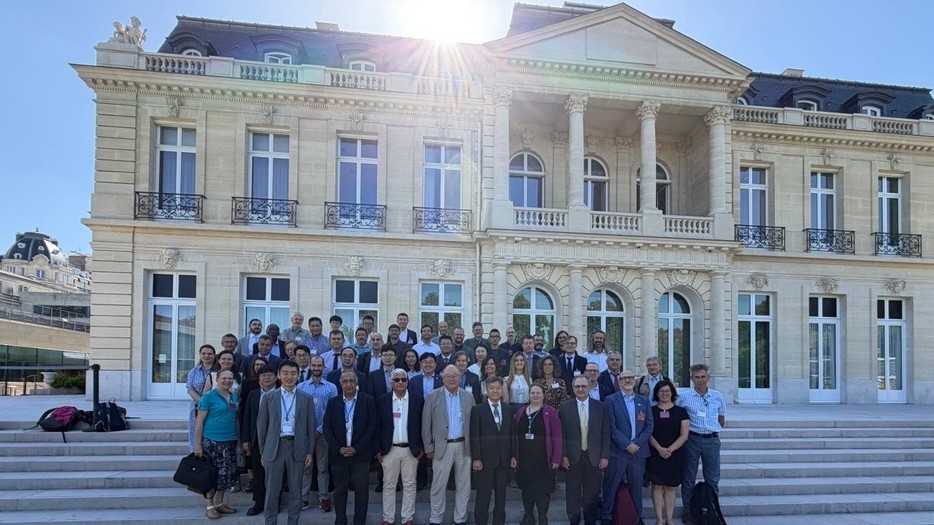
Sixty-one delegates from 21 countries, as well as the International Atomic Energy Agency (IAEA) and the European Commission (EC), attended the meeting. Participants included experts from regulatory bodies, technical support organizations, research institutions, industry, and international organizations, who jointly assessed current activities, approved new projects, and discussed future strategic priorities in the field of accident analysis and management.
As an international platform advancing the technical basis for nuclear reactor safety assessment, WGAMA comprehensively reviewed progress in multiple areas during the meeting, including thermal-hydraulics, computational fluid dynamics (CFD), severe accident analysis, code validation, and uncertainty quantification, with particular emphasis on the importance of bridging thermal-hydraulics and severe accident analysis.
Participating experts conducted in-depth analysis of emerging safety challenges posed by advanced reactors, small modular reactors (SMRs), passive safety systems, and innovative analysis methods, and approved several technical reports and proposals for new activities aimed at enhancing the level of knowledge on nuclear reactor safety.
The meeting featured a dedicated session on WGAMA's future direction and strategic priorities, which, drawing on reflections from the working group's 25 years since its establishment, facilitated exchanges on the impact of outputs, obstacles to the implementation of technical recommendations, and the areas with the greatest potential for international cooperation.
Core topics included maintaining scientific rigor while embracing innovation, expanding the scope of activities to address advanced reactor and SMR technologies, strengthening international partnerships, and ensuring the effective transfer of knowledge to the next generation of nuclear safety experts.
Delegates emphasized the need to maintain robust experimental programs, advance code validation methodologies and uncertainty quantification practices, and promote multidisciplinary approaches that integrate thermal-hydraulics, severe accidents, computational fluid dynamics, fuel behavior, and emerging digital tools.
As nuclear energy technologies continue to evolve, WGAMA will remain committed to providing a technical platform, developing assessment methods, sharing data and experience, and actively addressing the technical challenges shaping the future of nuclear safety research.
Disclaimer: Information republished from partner media, institutions or other websites is provided for reference and communication purposes only. It does not imply endorsement of its views or verification of its accuracy. Please contact us if any content infringes rights or requires correction.