
EDF Plans to Accelerate Climate Adaptation Plan as Summer Extreme Heat Forces Faster Nuclear Unit Retrofits
 Scan to share
Xavier Ursat, an executive at Electricité de France (EDF), told local media on October 13 that, given the record negative disruption caused by this summer's extreme heat to the operation of France's nuclear units, the company has decided to comprehensively accelerate the nuclear power plant climate adaptation plan (ADAPT).
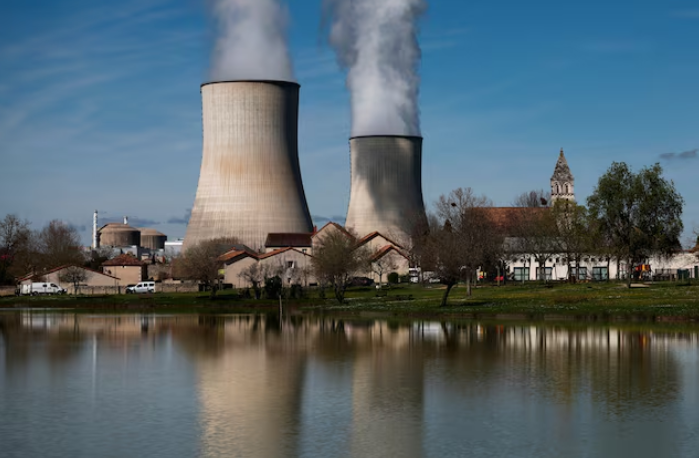
As the backbone of France's baseload power, more than half of the country's electricity supply depends on nuclear power plants, and these plants generally draw water from inland rivers or estuaries as the secondary loop cooling water source. Affected by heatwave weather, many units, after the cooling cycle, return water to rivers at slightly elevated temperatures, making it very easy to touch strict ecological and environmental discharge limit regulations. EnergyScan monitoring data show that this year the scale of output cuts or shutdowns of French nuclear units due to environmental discharge restrictions exceeded four times the historical peak, and as of October 7 the cumulative lost generation had exceeded 13 terawatt-hours (TWh), with some river-side reactors still continuously affected by low and depleted water levels.
Speaking on the sidelines of a news event held at EDF's research and development laboratory, Ursat pointed out that although power supply remained generally stable and controlled this summer, the harsh external environment shows that the company must accelerate the implementation of climate adaptation projects as soon as possible. However, accelerating this adaptation plan means the company not only needs to add upfront engineering capital expenditure, but must also comprehensively adjust the established reactor overhaul and maintenance windows.
According to the core technical route of the climate adaptation plan, EDF plans to add auxiliary cooling towers to the relevant reactors, using air convection to secondarily cool a small stream of water to be discharged from the main loop system, ensuring that it is discharged into natural rivers at a lower temperature, thereby avoiding environmental production restrictions caused by excessive thermal discharge. In addition, the company also plans to build supporting discharge buffer pools to alleviate the thermal load on receiving water bodies in rivers during periods of extreme heat.
The Cour des comptes previously estimated that the engineering cost of installing a new cooling tower for a single nuclear unit is about 500 million euros (about 559.6 million U.S. dollars). This retrofit will account for the vast majority of EDF's 8.7 billion euro special climate adaptation budget formulated in June this year.
Disclaimer: Information republished from partner media, institutions or other websites is provided for reference and communication purposes only. It does not imply endorsement of its views or verification of its accuracy. Please contact us if any content infringes rights or requires correction.