
France's Gravelines Nuclear Power Plant Reports Multiple INES Level 0 Events
 Scan to share
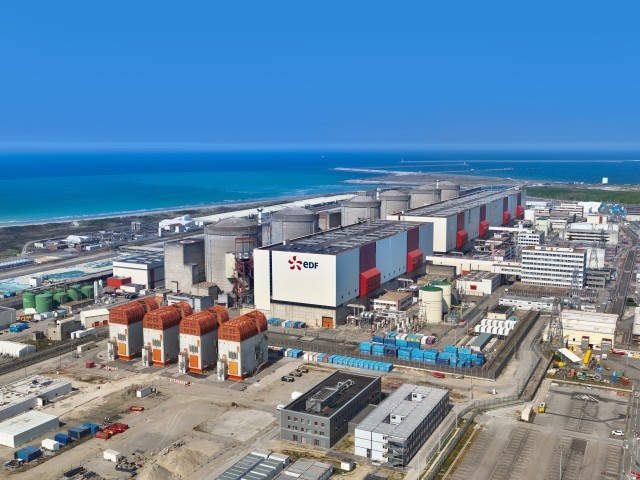
France's Gravelines nuclear power plant recently disclosed significant events reported to the French Nuclear Safety and Radiation Protection Authority (ASNR). The events cover safety, operations, and radiation protection, and were all rated as Level 0 on the International Nuclear and Radiological Event Scale (INES), i.e., below the scale threshold, with no actual impact on facility safety, personnel health, or the environment.
In a generic safety event involving EDF's 900 MWe-class nuclear reactor units, EDF discovered during inspections at the Cruas nuclear power plant that certain commercially supplied electric servomechanisms had been installed in functional positions requiring higher qualification levels, K3 or K3ad. K3 corresponds to seismic requirements, while K3ad involves both seismic and harsh environmental conditions, including radiation environments. Subsequently, EDF conducted checks on related equipment at the Blayais, Chinon, Cruas, Dampierre, Gravelines, Saint-Laurent, and Tricastin nuclear power plants and confirmed that a batch of equipment had model suitability issues.
EDF's analysis concluded that this equipment had been installed with knowledge of the situation and had undergone testing and upgrades during its service life, with no replacement ever required. However, as equipment aging management requirements evolved, the possibility that the relevant equipment could lose functionality due to premature aging under seismic or accident conditions could no longer be completely ruled out. EDF has strengthened monitoring of the equipment's condition and will implement replacement once spare parts are available. The event was reported to ASNR on July 3, 2026, and rated Level 0 on the INES scale.
The Gravelines nuclear power plant also reported multiple operational Level 0 events. On June 4, an electrical insulation fault alarm occurred during maintenance of the control system cabinet of Unit 3, and inspection revealed metal fragments inside the electrical terminals. After the relevant components were replaced and re-qualified, the fault was eliminated. On June 15, a routine inspection of ventilation equipment in Unit 6 found that the configuration did not meet requirements; corrective actions and subsequent testing confirmed that the equipment had been restored to compliant status.
On the evening of June 26, condensate water accumulated in a technical room at the Gravelines nuclear power plant, causing a temporary degradation of electrical insulation performance in some equipment of Units 3 and 4. Staff drained the accumulated water, protected the affected electrical cabinets, and inspected equipment status; insulation performance returned to normal the following morning. On July 2, during re-qualification testing of Unit 1, an improperly installed light bulb in new equipment caused a power surge, resulting in the loss of certain automatic functions used to control water flow and water quality in the main system for 23 minutes.
On July 6, Unit 5 was in shutdown state for its fourth ten-year periodic inspection, while Unit 6 was in normal operation. Before a disconnection operation on a distribution panel, some monitoring equipment was not switched to alternative power sources as required, causing a brief loss of power supply to several radiation protection and monitoring measurement systems in Units 5 and 6. After the anomaly was detected in the control room, the affected equipment was quickly restored to operation. On July 10, during routine maintenance of Unit 4, some operational sequences deviated from procedures; operators detected the deviation and restored the prescribed configuration. On July 18, during valve maintenance on the intermediate cooling circuit of Unit 1, water splashed onto nearby electrical equipment, causing an insulation fault; the affected equipment subsequently returned to normal.
On August 10, during operation of Units 3 and 4 at the Gravelines nuclear power plant, a large influx of jellyfish entered the seawater intake circuit used for facility cooling, causing gradual clogging of the filtration equipment. Despite enhanced monitoring by the operating team and reduction of reactor power, the filter clogging continued to develop, and the cooling water circulation pumps of both units failed successively. Unit 4 automatically shut down at 19:38 and Unit 3 at 19:56 as designed, after which the units were brought to a safe state.
On August 13, during operation of Unit 1, a valve supplying water to a steam generator unexpectedly closed, causing a water level decrease and triggering an automatic reactor shutdown. Standby systems operated as expected, and the unit subsequently returned to a normal safe shutdown state. Analysis showed that the automatic shutdown was caused by a technical fault in the valve. On August 22, Unit 4 entered the restart phase after being shut down earlier due to jellyfish accumulation affecting the cooling system, and an abnormal temperature rise in related equipment occurred during the turbine restart operation. To protect the equipment, operators performed a manual turbine trip, which triggered the reactor protection system's automatic shutdown. Safety systems operated as designed, and the plant has initiated further analysis to confirm the source of the triggering signal.
In addition, the Gravelines nuclear power plant reported a radiation protection Level 0 event. On June 30, while Unit 5 was shut down, a worker approached a temporary cordoned-off area for industrial radiography and crossed the barrier during an inspection. The on-site work team immediately reminded the worker to leave. Analysis of the event showed that the action violated the entry regulations for the cordoned-off area; since the radiation source was not emitting at the time the worker crossed the barrier, there were no health consequences, nor any impact on the environment or the facility.
Disclaimer: Information republished from partner media, institutions or other websites is provided for reference and communication purposes only. It does not imply endorsement of its views or verification of its accuracy. Please contact us if any content infringes rights or requires correction.