
Idaho State University to Build Second Nuclear Reactor
2026-09-18 10:32 US Nuclear Power
 Scan to share
Idaho State University will add a second nuclear reactor, injecting new momentum into the local energy future. On September 17, local and state leaders gathered on the Idaho State University campus to officially announce an upcoming new project. It is reported that the project will give the university a second nuclear reactor, marking another important step in the university's nuclear power research and education.
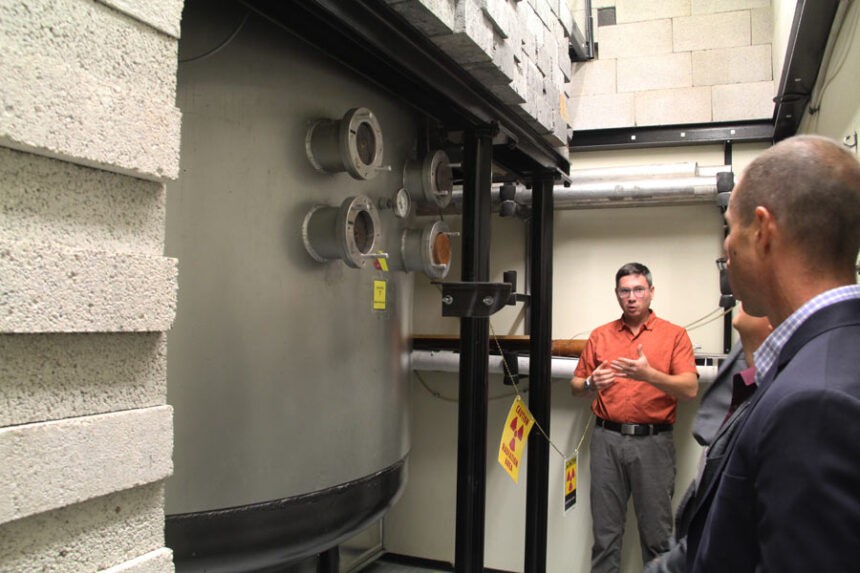
On the morning of the ceremony, participants gathered along Alvin·Ricken Drive to listen to the presentation. The 275-acre research park is adjacent to the planned reactor site and is officially called an "advanced nuclear microreactor," with the formal name "Advanced Research and Test Reactor." If the project proceeds smoothly, the new reactor will, together with the university's first reactor, jointly provide students with hands-on education about the future of nuclear power.
Idaho State University President Robert·Wagner stated that the university is committed to advancing Idaho's energy future. He pointed out that the project is a direct fulfillment of that commitment, because it will drive nuclear energy research, microreactor innovation, and specialized talent development—areas in which, frankly, no other institution nationwide can match.
Governor Brad·Little spoke at the event, praising Idaho for consistently leading the nation in nuclear power. He recalled that during a period when nuclear power development slowed elsewhere, Idaho continued to invest in key areas, and emphasized that this leadership has ultimately been recognized across the United States.
The nuclear reactor is being developed through a public-private partnership, with partners including NuCube Energy, a company headquartered in Idaho Falls focused on microreactor research and development, and the U.S. Department of Energy's Nuclear Reactor Innovation Center launch platform, the U.S. program. The project will be NuCube's first reactor. Company executive Dr. Cristian Rabiti stated that the site is only 50 miles from his residence, which is highly significant for building the company's first reactor.
Rabiti believes that this collaboration means far more than simply building a microreactor. He stated that it is not only about establishing the reactor itself, but also about building an innovative collaborative network. In his view, what truly matters is not the project itself, but the collaborative fruits it bears.
Although the new reactor is named a "microreactor," project lead Dr. Daniel LaBrier pointed out that it is actually slightly larger than the university's existing AGN-201 reactor. He explained that the new reactor's design concept is relatively simple, with very few components, similar to the AGN-201.
In sharp contrast, the new microreactor will produce vastly increased thermal energy. LaBrier stated that the AGN-201's thermal output is only 5 watts, an extremely low value, while the new reactor is expected to produce several megawatts of thermal energy, equivalent to an increase in thermal power of millions of times.
Along with the increased thermal output come potential future collaboration opportunities. LaBrier revealed that they plan to attract research and industry partners to jointly explore ways to utilize this thermal energy resource, which is the core resource the reactor provides. It is reported that the project is still in the planning stage, with no clear start date yet, but Rabiti hopes that after building this project, he can continue to advance more collaborations with Idaho State University, so that the promising vision can ultimately become reality.
Disclaimer: Information republished from partner media, institutions or other websites is provided for reference and communication purposes only. It does not imply endorsement of its views or verification of its accuracy. Please contact us if any content infringes rights or requires correction.