
US and OECD Nuclear Energy Agency Call for Unified Regulatory Standards to Break the Vicious Cycle of Cost Overruns and Delays in New Nuclear Power Plants
 Scan to share
The U.S. Department of Energy stated that it is engaged in close communication with partner countries, aiming to promote the unification of global nuclear power regulatory standards, thereby accelerating nuclear power capacity expansion and reducing construction costs.
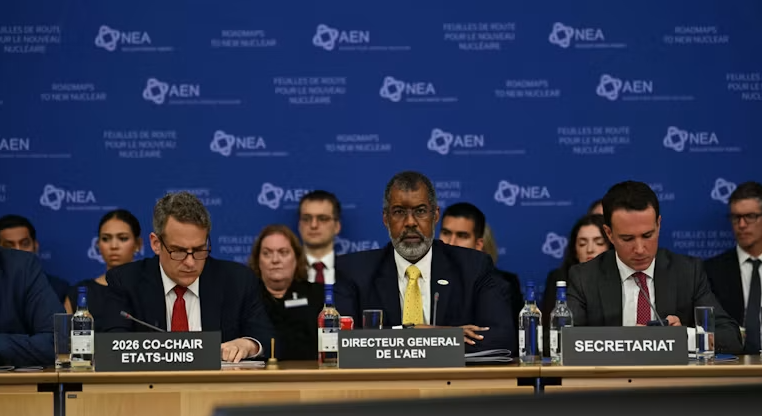
During the “New Nuclear Roadmap” conference organized by the OECD Nuclear Energy Agency (NEA) in Paris, U.S. Department of Energy Deputy Secretary James·Danly emphasized to the media that countries should establish a unified regulatory mechanism. He pointed out that many countries have decades of mature experience in nuclear power regulation, and it would be very regrettable if unnecessary obstacles were placed on nuclear power development due to a lack of consistency in regulatory systems. The United States is currently actively promoting greater regulatory consensus among countries.
OECD Nuclear Energy Agency Director-General William·Magwood also called at the meeting for strengthened cooperation in nuclear power licensing and approval in the coming years, and for the adoption of a “fleet” (batch) deployment model to break the long-standing cycle of cost overruns and schedule delays that have plagued new nuclear power projects.
Magwood particularly emphasized that this shift is crucial for the rapid global deployment of small modular reactors (SMRs). The core logic behind developing SMRs is to build and deploy nuclear power more quickly and cost-effectively. The industry in the future should not be limited to deploying a single reactor, but rather needs to deploy them in batches, which urgently requires deeper cooperation among all parties in licensing and approval to expand market scale.
Both the OECD Nuclear Energy Agency and the U.S. Department of Energy are optimistic about the decline in nuclear power costs. Both sides believe that as new units are built in batches and supply chains and infrastructure are rebuilt, nuclear power construction costs will gradually decrease. However, Magwood also cautioned that there will still be setbacks before costs decline comprehensively. The first batch of nuclear power plants will be more difficult and take longer to build, but as projects advance, schedules and costs will be effectively compressed.
In addition, Danly added that the United States is taking various measures to maintain nuclear power capacity, including preventing the premature retirement of existing nuclear power plants and promoting the reconnection of decommissioned nuclear power plants to the grid for power generation. For example, the U.S. Department of Energy has provided substantial loans to support the restart plan for the Duane Arnold Nuclear Power Plant in Iowa, while Holtec International is also advancing the resumption of operations at the Palisades Nuclear Power Plant.
Disclaimer: Information republished from partner media, institutions or other websites is provided for reference and communication purposes only. It does not imply endorsement of its views or verification of its accuracy. Please contact us if any content infringes rights or requires correction.