
ORNL Develops Duct Radiation Monitoring System to Enhance Fuel Cycle Facility Safety and Protection
 Scan to share
Recently, a research team at Oak Ridge National Laboratory (ORNL), led by embedded systems hardware and software engineer Brett·Witherspoon, successfully developed a new type of radiation monitoring system. The system can continuously assess the accumulation of radioactive materials inside ventilation ducts at facilities that manufacture nuclear fuel or process nuclear waste.
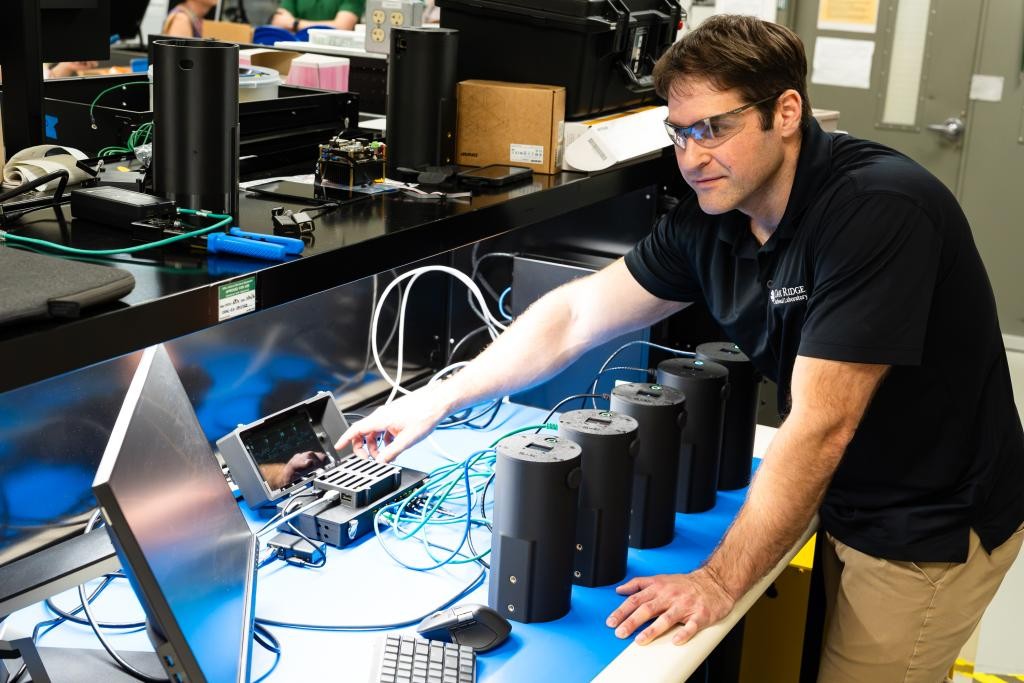
The system can be powered by battery or Ethernet, with a core cylindrical device approximately 12 inches tall. The device is installed inside the duct, and Oak Ridge National Laboratory states that it can provide unprecedented monitoring frequency and accuracy at a lower cost than existing detection systems, thereby effectively protecting personnel safety, nuclear facility operations, the ecological environment, and national security.
The original purpose of Witherspoon's team in developing this system was to help nuclear facilities better comply with government regulatory standards for radioactive material control, in order to safeguard worker health, public safety, and environmental hygiene. At the same time, efficient monitoring methods can also effectively prevent the illegal proliferation and misuse of radioactive materials.
The radiation monitoring methods currently used in nuclear facilities are generally fragmented, mainly used for spot-checking harmful particles that inevitably penetrate air filters and enter ducts. Traditional monitoring methods require workers to insert a radiation counter mounted on the top of a long pole into elevated ventilation ducts, making continuous uninterrupted real-time monitoring impossible.
In comparison, the new detector developed by Oak Ridge National Laboratory offers flexible power supply options. In battery-powered mode, the device can operate continuously for about one month, collecting and recording air sample data once per minute; if connected to Ethernet, it can operate at a higher frequency, achieving sample analysis and data transmission once per second.
The monitor uses low-cost plastic scintillator crystals, which emit photons when radiation from uranium or other radioactive materials is detected. Subsequently, silicon photomultipliers convert these photons into electrical pulses, which are counted by the device to determine whether radiation levels are within safe limits. Oak Ridge National Laboratory points out that compared to traditional inorganic scintillation crystals or semiconductor radiation detectors that cost thousands of dollars, these plastic scintillator crystals cost only a few dollars.
In preliminary testing, the research team verified the effectiveness of the detector in battery-powered mode within a laboratory facility that handles nuclear materials, and experiments proved that it operated very smoothly. Currently, the data generated from testing is being used to train an AI-enhanced algorithm developed by nuclear physicist Callie·Goetz. In the future, this algorithm software will be integrated into the detector to automatically alert nuclear facility operators when radioactive materials reach potentially dangerous concentrations.
Goetz pointed out that the detector costs a thousand times less than existing technology, while its highly targeted specialized design provides nuclear facilities with a more accurate, easier-to-use, and more cost-effective alternative. These devices will effectively reduce the regulatory compliance burden on nuclear facilities, making them safer and more efficient.
Currently, researchers at Oak Ridge National Laboratory are planning to demonstrate the monitoring system in Ethernet-powered mode inside a building on the laboratory campus that houses a molten salt reactor test loop, and intend to conduct further validation of the system at fuel enrichment and manufacturing facilities in the Oak Ridge area of Tennessee.
Disclaimer: Information republished from partner media, institutions or other websites is provided for reference and communication purposes only. It does not imply endorsement of its views or verification of its accuracy. Please contact us if any content infringes rights or requires correction.