
ARC and Idaho National Laboratory Forge Strategic Partnership to Advance First Reactor Deployment
 Scan to share
ARC Clean Technology announced earlier this week that it has signed a Strategic Partnership Project agreement with Battelle Energy Alliance, the operating and management contractor for Idaho National Laboratory (INL). The agreement establishes a multi-year collaboration framework aimed at advancing in-depth cooperation between ARC and INL on the design, demonstration, and first project deployment of the ARC-100, a 100 MWe sodium-cooled fast reactor.
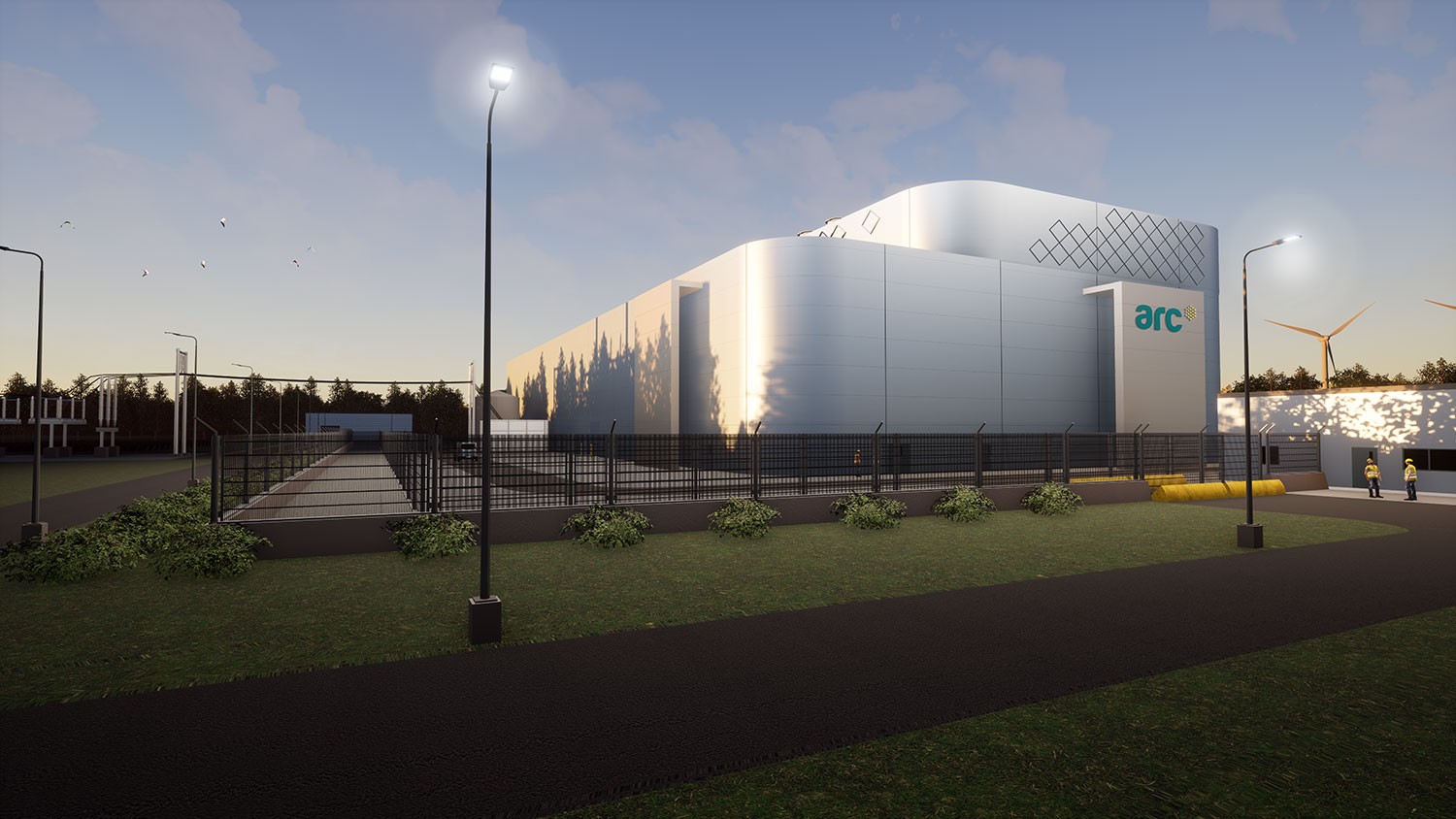
Among the many emerging nuclear reactor startups, Washington, D.C.-based ARC stands as one of the oldest members. The company was founded in 2006, even earlier than well-known enterprises such as TerraPower (founded in 2008), X-energy (founded in 2009), and Oklo (founded in 2013).
In the more than 20 years since its founding, ARC has explored multiple possible R&D and deployment pathways. Because the company has undergone several name changes (formerly known as Advanced Reactor Technologies, Advanced Reactor Concepts, and ARC Nuclear), many of its early activities were not documented in detail. Early patent filings indicate that the company had been developing its reactor design for several years after its founding, and multiple U.S. Department of Energy (DOE) publications around 2015 also mentioned its plans to develop a sodium-cooled fast reactor.
In 2017, ARC established a partnership with GE Hitachi Nuclear Energy (GEH) to jointly develop, license, and deploy the ARC-100 reactor in Canada. At the time, GEH planned to license intellectual property related to its Prism reactor design to ARC. Currently, ARC's efforts in Canada are still ongoing. The ARC-100 has passed multiple stages of regulatory review by the Canadian Nuclear Safety Commission, and the company has partnered with several enterprises to advance reactor deployment plans in Alberta.
Meanwhile, ARC's U.S. business received a major boost in 2020. At that time, the U.S. Department of Energy launched the Advanced Reactor Demonstration Program (ARDP), aimed at accelerating the demonstration of advanced reactors through public-private partnerships and cost-sharing models. The ARDP was divided into three different funding tiers, with the most well-known tier including TerraPower and X-energy; ARC was selected under the confusingly named "ARC-20" pathway (ARC-20 is short for "Advanced Reactor Concepts 2020," and its overlap with the ARC company name is purely coincidental). Following its selection, ARC received $27.5 million in funding support from the Department of Energy and set a goal of deploying a reactor by the mid-2030s. That same year, ARC also initiated pre-licensing engagement activities with the U.S. Nuclear Regulatory Commission (NRC) and currently plans to apply for a license under the newly introduced Title 10 of the Code of Federal Regulations Part 53 (10 CFR Part 53).
According to ARC, the newly established partnership with Battelle will receive comprehensive technical support from Idaho National Laboratory. The support provided by INL covers multiple technical areas including engineering design, advanced materials and manufacturing, high-performance computing and modeling, radiation testing, reactor commissioning and operation, and site development, spanning the entire lifecycle from detailed design to first-of-a-kind deployment.
Unlike other high-profile reactor deployment projects recently undertaken at Idaho National Laboratory, ARC has not been included in the participant lists of the Reactor Pilot Program or the Nuclear Energy Launchpad Program. Therefore, its design must go through the normal licensing process of the U.S. Nuclear Regulatory Commission, rather than the Department of Energy's fast-track authorization pathway. The core value of the Department of Energy's Strategic Partnership Project program lies in opening up INL's extensive technical expertise, top-tier talent team, and advanced facilities to private enterprises, other federal agencies, and universities.
The ARC-100 uses sodium cooling and metallic uranium-zirconium alloy as fuel, combined with a supercritical carbon dioxide Brayton cycle power conversion system. It is worth noting that this is not the first sodium-cooled fast reactor to be built at INL; the ARC-100 directly inherits and draws upon the experience and lessons learned from Experimental Breeder Reactor-II (EBR-II), which operated at the site for more than 30 years. In its latest press release, ARC has not yet provided a specific target date for obtaining NRC approval or achieving commercial operation of the first ARC-100.
Disclaimer: Information republished from partner media, institutions or other websites is provided for reference and communication purposes only. It does not imply endorsement of its views or verification of its accuracy. Please contact us if any content infringes rights or requires correction.