
US Delivers Cold War-Era Reactor Molten Salt Coolant to Texas Nuclear Innovation Project
 Scan to share
The U.S. nuclear energy sector has recently seen a landmark cross-generational collaboration. The U.S. Department of Energy (DOE)'s Oak Ridge National Laboratory (ORNL) has formally delivered over 2 metric tons of FLiBe molten salt to Natura Resources, a nuclear startup headquartered in Abilene, Texas. This batch of molten salt once served as the coolant for the historic “Molten Salt Reactor Experiment” (MSRE) during the Cold War, and after decades in storage, it has been reactivated to support the research, development, and deployment of fourth-generation nuclear reactor technology.
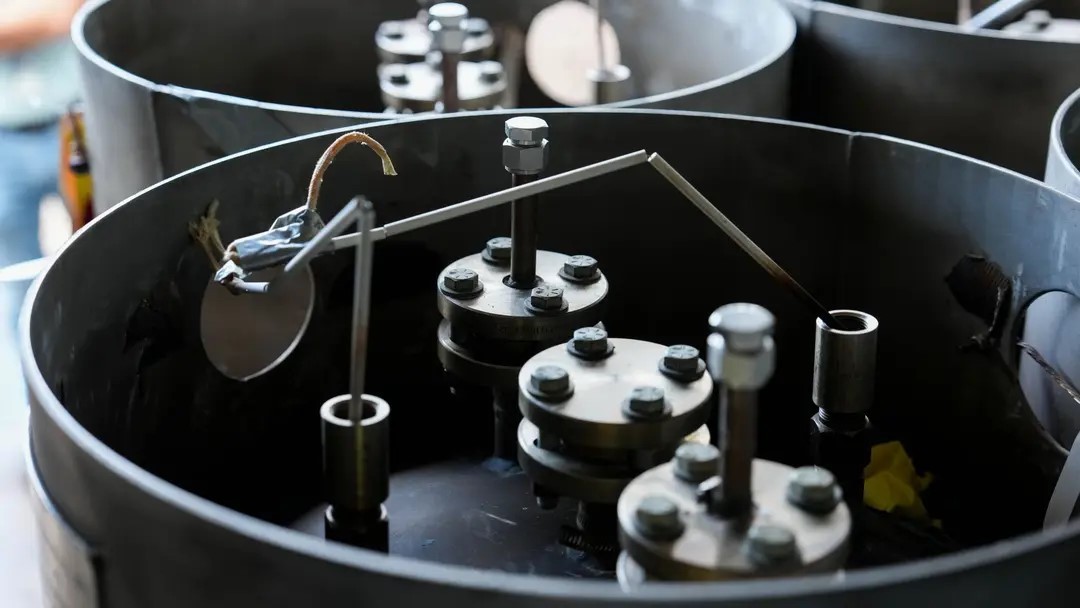
The delivered FLiBe molten salt is a mixture of lithium fluoride and beryllium fluoride, and its distinctive feature is that the lithium-7 (Li-7) isotope abundance within it reaches as high as 99.99%. Experts at Oak Ridge National Laboratory point out that because this highly enriched lithium-7 molten salt is extremely scarce and exceedingly difficult to purify in the modern era, this historically preserved material has become the only key near-term supply source currently available in the United States. It not only provides core material assurance for next-generation reactors, but also significantly shortens the research and development cycle for new nuclear energy technologies.
Natura Resources plans to transport this precious batch of molten salt to the NEXT Lab at Abilene Christian University (ACU), where it will serve as a key component of the MSR-1 liquid-fuel molten salt research reactor currently under construction. The reactor is designed for 1 megawatt (thermal power) and obtained a construction permit from the U.S. Nuclear Regulatory Commission (NRC) in 2024. Technicians at Oak Ridge Laboratory confirm that because this batch of FLiBe molten salt was used only as a secondary loop coolant in historical experiments and never came into direct contact with fission nuclear fuel, its internal physical properties and chemical structure remain intact, fully meeting the standards for re-service.
Unlike traditional solid-fuel light water reactors, the molten salt reactor developed by Natura uses nuclear fuel dissolved in liquid salt. This design allows the reactor to operate safely under atmospheric pressure and at high temperatures, physically eliminating the risk of core meltdown caused by high temperature and high pressure, and greatly enhancing inherent safety. In addition, the reactor can also utilize recycled waste as fuel and can even extract rare medical isotopes for cancer treatment.
Disclaimer: Information republished from partner media, institutions or other websites is provided for reference and communication purposes only. It does not imply endorsement of its views or verification of its accuracy. Please contact us if any content infringes rights or requires correction.