
US Department of Energy Study Shows: Deep Borehole Disposal Option Can Significantly Reduce Nuclear Fuel Cycle Back-End Waste Disposal Costs
 Scan to share
Results from a three-year US Department of Energy (DOE)-funded project show that Deep Boreholes technology can provide a safe and low-cost permanent disposal pathway for radioactive waste remaining after Nuclear Fuel Recycling. Deep Isolation Nuclear conducted a systematic assessment of multiple recycling waste disposal scenarios, and the results showed that the estimated costs for all tested scenarios were below the project's control target of “0.1 cents per kilowatt-hour of electricity generation.”
Long-term safety modeling also confirmed that under normal expected conditions, all options meet stringent safety standards. In the vast majority of scenarios, the estimated radiation doses to the public were several orders of magnitude below the regulatory benchmark of 10 millirem per year used in the analysis.
The study was carried out under the CURIE program of the US Department of Energy's Advanced Research Projects Agency-Energy (ARPA-E), with collaborative efforts from Argonne National Laboratory, Oklo, and Case Western Reserve University. In this collaboration, Deep Isolation was primarily responsible for demonstrating the feasibility of waste encapsulation technology and underground permanent isolation solutions.
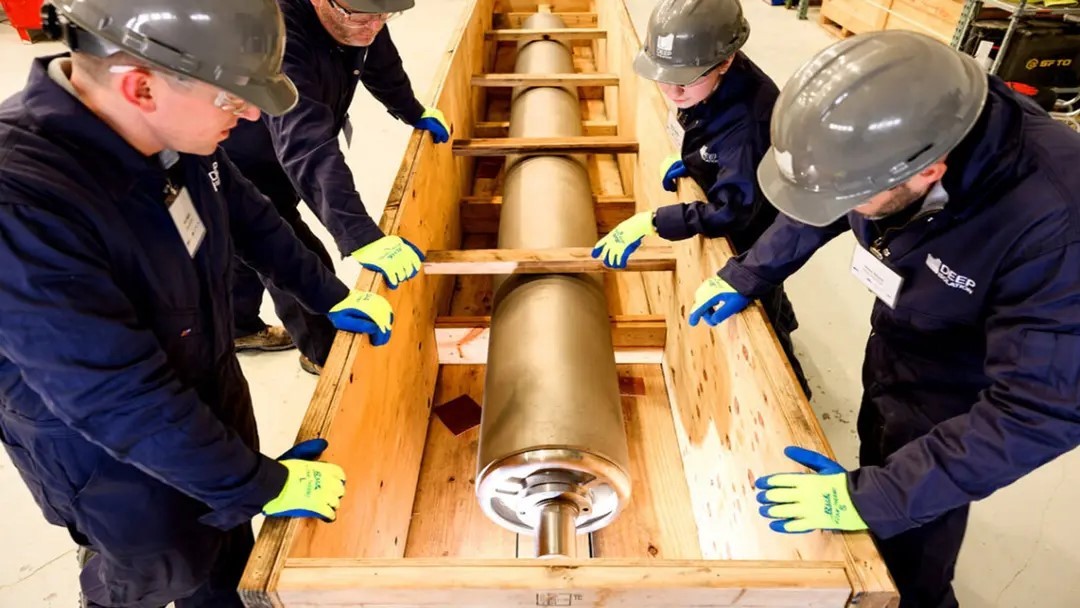
The company's engineered disposal solution uses directional drilling technology to bury waste deep within suitable deep rock formations. The project combined its universal "Universal Canister System" to conduct comparative validation of two underground configurations: horizontal directional boreholes and vertical deep boreholes.
The research team conducted a systematic review of the full lifecycle of geological disposal, covering the physical and chemical characteristics of waste generated during the nuclear fuel recycling stage, material encapsulation and shielding processes, deep geological repository engineering design, long-term radiation safety barriers, and full-cycle economic indicators.
Disclaimer: Information republished from partner media, institutions or other websites is provided for reference and communication purposes only. It does not imply endorsement of its views or verification of its accuracy. Please contact us if any content infringes rights or requires correction.