
U.S. Team Advances Offshore Engineering System for Uranium Extraction from Seawater, Accelerating Toward Industrial-Scale Application
 Scan to share
Nuclear fuel startup SuperCritical Materials and the University of Michigan (U-M) have formally established a research collaboration to jointly design and test an offshore mechanical system for uranium-from-seawater extraction, aiming to advance this cutting-edge technology toward industrial-scale engineering application.
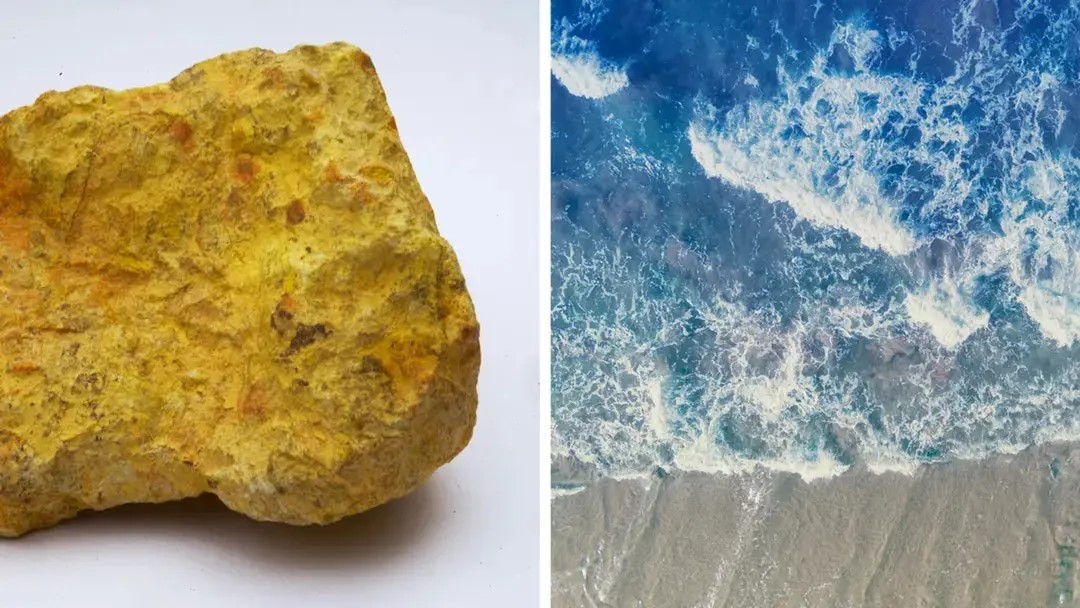
SuperCritical Materials had previously obtained an exclusive commercial license for a patented adsorbent manufacturing process that captures dissolved uranium in seawater. This joint research and development effort shifts the focus to the field of engineering machinery, primarily developing core offshore mechanical systems capable of supporting high-frequency deployment, prolonged seawater immersion exposure, and stable recovery of the adsorbent material in the marine environment.
The research project is led by Maha Haji, Assistant Professor in the Department of Mechanical Engineering at the University of Michigan and Director of the Symbiotic Engineering and Analysis Laboratory (SEAL), whose long-term research focuses on utilizing offshore engineering systems to recover critical strategic resources from the ocean. The collaboration aims to overcome the greatest bottleneck in transitioning uranium-from-seawater extraction from the laboratory to engineering-scale application——although approximately 4.5 billion metric tons of uranium resources are dissolved in the world's oceans, industrial-scale commercial systems must overcome the hydrodynamic and mechanical load challenges of massive quantities of adsorbent material undergoing repeated multi-cycle operations in harsh ocean conditions.
The university research team will characterize the mechanical properties of SuperCritical Materials' uranium adsorbent material, with a focus on monitoring changes in mechanical stress experienced throughout the entire process of dense packing, offshore deployment, seawater immersion, and retrieval and recovery. Meanwhile, researchers will also evaluate various loading and packaging configurations for the adsorbent material in nearshore systems, and develop multiple sets of prototype equipment for deployment and retrieval operations.
Alexander Canon Bryan, President and Chief Executive Officer of SuperCritical Materials, noted that the key challenge facing the industry is no longer limited to whether uranium can be extracted from seawater, but rather whether the adsorbent material can achieve efficient, low-cost, and repeatable deployment, immersion exposure, and recovery at industrial scale. Preliminary hydrodynamic validation is expected to be conducted at the University of Michigan's Aaron Friedman Marine Hydrodynamics Laboratory, utilizing its towing tank and wind-wave flume to simulate complex sea states such as waves and currents under controlled conditions, systematically optimizing design parameters and validating the hydrodynamic behavior of the equipment before proceeding to real open-ocean trials.
Disclaimer: Information republished from partner media, institutions or other websites is provided for reference and communication purposes only. It does not imply endorsement of its views or verification of its accuracy. Please contact us if any content infringes rights or requires correction.