
Indonesia Plans to Finalize the Site of Its First Nuclear Power Plant by 2027 at the Latest: Technologies from the United States, South Korea, Japan, and Russia Shortlisted for Cooperation Consideration
 Scan to share
Elen Setiadi, Deputy Minister for Energy and Mineral Resources Coordination at Indonesia's Coordinating Ministry for Economic Affairs, stated on September 30 in Jakarta that the Indonesian government is comprehensively advancing the construction project of a Nuclear Power Plant (NPP) and plans to officially finalize the construction site in 2026, or by 2027 at the latest. Indonesia aims to fully integrate advanced nuclear power into its national medium- and long-term energy supply strategy, using stable and abundant baseload electricity to support sustained domestic economic growth and industrialization transformation.
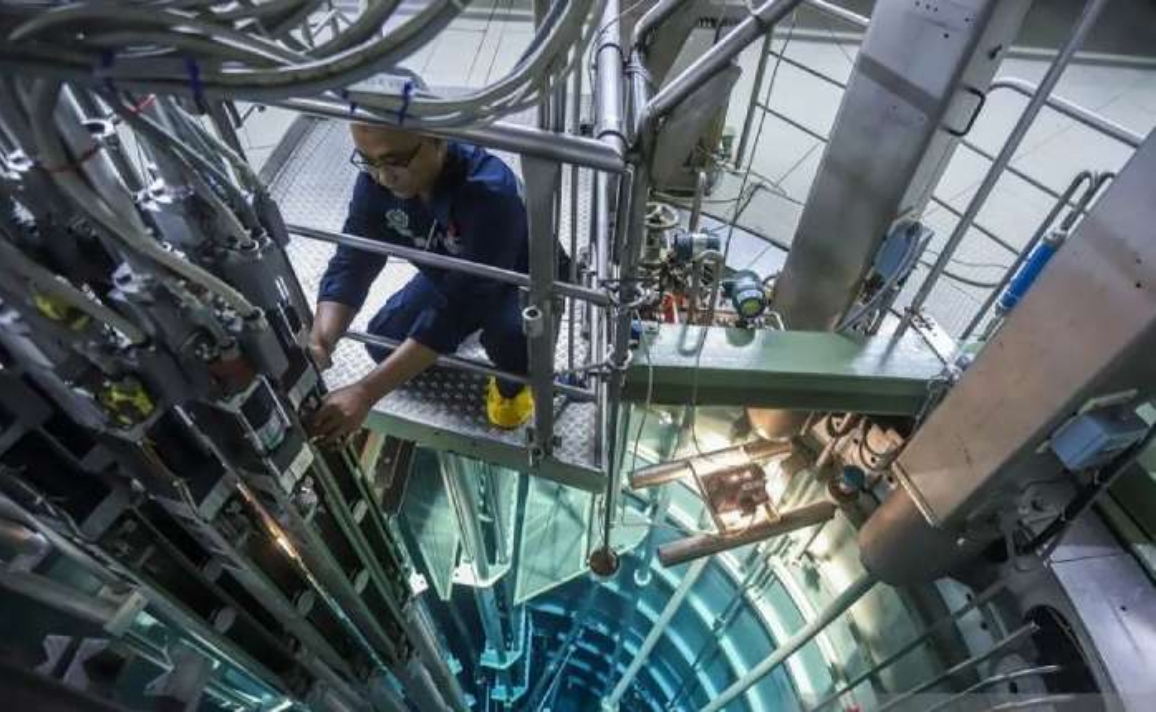
At an energy seminar hosted by the World Resources Institute Indonesia (WRI Indonesia), Elen Setiadi emphasized that the nuclear power plant site selection will be deeply tied to the reactor technology pathway to be adopted. Multiple reactor types and technology pathways are currently available for evaluation, and international partners from traditional nuclear powerhouses such as the United States, South Korea, Japan, and Russia have all expressed strong interest in joint development and technical cooperation. The Indonesian government is conducting a comprehensive assessment of all proposals to ensure that future nuclear power projects are both safe and economically competitive.
As the nation's industrialization process accelerates, Indonesia's medium- and long-term energy gap pressure is becoming evident. Official forecast data shows that by 2030, Indonesia's national annual electricity demand will surge to 600 terawatt-hours (TWh), with per capita electricity consumption approaching 2,000 kilowatt-hours (kWh). Setiadi pointed out that developing nuclear power is a key pathway for Indonesia to obtain low-carbon, reliable, and cost-controllable clean energy, and is crucial for ensuring grid resilience.
While promoting nuclear energy as a breakthrough, Indonesia is also scaling up multiple categories of renewable energy including solar, hydropower, wind power, geothermal, and ocean energy. To address the mismatch between the geographic distribution of renewable energy production sites and load centers, the Indonesian government plans to build a "Green Supergrid" with a total length of 70,000 kilometers by 2040, interconnecting key industrial zones and power load hubs across islands, and opening up cross-regional clean electricity consumption channels.
According to the latest Electricity Supply Business Plan for 2025–2034 (Rencana Usaha Penyediaan Tenaga Listrik, RUPTL), Indonesia plans to add 69.5 gigawatts (GW) of power generation and energy storage installed capacity over the next decade. Among this, new and renewable energy totals 42.6 GW, accounting for 61%; supporting energy storage systems amount to 10.3 GW, accounting for 15%; and fossil energy additions are compressed to 16.6 GW, with their share reduced to 24%.
In this massive energy transition plan, solar leads with 17.1 GW of new capacity, while hydropower, wind power, and geothermal are planned to add 11.7 GW, 7.2 GW, and 5.2 GW respectively, and biomass is planned at 0.9 GW. Meanwhile, the nuclear energy sector has also been formally allocated a starting planned capacity of 0.5 GW (500 MW), marking that Indonesia's commercial nuclear power has substantively moved from preliminary technical feasibility discussions into the countdown phase of national installed capacity deployment.
Disclaimer: Information republished from partner media, institutions or other websites is provided for reference and communication purposes only. It does not imply endorsement of its views or verification of its accuracy. Please contact us if any content infringes rights or requires correction.