
Indonesia Incorporates Nuclear Energy into Decarbonization and Power Planning
 Scan to share
The National Energy Council (DEN) of Indonesia recently stated that nuclear energy is expected to become an important option for driving the country's energy transition and achieving its net-zero emission targets. DEN member Sripeni Inten Cahyani said at a national energy policy promotion event held at Mataram University that the positioning of nuclear energy in Indonesia's energy planning is changing, and it is no longer just a "last resort."
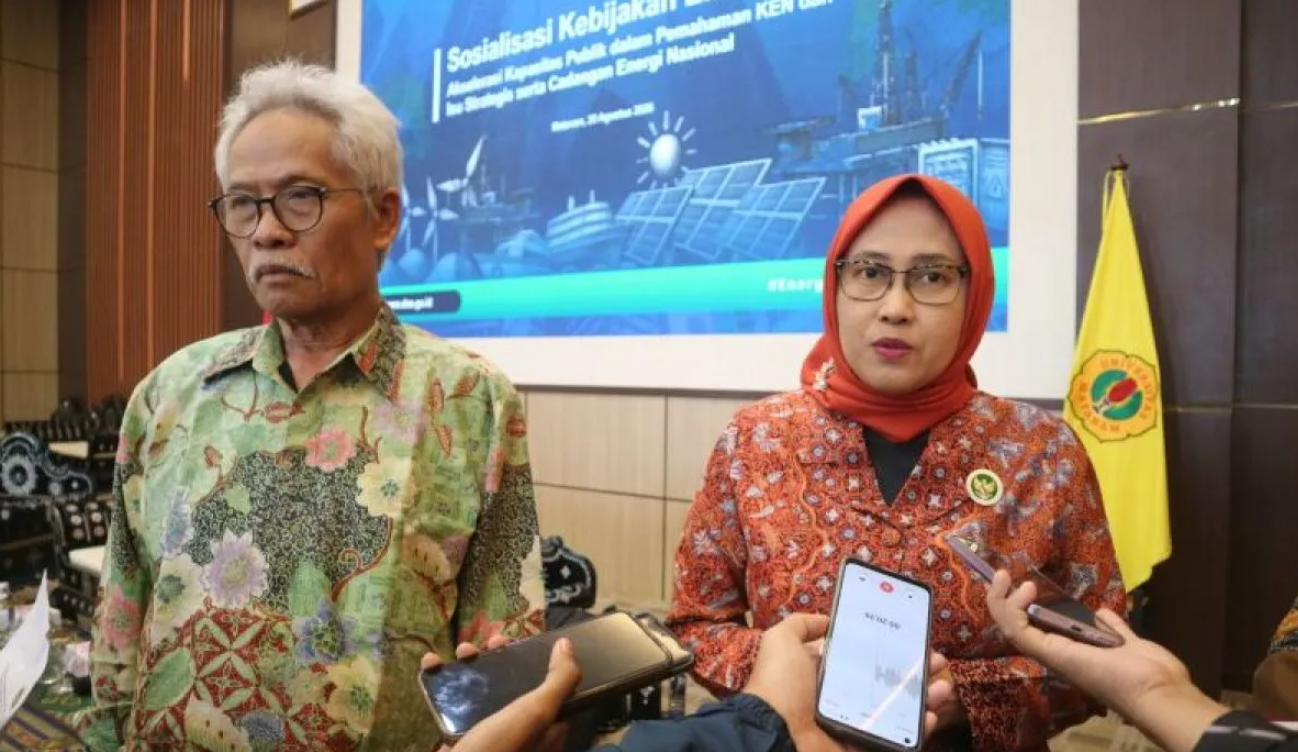
Sripeni Inten Cahyani (right), a member of the National Energy Council (DEN), accompanied by fellow member Surono (left), gave an exclusive interview to reporters after a national energy policy outreach activity at Mataram University in West Nusa Tenggara Province on Thursday, August 20, 2026, outlining the nuclear energy development roadmap. /ANTARA
She stated that nuclear energy was previously often discussed at the end of energy options, but its role is now being reassessed and it could become a key force in accelerating emission reduction efforts. She also noted that ASEAN countries such as Malaysia, the Philippines, and Vietnam have incorporated nuclear energy into their long-term energy strategies, with related projects planned to begin operation between 2031 and 2035.
According to the introduction, Indonesia already has a certain foundation for nuclear energy development. Gadjah Mada University (UGM) offers relevant academic programs, and the 30 MW research reactor in Serpong, Banten Province, remains in operation, providing support for talent cultivation and technological accumulation.
PT PLN (Persero), Indonesia's state-owned electricity company, has incorporated the national nuclear power development roadmap into its 2025-2034 Electricity Supply Business Plan (RUPTL). Under this plan, Indonesia aims to achieve a total nuclear power installed capacity of 500 MW, with 250 MW planned to begin commercial operation in 2032 and another 250 MW in 2034.
The National Research and Innovation Agency (BRIN) of Indonesia has identified 28 potential nuclear power plant sites, with preliminary assessments focusing on West Kalimantan Province and the Bangka-Belitung Islands Province.
Sripeni stated that long-standing public concerns about nuclear technology need to be gradually addressed on the basis of scientific understanding. She pointed out that radiation technology has already been safely applied in fields such as medical diagnostics. She believes that as industrial energy demand continues to grow, nuclear energy can support Indonesia's energy security and climate goals.
Disclaimer: Information republished from partner media, institutions or other websites is provided for reference and communication purposes only. It does not imply endorsement of its views or verification of its accuracy. Please contact us if any content infringes rights or requires correction.