
Estonia's Fermi Energia Narrows Down Site Selection for First Nuclear Power Plant
 Scan to share
Recently, the Estonian government and Fermi Energia announced that the site selection range for the country's first nuclear power plant has been further optimized. Based on safety and other multidimensional considerations, three candidate locations in the municipality of Lüganuse have been formally excluded, and future site selection efforts will be fully concentrated on three designated locations within the municipality of Viru-Nigula.
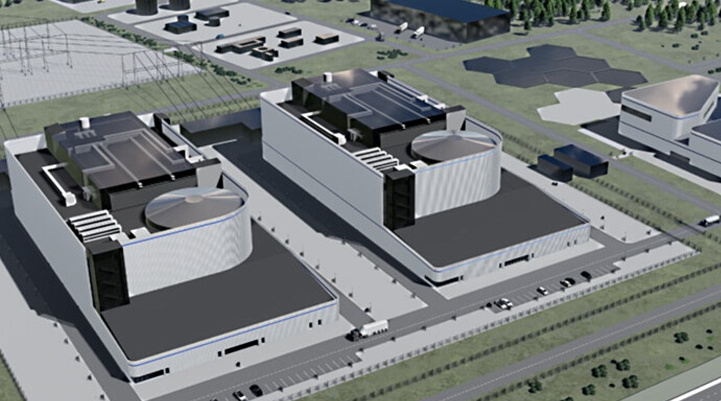
At the request of Fermi Energia, the Estonian government officially launched the national spatial planning process for the nuclear power plant in May 2025. Although the total planned area covers approximately 1,285 square kilometers, encompassing multiple municipalities and surrounding waters, after the first-phase site selection pre-assessment and consultations with various competent authorities, it was ultimately decided to abandon the six previously considered candidate sites and lock in three locations: Madara, Mala, and Letipea in the Viru-Nigula rural municipality.
Fermi Energia project manager Agnes Lihtsa noted that although the number of core plant sites has been streamlined, the overall planned area has not been reduced, and corridor planning for supporting infrastructure including power connections, cooling water pipelines, and access roads is still progressing. The entire spatial planning procedure is divided into two phases, with the final suitable site expected to be determined by the end of 2027, followed by a supplementary environmental impact assessment in the subsequent detailed construction plan. The spatial planning is expected to be completed in 2030.
In terms of the legal and technical roadmap, the Estonian government passed the Nuclear Energy and Safety Act in March this year, which received formal parliamentary approval in June, providing a clear legal framework for the siting, construction, operation, and decommissioning of the nuclear power plant. Fermi Energia has selected the BWRX-300 Small Modular Reactor (SMR) technology from GE Vernova Hitachi Nuclear Energy of the United States, and plans to submit a construction permit application in 2029, aiming to begin construction in 2031, with the first unit expected to enter commercial operation in the second half of 2035.
Disclaimer: Information republished from partner media, institutions or other websites is provided for reference and communication purposes only. It does not imply endorsement of its views or verification of its accuracy. Please contact us if any content infringes rights or requires correction.