
Estonia's Nuclear Power Plant Site Selection Enters New Phase, with All Six Candidate Locations on the Northern Coast
 Scan to share
Estonia's special plan for building a nuclear power plant has entered a critical screening phase. Following the government's decision launched last spring, six potential sites have been identified, all located on Estonia's northern coast. Three of the sites are in Lääne-Viru County, and the other three are in Ida-Virumaa County, indicating that the northern coastal region has become a key focus area for nuclear power project development.
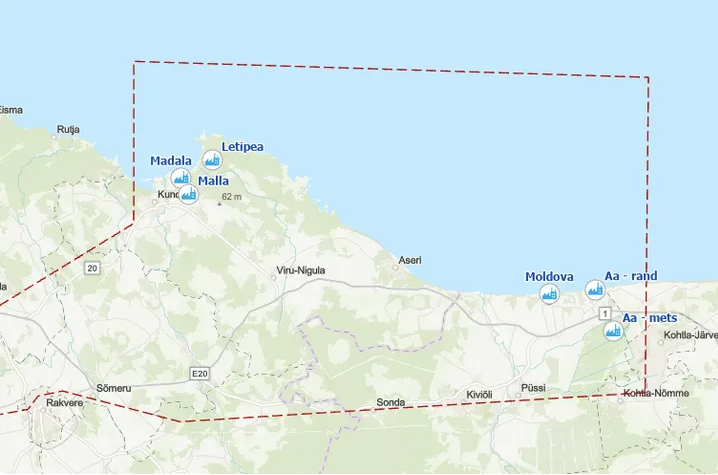
The planning is being organized by Estonia's Ministry of Economic Affairs and Communications, with Fermi Energia AS being the company interested in the plan and its implementation. The two parties will introduce the candidate sites and the criteria for final site selection through public events in early August. Relevant information was already presented on Wednesday in Rakvere, indicating the project is moving from internal assessment toward public engagement.
The concentration of the six candidate sites on the northern coast is likely related to the requirements of nuclear power plants for cooling water, infrastructure, power transmission conditions, and industrial support. Lääne-Viru County and Ida-Virumaa County themselves also possess a certain energy and industrial foundation, especially the Ida-Viru region, which has long been closely linked to Estonia's energy sector. Therefore, its prominence in nuclear siting discussions is not surprising.
However, nuclear power plant siting is not merely a technical and economic issue; it also involves local community acceptance, environmental impact, emergency response capabilities, and long-term safety regulation. The holding of public information sessions means that the government and the company need to explain to residents the siting rationale, risk control measures, and the potential employment, investment, and infrastructure changes the project may bring. How the final site is determined will depend on whether technical assessments, environmental reviews, and social communication can converge into a relatively stable consensus.
Disclaimer: Information republished from partner media, institutions or other websites is provided for reference and communication purposes only. It does not imply endorsement of its views or verification of its accuracy. Please contact us if any content infringes rights or requires correction.