
Estonia Selects Three Candidate Sites for Its First BWRX-300 Nuclear Power Plant
 Scan to share
Recently, the Estonian government officially announced that it will focus on three potential sites—Madala, Malla, and Letipea—in the Viru-Nigula area in northern Estonia for the development of the country's first nuclear power plant projects. Meanwhile, in accordance with the International Atomic Energy Agency (IAEA) risk assessment guidelines and for national defense and security considerations, Estonia has withdrawn from three other sites previously considered in the municipality of Lüganuse.
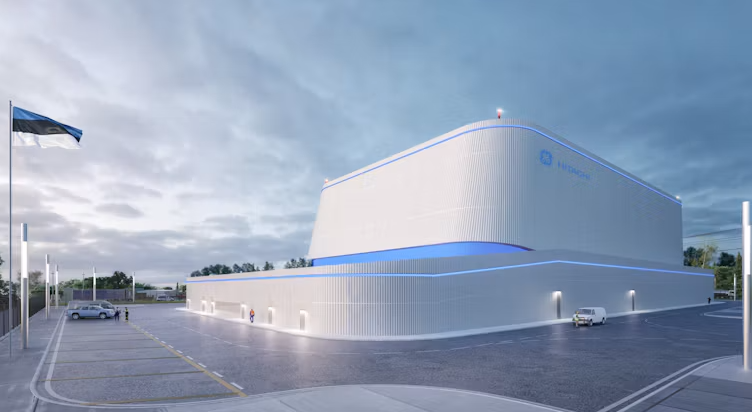
The project development company Fermi Energia plans to deploy two GE Vernova Hitachi Nuclear Energy BWRX-300 small modular reactors (SMRs), each with a single-unit power output of 300 MW, at the selected site. Project Manager Agnes Liht noted that although the number of core plant sites has been concentrated, the substations, grid connections, cooling water pipelines, and transportation infrastructure corridors required for nuclear power plant construction will still involve coordinated planning across eight relevant municipalities.
In terms of policies, regulations, and the advancement plan, the Estonian Parliament passed a legal framework permitting the development of nuclear energy this year, which will officially take effect in early 2027. According to the plan, Estonia is expected to finalize the selection of the final site by the end of 2027; Fermi Energia plans to submit a construction permit application in 2029, with the goal of commencing on-site construction in 2031 and achieving grid connection and operation around 2035.
The construction of this nuclear power project will significantly enhance Estonia's energy independence and effectively reduce its reliance on imported electricity and high-carbon oil shale power generation. In terms of the technology pathway, Estonia will draw extensively on the construction experience of Canada's first BWRX-300 demonstration project at Darlington, leveraging the highly simplified, efficient boiling water reactor technology to accelerate the transition to clean baseload energy.
Disclaimer: Information republished from partner media, institutions or other websites is provided for reference and communication purposes only. It does not imply endorsement of its views or verification of its accuracy. Please contact us if any content infringes rights or requires correction.