
Restart of Tomari Nuclear Power Plant Unit 3 Delayed to After End of 2027
 Scan to share
Hokkaido Electric Power Co. announced on July 30 that the restart of Unit 3 at the Tomari Nuclear Power Plant will be significantly delayed compared to earlier expectations, with the earliest possible date being the end of 2027 or later. Previously, the company had set a target of “restarting as early as possible within 2027,” but due to delays in the seawall construction project and the fact that the Nuclear Regulation Authority (NRA) has not yet completed its review of the relevant design and construction plans, the timeline for the unit's return to operation remains uncertain.
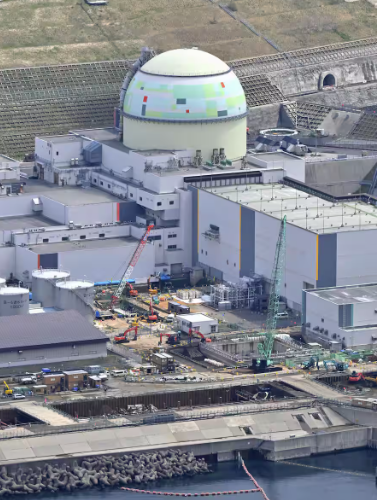
Hokkaido Electric Power President Susumu Saito stated at a press conference that the seawall at the Tomari plant was originally scheduled for completion in the spring of 2027, but is now expected to be finished by mid-August 2027 due to additional work such as seismic reinforcement of the wharf and liquefaction countermeasures, as well as factors like heavy winter snow. He said that the review of the design and construction plans is still ongoing, and the company is currently unable to estimate a specific restart date.
In addition to the seawall project, the NRA is still reviewing the plant's fire protection and seismic performance. A defect was also discovered in the analysis code used to evaluate seismic impacts, and related investigations and corrective work are still underway. Hokkaido Electric Power expects to release the correction results in August and hopes to submit revised documents as soon as possible to reassess subsequent construction and restart arrangements.
Under the current schedule, even if the seawall is completed in August 2027, subsequent steps including inspections, testing, and operational preparations will still be required. If the relevant reviews and corrective plans are approved, the restart of Tomari Unit 3 could be delayed to after the end of 2027.
The new seawall under construction at the Tomari plant has a total length of approximately 1.2 kilometers, a crest elevation of about 19 meters, and a maximum width of about 30 meters, designed to mitigate the risk of tsunami inundation. The project is divided into 34 sections, with some areas requiring excavation to a depth of about 30 meters to reach the bedrock layer, followed by the placement of improved soil composed of cement and gravel. Excavation work has been completed, and the placement of improved soil is approximately 67% complete.
Along National Route 229 near the nuclear plant, Hokkaido Electric Power is also installing steel pipe piles to prevent large vehicles from being swept into the sea during tsunami backwash and colliding with the seawall. This project involves installing 50 steel pipe piles, each approximately 2 meters in diameter and with pile tops about 20 meters above sea level, at 4-meter intervals over a range of about 200 meters.
Following the 2011 Fukushima Daiichi nuclear accident, Japan's nuclear safety regulatory requirements were significantly strengthened. The new regulations require nuclear plants to take measures to prevent simultaneous failure of safety functions such as external power and emergency power during earthquakes, tsunamis, and other disasters, and to establish multi-layered protection systems. Hokkaido Electric Power also plans to deploy eight mobile backup power vehicles and organize severe accident response teams to conduct power restoration drills, in preparation for scenarios where external power and emergency diesel generators fail.
The delay in restarting Tomari Unit 3 will also affect electricity rate reduction plans. Hokkaido Electric Power had previously planned to reduce monthly electricity bills for ordinary households by approximately 1,000 yen, a reduction of about 11%, after the unit restarts and stable commercial operation is confirmed. Under the current schedule, the related rate reduction is expected to be delayed until the spring of 2028 or later. Saito stated that the company still aims for a monthly reduction of about 1,000 yen and is considering measures such as point rewards to alleviate the burden on users during the period between restart and the actual rate reduction.
Disclaimer: Information republished from partner media, institutions or other websites is provided for reference and communication purposes only. It does not imply endorsement of its views or verification of its accuracy. Please contact us if any content infringes rights or requires correction.