
Canadian nuclear fuel supplier Cameco announces Westinghouse Electric IPO plan
 Scan to share
Canadian nuclear fuel supplier Cameco Corporation has announced that its joint venture——Westinghouse Electric Company has confidentially submitted a preliminary registration statement for a proposed initial public offering. The IPO aims to further advance Westinghouse's business development in the nuclear power sector and bring new sources of funding to the company. Currently, Cameco holds a 49% stake in Westinghouse, with Brookfield Renewable Partners owning the remaining 51%.
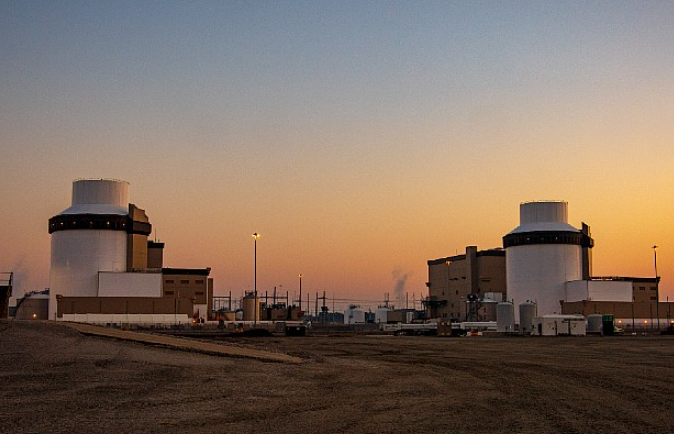
Westinghouse is one of the world's largest nuclear services companies and the supplier of the world's first commercial pressurized water reactor (PWR). Its technology platform covers the entire nuclear power value chain, with 57% of the 417 reactors currently operating globally using its technology. Cameco stated that Westinghouse holds a strategically important position in the global nuclear power industry and has growing global market opportunities.
According to Cameco's analysis, 91 AP1000 reactors could potentially be deployed over the next decade, with a total capacity of 105 gigawatts. These projects are located across the United States, Poland, Bulgaria, Ukraine, the Netherlands, Slovenia, Finland/Sweden, as well as Canada, India, and Saudi Arabia. Among them, projects supported by the U.S. Department of Energy are expected to enter commercial operation in the mid-2030s, and the strategic cooperation between Cameco, Brookfield, and the U.S. Department of Commerce will also support the construction of more nuclear power plants in the United States.
Cameco emphasized that as the number of nuclear power plants increases and experience accumulates, nuclear construction cycles will shorten and costs will decrease. For early projects, the timeline from first concrete pour to commercial operation is approximately 66 months, while after reaching "Nth-of-a-kind" scale deployment (i.e., building two units at the same site and maintaining a demand of at least two units per year), construction timelines can be reduced by 20-30%. At the same time, total capital costs will also decrease from $20-26 billion per reactor to $14-17 billion.
Disclaimer: Information republished from partner media, institutions or other websites is provided for reference and communication purposes only. It does not imply endorsement of its views or verification of its accuracy. Please contact us if any content infringes rights or requires correction.