
Japan aims to rebuild up to 5 retired nuclear power plants by the 2040s
 Scan to share
The Japanese government held a ministerial meeting on nuclear power on July 31 and decided to rebuild up to 5 retired nuclear power plants by the 2040s. This is the first time since the Fukushima Daiichi nuclear accident that the Japanese government has set a specific numerical target for nuclear plant reconstruction.
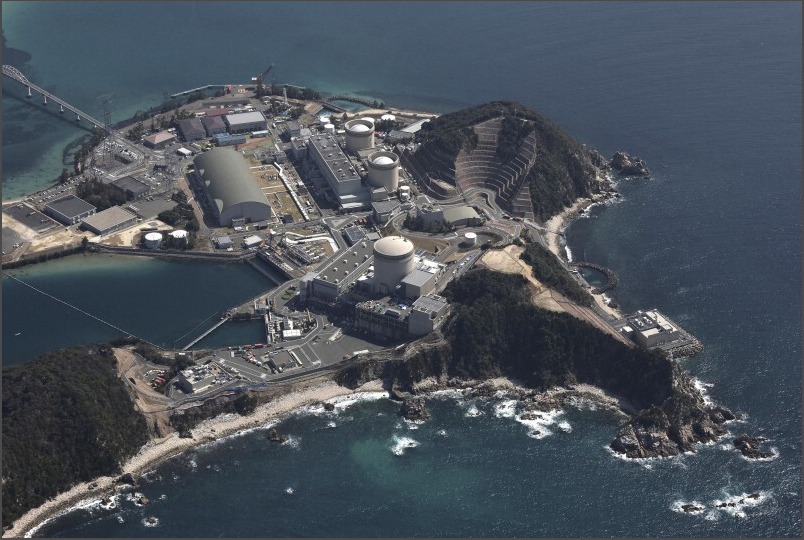
Kansai Electric Power Company's Mihama Nuclear Power Plant
Japanese Prime Minister Takaichi Sanae stated at the meeting that to steadily advance nuclear power investment, the Takaichi cabinet will continue to promote nuclear energy policy. According to the direction set at the meeting, Japan plans to rebuild 2 to 5 nuclear power plants by the 2040s, with a total installed capacity of approximately 2.2 million to 5.5 million kilowatts; by the 2050s, the reconstruction scale will expand to 11 to 14 plants, with a total installed capacity of approximately 12.7 million to 16 million kilowatts.
The Japanese government plans to raise the share of nuclear power in its electricity generation mix to 20% by 2040. In comparison, nuclear power accounted for only 9.4% of Japan's electricity generation in 2024. By setting clear medium- and long-term nuclear power construction targets, the Japanese government hopes to send signals to the market regarding energy alternatives, drive related investment, and maintain the nuclear power industry chain and professional talent base.
After the 2011 Fukushima Daiichi nuclear accident, the Japanese government had stated its intention to "reduce dependence on nuclear power as much as possible." However, in the Basic Energy Plan formulated in February 2025, this wording was removed, and the government instead explicitly stated its aim to "maximize the use" of nuclear power, indicating that its energy policy is re-strengthening the role of nuclear power.
However, nuclear plant reconstruction still faces multiple challenges. Following the Fukushima nuclear accident, Japan's nuclear safety requirements have been raised, and the costs of related safety measures have continued to increase; at the same time, inflation has pushed up construction costs. As a key focus of reconstruction, next-generation reactors are expected to take 10 to 20 years from preliminary surveys to commercial operation. Since the Great East Japan Earthquake, local governments and surrounding residents have also become more cautious about accepting nuclear power projects, and there remains uncertainty as to whether the relevant targets can be achieved as scheduled.
Disclaimer: Information republished from partner media, institutions or other websites is provided for reference and communication purposes only. It does not imply endorsement of its views or verification of its accuracy. Please contact us if any content infringes rights or requires correction.