
Philippine Lawmaker Says Nuclear Energy Could Ease Power Supply Pressure in Western Visayas
 Scan to share
Mark Cojuangco, chair of the House of Representatives Committee on Nuclear Energy and representative of the Second District of Pangasinan, said on July 29 that if the Philippines adopts nuclear energy technology, the Western Visayas region could gain access to lower-cost and more stable electricity supply.
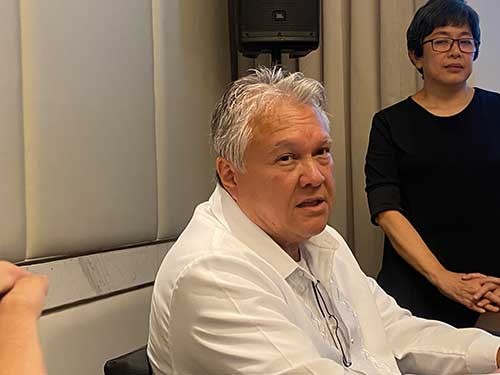
Cojuangco noted that Iloilo and other parts of Western Visayas still rely heavily on coal-fired power, and the repeated power supply issues in recent years indicate the region needs more reliable and cost-controllable energy options. He is one of the principal authors of the Philippine National Nuclear Energy Safety Act (Republic Act No. 12305), which establishes a legal framework for the safe use of nuclear energy in the Philippines and creates an independent regulatory body, the Philippine Atomic Energy Regulatory Authority (PhilATOM), responsible for licensing and oversight of nuclear facilities.
Philippine President Ferdinand Marcos Jr. signed the law on September 18, 2025. The law does not directly authorize the construction of any nuclear power plant but rather establishes a regulatory foundation for future nuclear energy projects.
When discussing nuclear power costs, Cojuangco cited the case of Vietnam, noting that its electricity cost is approximately 5.50 pesos per kilowatt-hour. However, Vietnam currently has no operating nuclear power units. Vietnam's National Assembly restarted the long-shelved Ninh Thuan nuclear power project in late 2024, and the Vietnamese government signed an intergovernmental agreement with Russia in March 2026 to build two nuclear reactors in Ninh Thuan, with the first unit unlikely to begin operation before 2030 at the earliest.
Cojuangco also noted that the Philippines already has the Bataan Nuclear Power Plant in Bataan Province. He said that if the plant could be used for power generation, purchasing approximately $20 million worth of uranium fuel annually could provide 1,000 megawatts of electricity; by comparison, achieving the same output using imported fuels such as coal could cost $350 million to $450 million per year. The Bataan Nuclear Power Plant was completed in 1984 but has never been loaded with fuel or operated, and successive administrations have repeatedly discussed whether to rehabilitate and activate it.
He believes that nuclear power projects could also bring employment and training opportunities to communities hosting the plants, as a significant portion of nuclear power expenditures goes toward personnel salaries, technical training, and operational management rather than fuel procurement. He said a 1,000-megawatt-class nuclear power plant would require a large number of knowledge-based positions, with a regular workforce potentially reaching around 1,000 people.
In recent years, power supply stability issues on Panay Island, located at the end of the Philippine grid, have been prominent. From January 2 to 5, 2024, widespread blackouts occurred on Panay Island and Guimaras Island, with the Visayas grid losing approximately 452 megawatts of power, an incident that subsequently triggered an investigation by the Energy Regulatory Commission. Grid pressure has not been fully alleviated since then. The Institute for Contemporary Economics, based in Iloilo City, reported that manual load shedding measures implemented since May 13, 2026, affected a total of 645,400 customers within the franchise areas of MORE Power, Negros Power, and Bohol Light, resulting in a loss of 940,848 kilowatt-hours of electricity.
Cojuangco said the Western Visayas region should study nuclear power options as early as possible, or it may fall behind Cebu or Negros in power development. He said that if other regions take the lead in building stable power sources, Panay Island may need to purchase electricity from those regions in the future, with funds flowing to the locations of external power sources.
Gayle Certeza, chief convenor of Alpas Pilipinas, an organization supporting nuclear energy development in the Philippines, presented nuclear energy from an environmental perspective. She explained that a typical nuclear power production process involves generating heat through the fission of uranium atoms, heating water into steam, and using that steam to drive turbines for electricity generation. She said that compared with fossil fuel power generation, nuclear power operations do not directly emit carbon dioxide, sulfur dioxide, ash, or other combustion byproducts.
Disclaimer: Information republished from partner media, institutions or other websites is provided for reference and communication purposes only. It does not imply endorsement of its views or verification of its accuracy. Please contact us if any content infringes rights or requires correction.