
Philippines Fully Advances Feasibility Study for Restart of Bataan Nuclear Power Plant
 Scan to share
Recently, against the strategic backdrop of Philippine President Ferdinand·Marcos Jr.'s active promotion of the country's energy transition and nuclear power revival, the Bataan Nuclear Power Plant, which has lain dormant for nearly four decades, has ushered in a new opportunity for restart. South Korean enterprises are comprehensively conducting technical and economic feasibility studies, marking the return of the country's nuclear power program, shelved for decades, to its historical starting point.
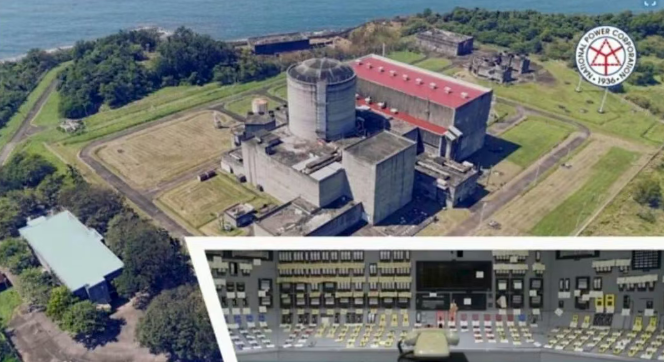
The Bataan Nuclear Power Plant was first built in the 1970s. In response to the severe oil crisis at the time, it was initiated by the government of former Philippine President Ferdinand·Marcos Sr., with the site selected at Napot Point, Bataan Province. The project adopted a single 621 MW pressurized water reactor from Westinghouse Electric Company. It was successfully completed in 1984 and fully loaded with nuclear fuel. However, due to the combined impact of seismic safety concerns, financial pressure, and the Chernobyl nuclear accident, it was ultimately sealed and shelved by the Corazon·Aquino government after the 1986 people power revolution, and was never connected to the grid for power generation.
Despite decades of exposure to the elements, the Bataan Nuclear Power Plant has not become an abandoned project. After years of continuous maintenance and multiple rounds of safety assessments by the International Atomic Energy Agency (IAEA), on-site surveys show that the facility still possesses a solid engineering foundation. As the National Power Corporation of the Philippines and Korea Hydro & Nuclear Power (KHNP) deepen their cooperation, the rehabilitation and feasibility study fully undertaken by the South Korean side are progressing steadily. Through verification of the current equipment status and demonstration of refurbishment pathways, technical obstacles to reviving the plant are being cleared.
At present, Philippine energy policy is undergoing a major shift. The country has formally incorporated nuclear power into its long-term clean energy development agenda, setting targets of achieving 1.2 million kilowatts of installed nuclear power capacity by 2032 and raising it to 4.8 million kilowatts by 2050. The refurbishment and commissioning of the Bataan Nuclear Power Plant is precisely the core priority candidate for achieving this ambitious goal. As demand for stable low-carbon electricity in Southeast Asia becomes increasingly urgent, the successful restart of this legacy project will not only greatly alleviate domestic power shortages but also provide a highly valuable and vivid practical reference for the modernization and retrofit of aging nuclear power facilities worldwide.
Disclaimer: Information republished from partner media, institutions or other websites is provided for reference and communication purposes only. It does not imply endorsement of its views or verification of its accuracy. Please contact us if any content infringes rights or requires correction.