
Kairos Power Advances Flibe Molten Salt Applications to Support KP-FHR High-Temperature Reactor Development
 Scan to share
Kairos Power announced on July 29 that its Fluoride Salt-Cooled High-Temperature Reactor (KP-FHR) will be among the early adopters of a fluoride salt coolant. This coolant, commonly referred to as Flibe, is composed of lithium fluoride (LiF) and beryllium fluoride (BeF₂). In the 1960s, Oak Ridge National Laboratory used this material as a coolant in the Molten Salt Reactor Experiment.
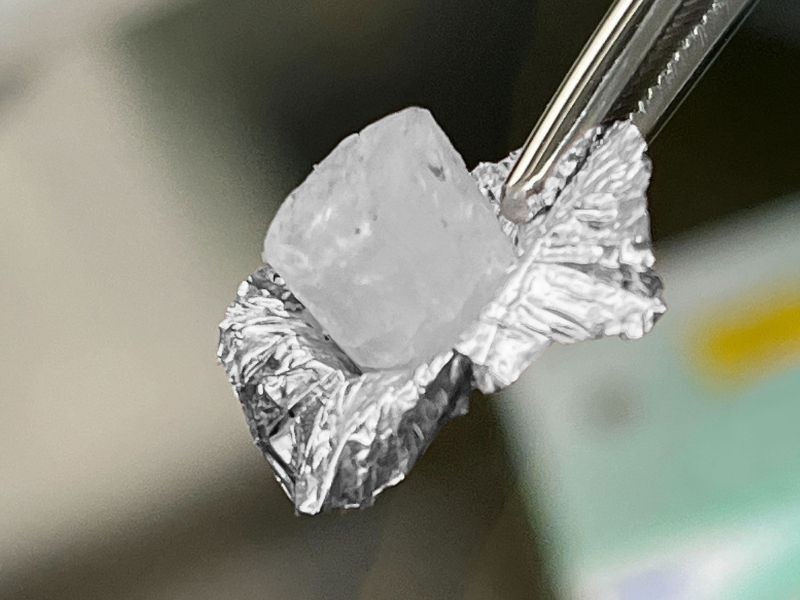
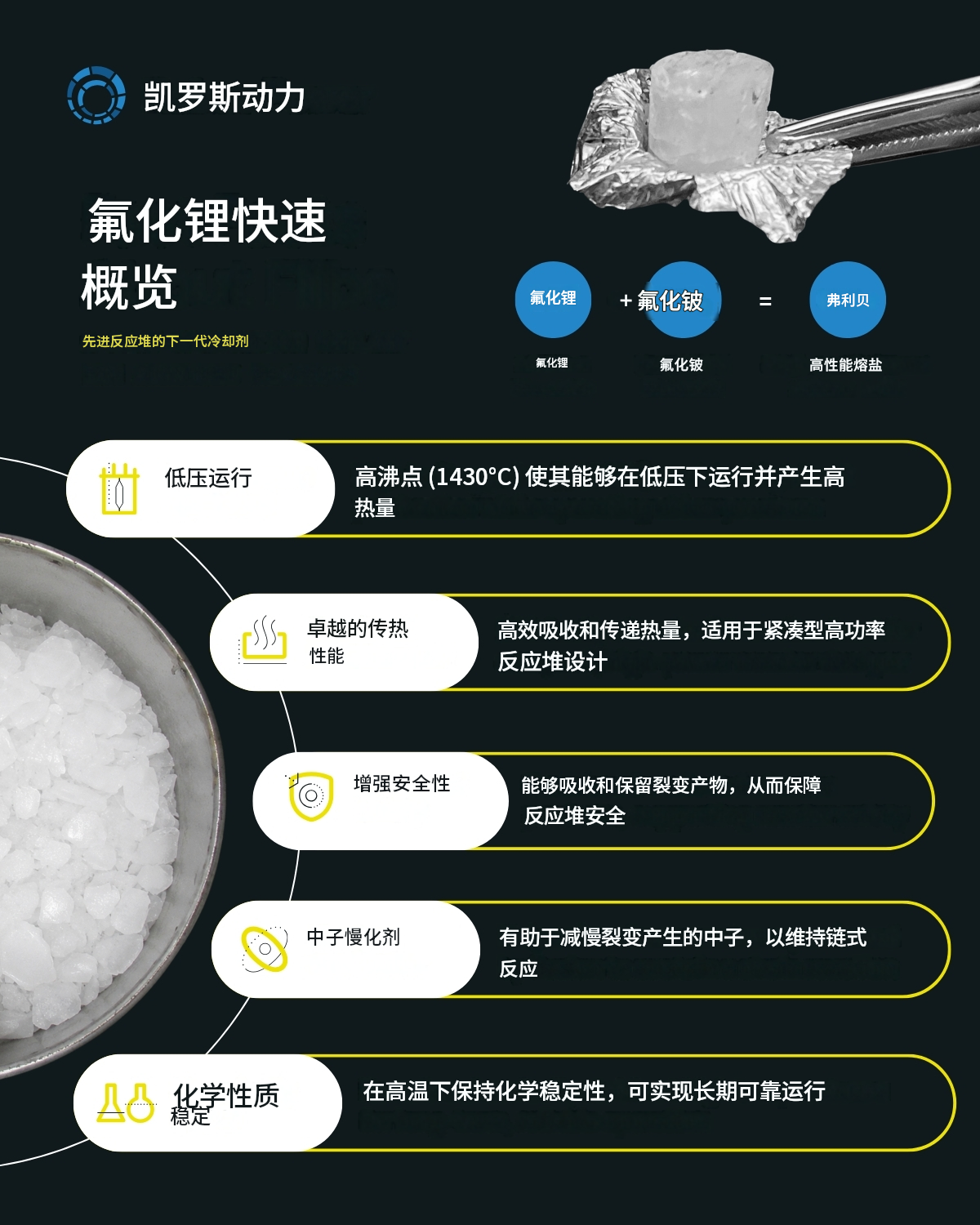
According to Kairos Power, Flibe has a high specific heat capacity, enabling it to effectively absorb and transfer heat generated in the reactor core. Compared with some sodium-cooled or helium-cooled reactor systems, fluoride salt offers certain advantages in heat transport, helping the KP-FHR achieve higher power output in a more compact design.
Flibe has a boiling point of approximately 1,430°C, which is above the operating temperature range set for the company's commercial reactors. This characteristic allows the KP-FHR to operate at high temperatures and near atmospheric pressure, thereby improving system efficiency and reducing the need for thick-walled, high-pressure reactor components.
In terms of safety features, Flibe also complements tristructural isotropic (TRISO) fuel. Kairos Power states that if fission products are released from the ceramic-coated particle fuel, the molten salt can absorb and retain them, providing an additional functional containment barrier for the reactor and helping to reduce the footprint of safety-related systems.
Beyond its cooling function, Flibe also provides a certain moderating effect. The KP-FHR primarily relies on graphite moderators to reduce neutron energy, but the lithium and beryllium in Flibe are lighter elements that can absorb some energy during collisions with fast neutrons, further slowing neutrons down. The company states that its facility uses salt enriched with the lithium-7 isotope to support reactor performance and sustained chain reaction stability.
Kairos Power also emphasizes that Flibe is chemically stable under normal high-temperature conditions when isolated from oxygen and moisture. The KP-FHR plant will be equipped with a chemistry control system and inert gas system to limit contact between the molten salt and air, and to continuously remove trace impurities, supporting long-term operation.
On the supply chain front, Kairos Power is advancing vertical integration of Flibe production. The company is building a Salt Production Facility (SPF) at its manufacturing research and development campus in Albuquerque, New Mexico, which is planned to supply Flibe molten salt for the Hermes 2 commercial-scale demonstration plant in Oak Ridge, Tennessee, as well as for subsequent commercial reactors. The facility will also employ a new process developed by Kairos Power to enrich lithium-7 isotope in the salt to enhance reactor performance.
Construction of the new facility will draw on experience from Kairos Power's molten salt purification plant in Elmore, Ohio. That purification plant currently produces high-purity salt coolant for the company's non-nuclear engineering test units and has accumulated experience in Flibe production, handling, and operations.
Disclaimer: Information republished from partner media, institutions or other websites is provided for reference and communication purposes only. It does not imply endorsement of its views or verification of its accuracy. Please contact us if any content infringes rights or requires correction.