
Croatia's Krško Nuclear Power Plant Only 3.4°C Away from Shutdown Threshold
 Scan to share
Croatian Prime Minister Andrej Plenković on August 4 dismissed concerns that the Slovenia-Croatia jointly owned Krško (Krško) nuclear power plant might be forced to shut down due to excessively high Sava River water temperatures, stating that power supply is secure and the situation is under control.
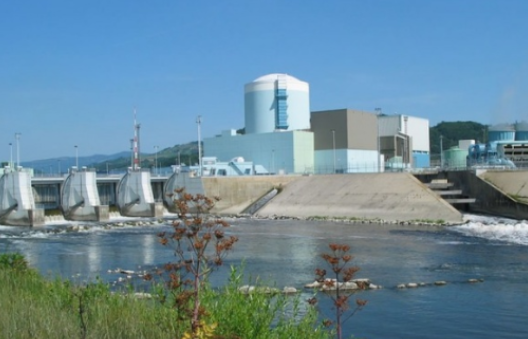
However, the plant is actually approaching environmental cooling limits, and due to abnormally high temperatures and declining Sava River water levels, the safety limits at the Krško nuclear power plant are nearing critical thresholds. According to environmental regulations, the daily average temperature of the river at the complete mixing point must not exceed 28 degrees Celsius, and the daily temperature increase must not exceed 3 degrees Celsius. As of August 4, the Sava River in the area was 24.6 degrees Celsius, with a daily increase of 2.6 degrees Celsius, leaving only 3.4°C before the 28°C red line and 0.4°C before the 3°C daily increase red line.
Despite this, the plant continues to operate at full capacity and uses cooling towers for additional cooling, although this reduces its efficiency. If hydrological conditions deteriorate, power output may be gradually reduced, and in the most unfavorable scenario, a complete shutdown may be required, which could take approximately one week. The Krško nuclear power plant is located in southeastern Slovenia, near the Croatian border, and is operated by a joint venture of the two countries, providing approximately 25% of Slovenia's electricity demand and 15% of Croatia's electricity.
The Croatian Prime Minister has already held consultations regarding the plant's operational status and plans to meet with the management of the HEP energy group to obtain the latest information. He emphasized that everything is currently under control and there is no threat whatsoever. However, he noted that the situation differs from that of Hungary, which was forced to implement additional safety protocols due to critically low Danube River water levels.
The Croatian side believes that the Sava River has not dried up like the Danube, but rather that water temperatures have risen. It is worth noting that France also frequently experiences shutdowns of nuclear reactors due to rising water temperatures. Currently, reactors at several nuclear power plants in the country have been shut down or had their power reduced to address the challenges posed by high temperatures.
Disclaimer: Information republished from partner media, institutions or other websites is provided for reference and communication purposes only. It does not imply endorsement of its views or verification of its accuracy. Please contact us if any content infringes rights or requires correction.