
South Korea's Taesung advances order for Unit 2 of US TerraPower SMR, pivoting to new track in nuclear power and gas turbine forgings
 Scan to share
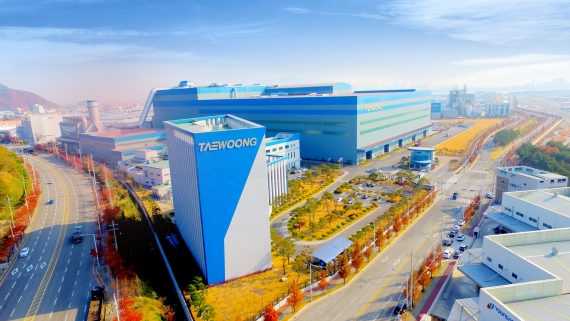
South Korean open-die forging company Taesung is accelerating its entry into the small modular reactor (SMR) supply chain. Data shows that Taesung secured its first order in June this year for rotating plug components of the primary equipment for Unit 1 of US-based TerraPower's SMR, and is expected to advance follow-up orders for related components of Unit 2 of the same project in September. The rotating plug is installed on the upper section of the reactor to support nuclear fuel replacement and in-vessel equipment maintenance, requiring high material resistance to high temperatures and radiation, as well as large-scale forging capabilities. This order therefore not only carries revenue significance but also demonstrates the company's technical validation value in the high-end nuclear power forging segment.
TerraPower, founded by Microsoft founder Bill Gates, is developing a fourth-generation "Natrium" reactor cooled by liquid sodium. If Taesung can extend its supply from the first-of-a-kind unit to subsequent units, it will help build a track record of continuous delivery and enhance its presence in the advanced nuclear energy supply chain in North America. Previously, Taesung also supplied forged components to GE Hitachi Nuclear Energy's Generation 3.5 SMR "BWRX-300" project and participated in related Canadian project construction, meaning it has accumulated delivery experience across SMR projects of different technology routes.
From a corporate strategy perspective, Taesung is positioning nuclear power and SMR business as a key growth direction to escape the volatility of traditional single-demand markets. The company stated that it is advancing technological accumulation and intellectual property layout in steelmaking, forging, inspection, and quality management to enhance the reliability of nuclear-grade product quality. For large open-die forging companies, although the SMR market is still in the early stages of industrialization, its high component standards, long certification cycles, and strong supply chain barriers mean that once qualified as an approved supplier, the stickiness of follow-up orders and long-term collaboration potential are substantial.
Beyond nuclear power, Taesung is also expanding its large forging business for gas turbines. The company is currently collaborating with Mitsubishi Heavy Industries on the development of the rotor shaft, a core component of gas turbines. The entire R&D project consists of eight stages: Stage 2 was completed last year, Stage 3 was launched this year, and phased development volumes were secured in the first half of the year, generating partial sales revenue. Taesung plans to complete rotor shaft R&D by 2028, achieve commercialization by 2030, and has set a mid-to-long-term target of 120 billion KRW in annual sales for the gas turbine rotor shaft business.
Against the backdrop of global power demand growth, AI data center expansion, and the energy transition, both SMRs and high-efficiency gas turbines are regarded as key components of future power infrastructure. Data also mentions that the Encinal LNG combined-cycle power plant project in Texas, US, could represent a mid-to-long-term opportunity for South Korean companies to participate in gas turbine and power generation equipment supply. If Taesung can achieve breakthroughs in both SMR nuclear forgings and gas turbine rotor shafts, its power generation equipment business is expected to become a new core segment following wind power.
Disclaimer: Information republished from partner media, institutions or other websites is provided for reference and communication purposes only. It does not imply endorsement of its views or verification of its accuracy. Please contact us if any content infringes rights or requires correction.