
Newcleo Initiates U.S. Regulatory Pre-Application Engagement for MOX Fuel Facility, Accelerating Advanced Reactor Fuel Supply Chain Development
 Scan to share
Advanced reactor and nuclear fuel company Newcleo has initiated regulatory pre-application engagement with the U.S. Nuclear Regulatory Commission (NRC) for a mixed oxide (MOX) fuel fabrication facility, with plans to advance construction at the Savannah River Site in South Carolina. This move indicates that the company is not only advancing the licensing of its advanced reactor itself but also seeking to establish supporting fuel supply capabilities in parallel, aiming to mitigate fuel bottlenecks in future commercial deployment.
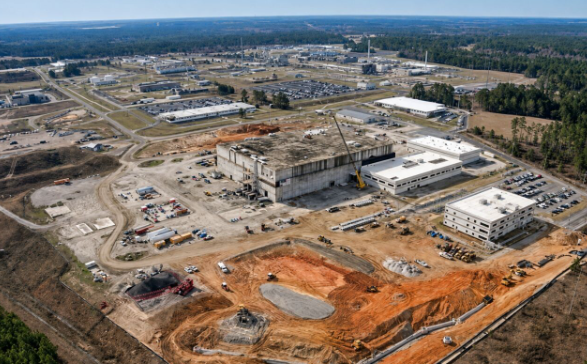
The submitted regulatory engagement plan represents a key step prior to formal license application, with the core objective of communicating with regulators in advance on facility design, safety standards, review scope, and key technical issues. Newcleo previously submitted its regulatory engagement plan for the LFR-AS-200 lead-cooled fast reactor to the NRC in July, and now bringing the MOX fuel facility under the same regulatory timeline demonstrates that the company is building an integrated licensing pathway covering both the reactor and fuel supply sides.
MOX fuel is manufactured by blending uranium oxide with plutonium oxide extracted from sources such as spent fuel, offering the advantages of recycling nuclear materials and improving resource efficiency. Newcleo's lead-cooled fast reactor uses liquid lead as a coolant, with the goal of combining with MOX fuel to form a closed nuclear fuel cycle. If this route achieves commercialization, it would not only reduce dependence on natural uranium mining and enrichment capacity but also help diminish the volume of high-level waste ultimately requiring geological disposal and the associated long-term radiological burden.
However, MOX fuel involves spent fuel reprocessing and plutonium material management, which inherently raises sensitive issues such as radiation safety, nuclear material safeguards, and nuclear non-proliferation. Therefore, any such facility must pass rigorous review before being established in the United States, with fuel fabrication, transportation, security, and the interface with reactor operations all becoming regulatory priorities. For Newcleo, whether the fuel facility license and the lead-cooled fast reactor license can proceed in a coordinated manner will directly impact the feasibility of its commercial deployment plans in the 2030s.
This case also provides an observation model for nuclear power countries such as South Korea that face spent fuel storage pressure. Although South Korea has advanced the development of high-level radioactive waste management institutions, interim storage facilities are approaching saturation, and long-term spent fuel management remains a critical challenge in energy policy. The accelerated deployment of fast reactors, MOX fuel, and closed fuel cycle initiatives by U.S. and European companies demonstrates that competition in advanced nuclear energy has expanded from single-reactor technology development to overall competition in fuel supply chains and waste reduction technology systems.
Disclaimer: Information republished from partner media, institutions or other websites is provided for reference and communication purposes only. It does not imply endorsement of its views or verification of its accuracy. Please contact us if any content infringes rights or requires correction.