
Search Results
Keyword:spent fuel recycling
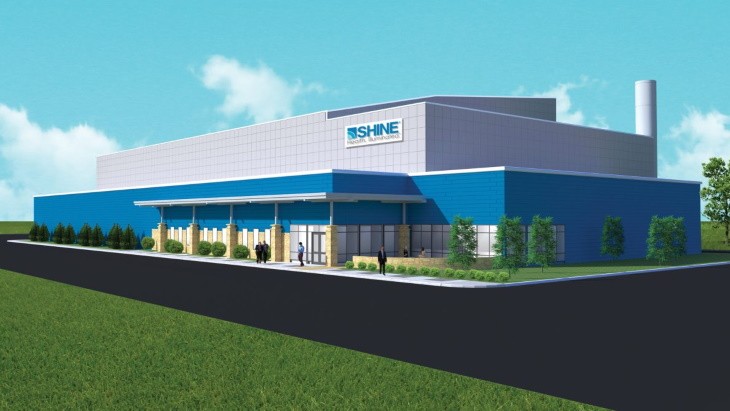
SHINE Advances Commercial Spent Fuel Recycling Facility Construction
U.S. electricity demand is growing at a rate rarely seen in decades, and nuclear energy is considered one of the key options to meet the incremental demand. Meanwhile, the current open nuclear fuel cycle still treats spent fuel primarily as single-use waste, failing to fully utilize most of the energy potential that remains within it. SHINE Technologies is developing spent fuel recycling technologies and plans to build a facility with spent fuel recycling capabilities. The company stated that multiple collaborations funded by the U.S. Department of Energy's Advanced Research Projects Agency-Energy (ARPA-E) CURIE program are advancing the work from validated laboratory-scale chemical processes toward commercial scale...
2026-08-19
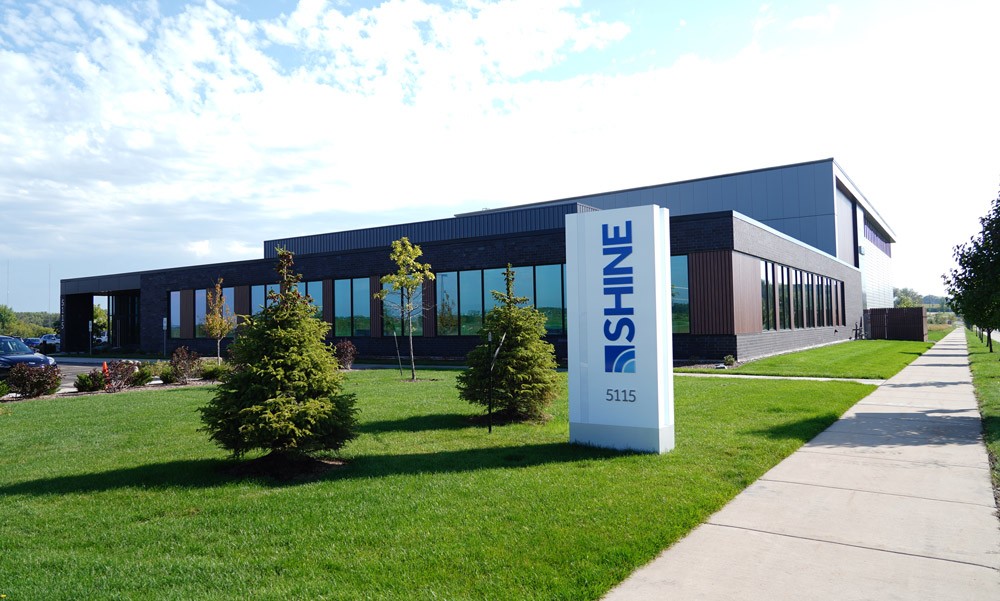
SHINE to Advance Spent Fuel Recycling Separation Technology with Argonne National Laboratory and Others
On August 18, fusion energy company SHINE announced that it will collaborate with the U.S. Department of Energy's Argonne National Laboratory and Case Western Reserve University to apply high-throughput chemical separation technology to the nuclear fuel recycling process it is currently developing. The collaboration is carried out under the CURIE program of the U.S. Department of Energy's Advanced Research Projects Agency-Energy (ARPA-E), with additional funding led by Case Western Reserve University, and SHINE participates as a subcontractor. Spent fuel is often referred to as nuclear waste, but it retains approximately 90% of its energy potential while containing multiple reusable byproducts. In recent years, federal programs and private investment in the United States have driven renewed interest in spent fuel recycling. Argonne National Laboratory is developing a new chemical processing device called "Packed Centrifugal Equipment for Radiochemical Separation," abbreviated as PaCERS. The device generates centrifugal force exceeding normal gravity conditions through high-speed rotation to improve chemical separation efficiency, and reduces costs across multiple stages of nuclear fuel recycling through higher throughput and lower solvent usage.
2026-08-19
Nuclea Energy to Acquire Moltex Advanced Nuclear Technology Portfolio
Moltex Energy announced on August 13 that Nuclea Energy Inc. has signed a definitive agreement to acquire its advanced nuclear technology portfolio. The transaction was concluded following a competitive bidding process, with the relevant technologies and company assets having attracted interest from multiple parties earlier. The proposed technology platform, developed over more than a decade, encompasses the Waste-to-Stable Salt (WATSS) spent fuel recycling process, the Stable Salt Reactor – Wasteburner (SSR-W), and FLEX reactor technology. The portfolio includes 80 granted patents across 9 patent families, as well as 9 pending patents related to the WATSS recycling process...
2026-08-14
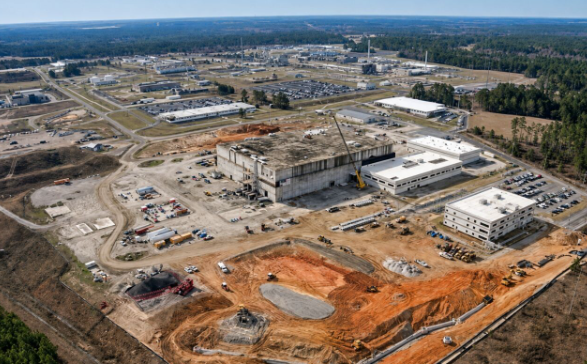
Newcleo Initiates U.S. Regulatory Pre-Application Engagement for MOX Fuel Facility, Accelerating Advanced Reactor Fuel Supply Chain Development
Advanced reactor and nuclear fuel company Newcleo has initiated regulatory pre-application engagement with the U.S. Nuclear Regulatory Commission (NRC) for a mixed oxide (MOX) fuel fabrication facility, with plans to advance construction at the Savannah River Site in South Carolina. This move indicates that the company is not only advancing the licensing of its advanced reactor itself but also seeking to establish supporting fuel supply capabilities in parallel, aiming to mitigate fuel bottlenecks in future commercial deployment. The submitted regulatory engagement plan represents a key step prior to formal license application, with the core objective of communicating with regulators in advance on facility design, safety standards, review scope, and key technical issues. Newcleo previously submitted its regulatory engagement plan for the LFR-AS-200 lead-cooled fast reactor to the NRC in July...
2026-08-07
Curio, NuScale and Framatome Sign MOU to Advance Next-Generation Nuclear Fuel Cycle Solutions
Curio, NuScale Power and Framatome Inc. recently signed a strategic memorandum of understanding to jointly evaluate integrated nuclear fuel solutions aimed at strengthening the U.S. nuclear fuel supply chain and supporting the international nuclear energy market and the deployment of next-generation nuclear technologies. Under the agreement, the three parties will conduct evaluations centered on Curio's proprietary NuCycle recycling technology, focusing on the conversion pathways of recyclable nuclear materials from "source to product" and from "source to fuel." The collaboration also encompasses future engineering coordination, fuel development, fuel qualification, manufacturing and commercialization, as well as advancing the integration of nuclear supply chain-related segments...
2026-08-07