
U.S. and European Nuclear Fuel Markets Accelerate Adjustment, with Canada and Kazakhstan Remaining Leading Uranium Supply Sources
 Scan to share
Annual reports recently released by the U.S. Energy Information Administration and the European Supply Agency show that the global nuclear fuel supply landscape in 2025 continues to be shaped by geopolitical and energy security factors. Canada remains the most important source of uranium for utility nuclear power operators in the United States and the European Union, followed closely by Kazakhstan, underscoring the two countries' central role in the Western nuclear fuel supply chain. Meanwhile, both the United States and the European Union are focusing on concerns over supply source concentration, dependence on Russian-related supplies, and security assurance issues arising from future growth in nuclear power demand.
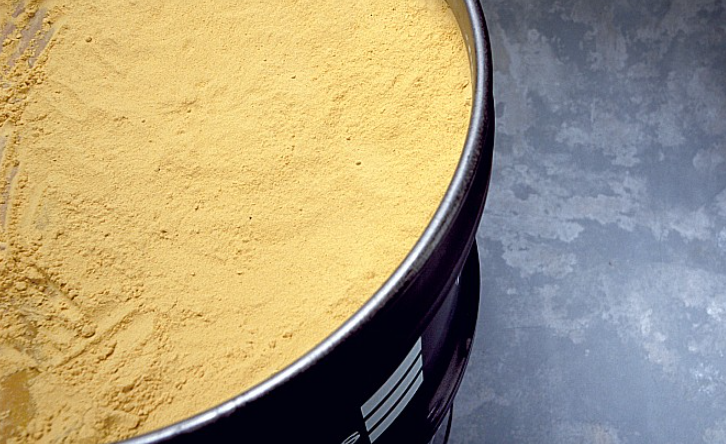
In the U.S. market, owners and operators of civilian nuclear power plants procured 46.9 million pounds U3O8e of uranium deliveries from domestic and foreign suppliers in 2025, a 16% decline from 55.9 million pounds in 2024. Of this total, Canada accounted for 32% of U.S. deliveries, Kazakhstan 28%, Australia 15%, Uzbekistan and Namibia 7% and 4% respectively, and domestically sourced U.S. material accounted for 7%, down from 8% in 2024. The report also shows that the U.S. market continued to receive imported uranium from countries such as Malawi and Niger, though data for certain countries were withheld to avoid disclosing individual company information.
The U.S. nuclear fuel processing segment also exhibits an internationalized character. In 2025, owners and operators of U.S. nuclear power plants delivered 32 million pounds U3O8e of natural uranium feed to domestic and foreign uranium enrichment suppliers, with 37% going to U.S.-based enrichment facilities and the remaining 63% handled by overseas suppliers, including France and Russia. Although Russian-origin material still accounted for a notable share of U.S. deliveries in 2024, related data for 2025 were withheld, reflecting the heightened sensitivity surrounding Russian nuclear fuel supply in statistical disclosure and the policy environment.
On the European side, Canada and Kazakhstan were likewise the leading uranium supply countries in 2025. The European Supply Agency reported that four countries supplied more than 83% of the EU's natural uranium deliveries, while six countries supplied over 98% of the EU's natural uranium requirements. Unlike the U.S. report, Russian-origin uranium still holds a significant position in the EU, with Russian deliveries of 2,346 tU in 2025, accounting for 15.98% of the EU total. Since the EU's entire fresh uranium demand relies on external imports, its nuclear fuel supply is inevitably affected by geopolitical changes and trade policy adjustments.
The European Union is making diversification of nuclear fuel supply a key priority for energy security. The REPowerEU roadmap issued by the European Commission in May 2025 proposes phasing out dependence on Russian energy, including gradually eliminating Russian nuclear-related supplies and identifying alternative fuel sources for Russian-designed VVER reactors operating in several EU member states. The European Supply Agency stated that "significant progress" was achieved in this area in 2025, with all EU VVER reactor operators having signed alternative fuel supply contracts with non-Russian suppliers by year-end, indicating that Europe's nuclear fuel supply chain is being restructured toward a more diversified and secure direction.
Disclaimer: Information republished from partner media, institutions or other websites is provided for reference and communication purposes only. It does not imply endorsement of its views or verification of its accuracy. Please contact us if any content infringes rights or requires correction.