
Bill Gates Visits South Korea to Deepen SMR Cooperation with Korean Companies
 Scan to share
Bill Gates, co-founder of Microsoft, founder of TerraPower, and chairman of the Gates Foundation, visited South Korea on August 13. This marks his first visit to the country since August last year, with the primary agenda of expanding cooperation in the field of small modular reactors (SMRs).
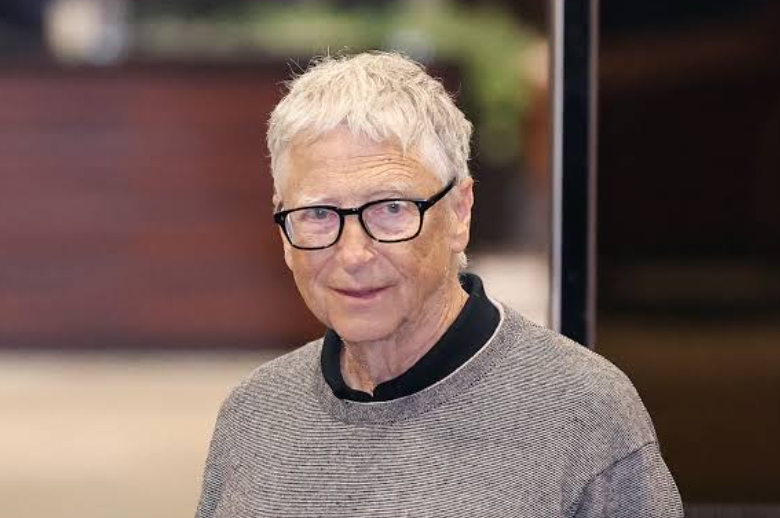
At approximately 9:20 p.m. local time on the 13th, Gates arrived at Gimpo Business Aviation Center at Seoul Gimpo Airport via private jet. During his visit, he plans to meet with figures from the South Korean government, the National Assembly, and the business community.
It is reported that Gates is scheduled to meet with South Korean Prime Minister Han Seong-sook on the 14th, with the meeting having been proposed by Gates' side first. The South Korean side is also coordinating the schedule for a private meeting between Gates and National Assembly Speaker Cho Jung-sik.
Arrangements at the corporate level are equally intensive. Gates plans to meet with HD Hyundai Chairman Chung Ki-sun on the 14th to discuss SMR-related cooperation plans. The two previously met during the Davos Forum in Switzerland earlier this year, making this meeting roughly seven months later.
Additionally, Gates is expected to engage with senior executives from SK Group, including Chairman Chey Tae-won. SK Group is one of TerraPower's major shareholders, and coordination is underway regarding the schedule, agenda, and participants for this visit.
This visit has drawn attention from South Korea's nuclear energy industry, particularly in connection with the advancement of TerraPower's next-generation nuclear power projects. In March last year, TerraPower obtained a construction permit for Unit 1 in Kemmerer, Wyoming, from the U.S. Nuclear Regulatory Commission (NRC). The project is regarded as a significant milestone in the construction of commercial-scale next-generation nuclear power plants in the United States.
The scope of South Korean companies' participation in TerraPower projects is also expanding. In May last year, HD Hyundai Heavy Industries was selected as the preferred supplier for the reactor enclosure system (RES), a key component of TerraPower's sodium-cooled fast reactor. In January this year, Korea Hydro & Nuclear Power (KHNP) also acquired shares in TerraPower worth $40 million, approximately 600 billion KRW, further strengthening the partnership between the two sides.
"Natrium," the fourth-generation reactor being developed by TerraPower, is a sodium-cooled fast reactor (SFR) that uses liquid sodium as a coolant. The technology is considered complementary to renewable energy sources, serving to meet stable, low-carbon electricity demand.
Gates' visit comes at a time when the South Korean government is accelerating its push into the SMR industry. According to data from the International Energy Agency (IEA), global data center electricity consumption is expected to rise from 415 terawatt-hours in 2024 to 945 terawatt-hours in 2030, more than doubling, driven by the expansion of artificial intelligence applications.
The South Korean government has begun building supporting infrastructure for SMR commercialization. In February last year, after the National Assembly passed the Special Act on Small Modular Reactors, South Korea moved forward with establishing SMR production support centers in Changwon, Busan, and Gyeongju.
During his visit to South Korea last year, Gates also emphasized that SMRs could serve as one of the solutions to growing electricity demand in the AI era. At that time, he met with South Korean government officials and leaders of companies including SK Group, HD Hyundai Group, and Samsung Electronics to discuss sodium-cooled fast reactor supply chain development and commercialization strategies.
Disclaimer: Information republished from partner media, institutions or other websites is provided for reference and communication purposes only. It does not imply endorsement of its views or verification of its accuracy. Please contact us if any content infringes rights or requires correction.