
Kansai Electric says Rokkasho reprocessing plant delay does not change target of starting operation in fiscal 2027
 Scan to share
On August 18, officials from Japan's Agency for Natural Resources and Energy (ANRE) and Kansai Electric Power Company (KEPCO) visited the Aomori Prefectural Government to explain the construction and operation schedule of the spent fuel reprocessing plant under construction in Rokkasho Village, Aomori Prefecture. The facility is a key project in Japan's nuclear fuel cycle system and is also listed as one of the receiving sites for spent fuel transported from nuclear power plants in Fukui Prefecture.
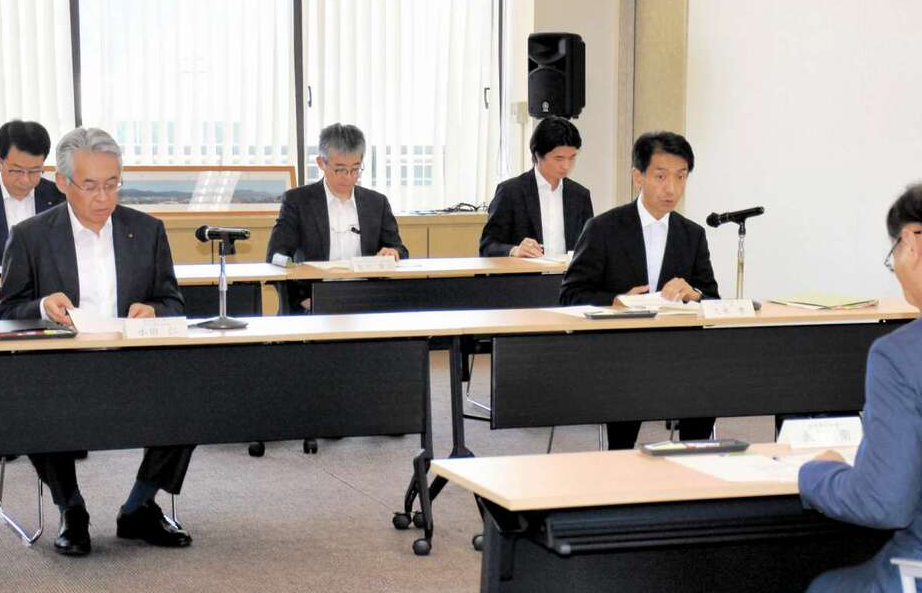
Kansai Electric reiterated that even if the completion of the Rokkasho reprocessing plant is delayed from its original schedule within the current fiscal year, the target of starting operation within fiscal 2027 remains unchanged. The company stated that under the current spent fuel transport roadmap, the transport volume from fiscal 2028 onward is not expected to be significantly affected; if the construction schedule is indeed delayed, a revised effective roadmap will be promptly submitted to local governments to ensure the stable transport of spent fuel.
The Rokkasho reprocessing plant is being constructed and operated by Japan Nuclear Fuel Limited (JNFL), primarily for recovering plutonium and other materials from spent fuel. Regarding the transition arrangements from completion to operation of the plant, Hitoshi Mizuta, head of Kansai Electric's nuclear power division, explained that Japan Nuclear Fuel Limited intends to carry out some processes related to high-level liquid waste—originally planned to be implemented after completion—ahead of the plant's completion, thereby shortening the time between completion and start of operation.
Kansai Electric also stated that apart from the 300 tons of spent fuel planned to be shipped to France as part of the reprocessing demonstration research, the timing for shipping an additional 100 tons of spent fuel currently under study has not been finalized, and therefore near-term transport arrangements will not be significantly affected. Under the previous roadmap, Kansai Electric also plans to deliver a total of 198 tons of spent fuel to the Rokkasho reprocessing plant.
Regarding the temporary storage of spent fuel within Fukui Prefecture, Kansai Electric plans to construct air-cooled dry storage facilities at the sites of its Mihama, Takahama, and Oi nuclear power plants to temporarily store spent fuel from the plants' storage pools, in coordination with subsequent transport arrangements. The company is seeking consent for this plan from the Fukui Prefectural Government and the three municipalities hosting the nuclear power plants.
Hideki Toshima, mayor of Mihama Town, stated on the 18th that he intends to approve the construction of a dry storage facility at the Mihama nuclear power plant, on the condition that matters such as the spent fuel transport roadmap are steadily advanced. This marks the first time among the heads of the three municipalities hosting the nuclear power plants that someone has publicly expressed support for the facility construction. The Mihama Town Assembly had already expressed consent to the plan in June, and the town is expected to notify the Fukui Prefectural Government of its decision shortly.
Toshima stated that while local residents had concerns about spent fuel remaining at the nuclear power plant for extended periods, dry storage is overall a storage method with high safety, and the operator has also provided explanations to residents. He said the local decision also took into account factors such as the regional revitalization proposals put forward by the operator.
Currently, the Takahama Town Assembly has approved the relevant plan, but the town mayor has not yet made a final decision; regarding Oi Town, as the review by the Nuclear Regulation Authority (NRA) is still ongoing, neither the town assembly nor the town mayor has expressed a position. The Fukui Prefectural Government has stated that it will make a decision after taking into account the opinions of the municipalities hosting the nuclear power plants and the construction progress of the Rokkasho reprocessing plant in Aomori Prefecture.
Regarding whether the completion of the dry storage facilities will change the management of storage pools at the nuclear power plants, Kansai Electric emphasized that, in principle, the transfer of spent fuel from storage pools to dry storage facilities will not result in the use of newly available capacity in the storage pools. The company stated that such capacity would only be considered for use under special circumstances such as natural disasters, and only after the prefectural government and the municipalities hosting the nuclear power plants have been informed of the specific situation; delays in the completion or start of operation of the Rokkasho reprocessing plant do not fall under these exceptional circumstances.
Disclaimer: Information republished from partner media, institutions or other websites is provided for reference and communication purposes only. It does not imply endorsement of its views or verification of its accuracy. Please contact us if any content infringes rights or requires correction.