
Investigation into Automatic Shutdown of Unit 3 at Japan's Ohi Nuclear Power Plant: Damage Found in Exciter Rotating Rectifier
 Scan to share
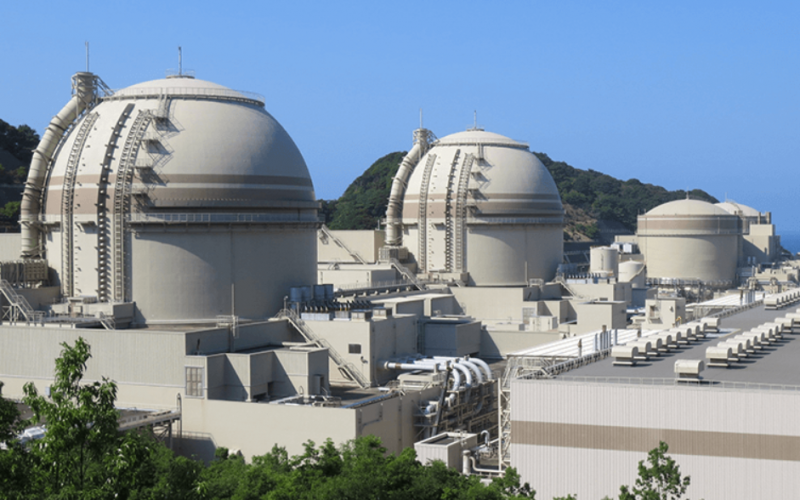
Kansai Electric Power reported on August 19 that Unit 3 of the Ohi Nuclear Power Plant experienced an automatic generator trip triggered by a generator “loss-of-field” alarm at 23:56 on August 8, followed by an automatic reactor shutdown. At the time of the event, the unit was operating stably at rated thermal power. The company stated that the event caused no radiological impact on the environment.
The “loss-of-field” alarm is used to indicate an abnormal state in the magnetic field generated inside the generator. Following the incident, Kansai Electric conducted on-site inspections of equipment related to generator magnetic field establishment, including the generator, exciter, and automatic voltage regulator (AVR). Among these, the exciter is used to establish the magnetic field for the generator, and the automatic voltage regulator is used to automatically maintain the stability of the generator's output voltage.
The investigation showed no abnormalities in the electrical circuits related to generator rotor excitation; visual inspections of the automatic voltage regulator and its external connection terminals on both the AC and DC sides also revealed no abnormalities.
During the exciter inspection, Kansai Electric found damage to the rotating rectifier. The rotating rectifier consists of components such as diode modules and protective fuses, and is used to convert the AC power generated by the exciter into DC power. The inspection revealed that one diode module exhibited heat sink melting, diode tilting, breakage of the fixing insulating bolts, and disconnection of connecting wires; an adjacent diode module also sustained partial damage.
In addition, inspectors found traces of black deposits scattered around the rotating rectifier. Of all 72 protective fuses, 36 had operated and blown. No abnormalities were found in the cables connected to the exciter. Kansai Electric also confirmed that no operational actions or work affecting the current or voltage parameters of the generator or exciter were performed on-site at the time of the event.
Kansai Electric stated that, given the confirmed damage to the exciter rotating rectifier, the next step will be to transport the exciter to the manufacturer's facility to conduct detailed investigations, including internal inspection of the rotating rectifier, composition analysis of the black deposits, and cross-sectional observation of the disconnected wire areas.
Disclaimer: Information republished from partner media, institutions or other websites is provided for reference and communication purposes only. It does not imply endorsement of its views or verification of its accuracy. Please contact us if any content infringes rights or requires correction.