
Japan Explains Plan for Spent Fuel Interim Storage Facility in Kaminoseki Town
 Scan to share
Japan's Agency for Natural Resources and Energy recently held an explanatory meeting with the Kaminoseki Town Assembly regarding the Chugoku Electric Power Company's plan to construct a spent fuel interim storage facility in Kaminoseki Town, Yamaguchi Prefecture. The briefing covered the Japanese government's nuclear fuel cycle policy, facility safety, and related subsidy systems.
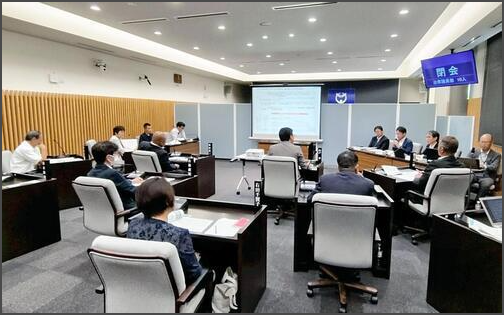
The meeting was held on the 19th at the Kaminoseki Town Assembly. Previously, the Japanese government had decided to revise guidelines related to nuclear energy policy and included the Kaminoseki Town spent fuel interim storage facility plan within them. At the meeting, the Agency for Natural Resources and Energy stated that interim storage facilities are important infrastructure supporting the nuclear fuel cycle policy, and that advancing the construction and utilization of such facilities requires a thorough understanding of local conditions and the cooperation of surrounding communities.
Junichi Nakatani, Director of the Office for Siting Measures in the Nuclear Fuel Cycle Industry at Japan's Agency for Natural Resources and Energy, stated that the Chugoku Electric Power Company's initiative to advance the interim storage facility construction is consistent with Japan's national policy and holds significant importance from an energy policy perspective. He also emphasized that understanding from surrounding communities is equally critical, and that the Agency is willing to actively respond to local requests for briefings.
Regarding the positioning of the Kaminoseki Town interim storage facility within national policy, the Agency for Natural Resources and Energy explained that Japan's spent fuel reprocessing facility has not yet been completed; even if completed, it would not be able to process all spent fuel at once, thus necessitating an intermediate stage for storage. The Agency stated that Kaminoseki Town has been designated as an important candidate site, and the government holds high expectations for it.
In response to concerns that the interim storage facility could evolve into a permanent storage facility due to uncertainties surrounding the operation of the reprocessing facility, the Agency for Natural Resources and Energy responded that regardless of circumstances, spent fuel must be transported out of Kaminoseki Town and will not remain there indefinitely. Regarding government responsibility and the extent of involvement, the Agency stated that such matters are primarily based on agreements and trust between the company and the local community, and that the government can provide guidance to the company to ensure compliance with relevant requirements.
During the meeting, assembly members also raised questions concerning the storage period, operational status, and impact on local population movement of the interim storage facility in Mutsu City, Aomori Prefecture. The Agency for Natural Resources and Energy stated that no so-called reputational damage from the interim storage facility has been confirmed to date; in some cities with nuclear-related facilities, populations have actually increased, and livability survey rankings are relatively favorable.
Regarding the question of whether the Mutsu City facility's potential acceptance of spent fuel from other power companies through inter-operator cooperation would diminish the necessity of the Kaminoseki Town facility, the Agency for Natural Resources and Energy stated that the available capacity is only approximately 500 tons and would not change the importance of Kaminoseki Town as a candidate site. The Agency also stated that subsidy systems for surrounding municipalities can be used for public facility construction, improvement of resident welfare, and regional development.
Disclaimer: Information republished from partner media, institutions or other websites is provided for reference and communication purposes only. It does not imply endorsement of its views or verification of its accuracy. Please contact us if any content infringes rights or requires correction.