
Collective Radiation Dose of Workers at Japan's Fukushima Daiichi Nuclear Power Station Ranks Highest Nationwide
 Scan to share
Japanese nuclear power plant operators are required to submit "radiation management reports" to the Nuclear Regulation Authority (NRA) annually, detailing the exposure status of plant workers. According to the relevant 2025 reports, the collective radiation dose of workers at Tokyo Electric Power Company (TEPCO)'s Fukushima Daiichi Nuclear Power Station remains significantly higher than at other Japanese nuclear plants, indicating that the radiological impact from post-accident on-site decommissioning and management work is still ongoing.
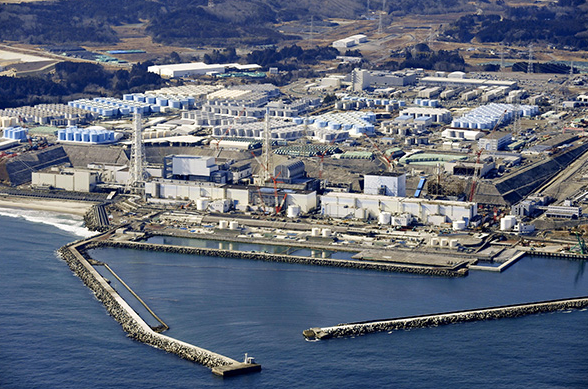
By collective dose per plant, Fukushima Daiichi recorded 20.97 person-sieverts, the highest in Japan. This figure is more than nine times the 2.22 person-sieverts reported at Kansai Electric Power's Takahama Nuclear Power Station. Located in Fukui Prefecture, the Takahama plant has all four units in operation and ranks second in collective dose among Japanese nuclear plants.
The report shows that Kyushu Electric Power's Sendai Nuclear Power Station recorded 0.99 person-sieverts, Genkai Nuclear Power Station 0.80 person-sieverts, and Japan Atomic Power Company (JAPC)'s Tokai Daini Nuclear Power Station 0.75 person-sieverts. Generally, worker exposure doses tend to be higher during plant operation or when preparatory work is underway for restart.
In terms of the number of workers with annual exposure exceeding 5 millisieverts, Takahama had 66, Sendai 18, and Tokai Daini 11; Fukushima Daiichi, however, exceeded 1,500, a notably larger gap.
In contrast, Hokkaido Electric Power's Tomari Nuclear Power Station, Tohoku Electric Power's Higashidori Nuclear Power Station, TEPCO's Kashiwazaki-Kariwa Nuclear Power Station, Chubu Electric Power's Hamaoka Nuclear Power Station, Hokuriku Electric Power's Shika Nuclear Power Station, and JAPC's Tsuruga Nuclear Power Station all reported no workers with annual exposure exceeding 5 millisieverts. Most of these plants are currently shut down.
By average worker exposure dose, Fukushima Daiichi also ranked highest at 1.7 millisieverts; Takahama recorded 0.5 millisieverts, and Sendai 0.3 millisieverts.
Disclaimer: Information republished from partner media, institutions or other websites is provided for reference and communication purposes only. It does not imply endorsement of its views or verification of its accuracy. Please contact us if any content infringes rights or requires correction.